
27+
Years Engineering Heritage
121
Verified Technical Specialists
20+
Years International Export Track
100%
In-House Batch Traceability
Surgical Instrumentarium & Systems
Precision Trauma & Surgical Orthopedic Solutions
Engineered in compliance with ISO 13485 and CE standards. Our portfolio delivers full bio-mechanical compatibility across upper limb reconstructions, micro-trauma fixation, power tools, and surgical education models.






Procurement Whitepaper & Strategic Insights
Evolutionary Trends in Internal Bone Fixation Engineering
An authoritative overview of osteosynthesis metallurgy, locking screw biomechanics, regulatory dynamics under EU MDR 2017/745, and the modern shift toward value-based hospital acquisition.
Biomechanical Paradigms: Locking vs. Dynamic Compression
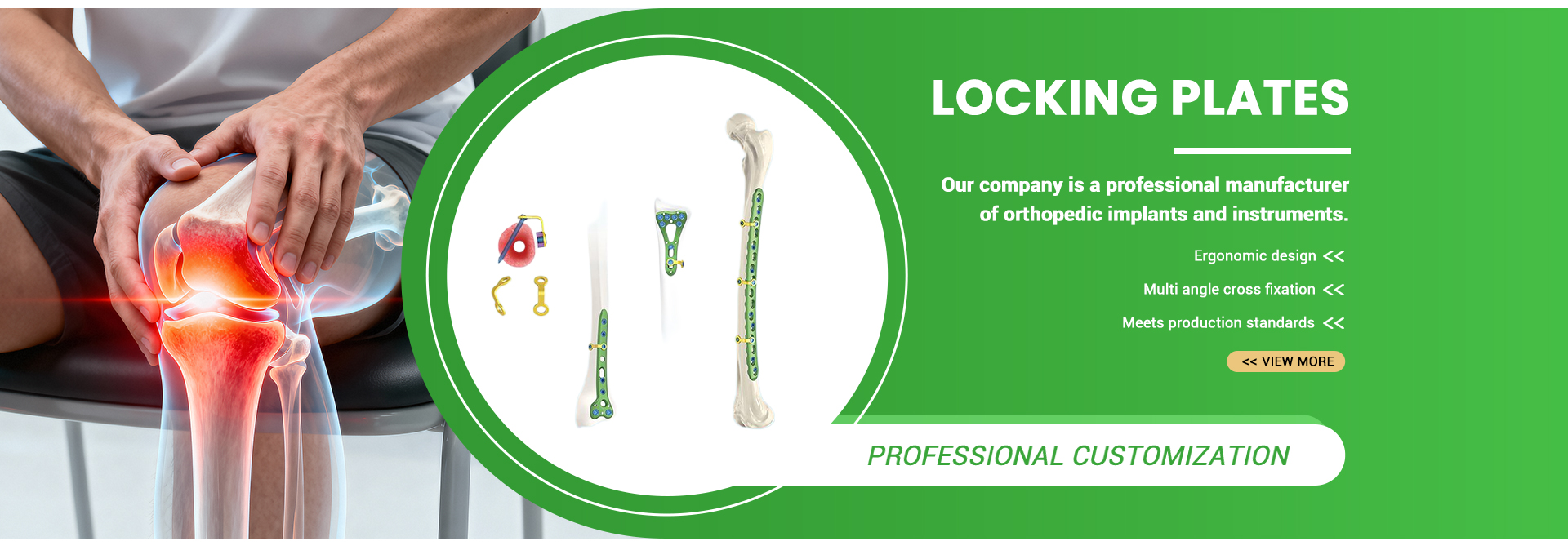
The orthopaedic fixation continuum has dramatically evolved from absolute rigidity through traditional dynamic compression plates (DCP) toward biological internal fixation using angular-stable locking plates. Conventional plates depend entirely on bone-plate friction induced by screw torque, which inherently compresses periosteal blood flow and elevates necrosis rates. Modern CE-certified locking plates (LCP) act as internal fixators. By locking screw threads precisely into the plate hole, stress distributions are shared axially across the whole implant construct without stripping thread contacts, preserving vascularity under comminuted fracture settings and osteoporotic conditions.
Variable-Angle & Multi-Axial Trajectory Fixation
Surgical demands within periarticular anatomy require pinpoint screw placement to avoid intra-articular breaches while securely anchoring small osteochondral fragments. Next-generation multi-axial locking systems empower orthopaedic trauma surgeons to adjust screw trajectories within a 30-degree conical corridor before locking threads permanently. This reduces intraoperative plate re-contouring, decreases residual mechanical fatigue stress within titanium profiles, and minimizes micro-motion that causes secondary implant failure in complex metaphyseal fractures.
Metallurgical Selection: Ti-6Al-4V ELI vs. 316L Steel
Medical-grade titanium alloy (Ti-6Al-4V ELI conforming to ASTM F136 / ISO 5832-3) delivers an elasticity modulus (~110 GPa) significantly closer to human cortical bone (~18-20 GPa) than 316L medical stainless steel (~200 GPa). This modulus mitigation minimizes "stress-shielding" phenomenon, which preserves regional bone density throughout extended consolidation. Titanium alloys also eliminate nickel allergy complications and offer higher fatigue resistance under cyclic multi-planar loading, whereas electropolished 316L plates provide superior shear strength and ductility for cost-controlled national healthcare systems.
Market Intelligence
Emerging Procurement & Manufacturing Trends (2025–2030)
Global medical device supply chains are shifting toward regional risk-hedging, regulatory stringency, customized osteosynthesis, and integrated sterilization convenience.
EU MDR 2017/745 Tightening & Upstream Quality Auditing
The transition toward European Medical Device Regulation (EU MDR) has caused many small, fragmented trading houses to exit the marketplace due to escalating Clinical Evaluation Report (CER) overheads and Post-Market Clinical Follow-up (PMCF) mandates. Institutional buyers now insist upon dealing directly with primary manufacturers that boast certified cleanrooms, complete on-site validation reports by organizations like TÜV Rheinland, and continuous metallurgical testing from smelting to final laser passivization.
Convergence of Implants, Instrument Kits & Power Tools
Procurement teams are moving away from piecemeal instrument sourcing. When bone screws strip because of screwdriver mismatches or plates crack during intraoperative bending due to improper instrument geometry, liability cascades. Importers are systematically requesting single-source manufacturing of matched plate systems, high-torque orthopedic drill/saw handpieces, reduction forceps, and custom sterilization cassettes, driving standardized tolerances across the full clinical suite.
Pre-Sterilized Single-Use Procedure Packs
Sterilization processing backlogs in busy emergency orthopedic units have triggered widespread demand for Gamma-irradiated, double-blister pre-packaged sterile bone plates and matching screws. By eliminating hospital autoclave cycles and tray verification labor, sterile pre-packed plates safeguard trace batch numbers via high-density GS1 DataMatrix 2D barcodes, accelerating operating room turnaround and drastically curtailing nosocomial infection risks.
Comparative Engineering
Osteosynthesis Fixation Matrix: Clinical & Commercial Criteria
Benchmarking core parameters to assist distributors and hospital procurement committees in tailoring their inventory portfolio.
| Evaluation Parameter | Locking Compression Plates (LCP) | Multi-Axial / Variable Angle Plates | Dynamic Compression Plates (DCP) | Modular External Fixators |
|---|---|---|---|---|
| Primary Material | Ti-6Al-4V ELI / 316L Stainless | Ti-6Al-4V ELI Grade 5 | 316L Medical Stainless Steel | Carbon Fiber / Aluminum Alloy / Steel |
| Stability Mechanism | Thread-in-plate angular stability | Variable conical screw locking (±15°) | Plate-to-bone frictional compression | External transfixing pin-to-rod frame |
| Periosteal Perfusion | Maximal preservation (Elevated contact) | Maximal preservation (Under-cut contour) | High compression (Impaired blood supply) | 100% Preserved (Extra-articular span) |
| Clinical Indications | Comminuted, diaphyseal & osteoporotic | Complex articular & metaphyseal fractures | Simple transverse / non-osteoporotic | Polytrauma, open fractures, damage control |
| Instrument Complexity | Moderate (Torque-limiting drivers) | High (Directional guides & adaptors) | Low (Standard cortical screwdrivers) | Low to Moderate (Wrenches & pin drivers) |
| Tender Cost Index | Mid to High Value | Premium Value | Budget-Friendly / Standard | Tiered Modular Pricing |
The GMV Manufacturing Edge
Why Leading Orthopedic Brands Partner With Jiangsu GMV
Over 27 years of dedicated precision machining in Suzhou, backed by accredited quality systems, certified CNC workshops, and verifiable trade records.
TÜV Rheinland Audited
Production facility, testing infrastructure, and quality control systems are physically evaluated on-site by TÜV Rheinland with accessible assessment validation reports.
Multi-Axis CNC Lathes
Equipped with advanced imported Swiss-type multi-axis CNC lathe lines, precision machining centers, and optical thread grinders for sub-micron tolerance controls.
Full OEM/ODM Engineering
We translate reverse engineering samples, clinical CAD drawings, and specialized surgical requirements into production-ready bone plates and matching screwdrivers.
In-House Testing Labs
State-of-the-art tensile failure testing, metallurgical spectral analysis, Vickers hardness verifiers, and optical profile projectors ensure full batch integrity.
Procurement Clarifications
Frequently Asked Questions by Global Buyers
Essential technical, manufacturing, and regulatory answers for hospital procurement committees, distributors, and tender applicants.
What regulatory certifications support your bone plates and surgical implants?
Our facility operates under an audited ISO 13485 medical device quality management system. Implants and core instrument systems carry CE certificates, and our manufacturing premises in Suzhou, Jiangsu, China have completed third-party on-site verification by TÜV Rheinland. We supply full technical documentation dossiers (Device Master Files), Declaration of Conformity, and material compliance certificates for national health registrations.
Can we request customized plate anatomies or OEM laser marking?
Yes. As an authentic custom manufacturer with extensive ODM capabilities, we support precision high-contrast fiber-optic laser marking of your brand logos, specific plate length numbering, screw gauge diameters, and batch lot numbers. We can also manufacture bespoke plates from 3D CT scan reconstruction files, physical master samples, or CAD STEP files provided by your engineering team.
What raw material grades do you utilize for titanium and stainless steel plates?
We source only clinically verified medical-grade raw bar and plate stock. For titanium systems, we use exclusively Ti-6Al-4V ELI (Extra Low Interstitial) conforming to ASTM F136 and ISO 5832-3 standards. For stainless steel implants, we utilize vacuum-arc remelted (VAR) 316L implant-grade stainless steel according to ASTM F138 / ISO 5832-1. Complete chemical composition and mechanical mill test reports accompany every single production batch.
How do you guarantee system compatibility between plates, screws, and instruments?
Because Jiangsu GMV manufactures plates, locking screws, drills, and sterilization instrument sets in the same manufacturing plant, all male-female thread pitches, screwdriver recess profiles (such as Torx or Stardrive), and plate countersink radii are designed to interlock smoothly. This in-house vertical integration prevents screw binding, head stripping, or loose construct instability inside the operating theater.
What is the standard production lead time and minimum order quantity (MOQ)?
For standard catalog configurations (e.g., standard distal radius plates, proximal tibial locking plates, small fragment sets), dispatch is typically completed in 10 to 15 working days. For custom OEM designs or private brand configurations, typical production turnaround ranges from 25 to 35 working days post CAD drawing validation. We offer flexible MOQs to assist distributors during local hospital trial validations and initial market entry.
Expand Your Orthopedic Distribution Portfolio Today
Direct from our TÜV Rheinland verified manufacturing base in Suzhou. Request full technical specifications, CE verification documentation, and competitive factory tier pricing for your regional tenders.
Get a Quote