Featured Orthopedic Instruments & Surgical Fixation Systems
Explore our clinically validated hardware portfolio engineered by Jiangsu GMV Medical. From emergency damage-control fixators and powered bone saws to precision anatomically matched instrumentation sets.



High-Speed Surgical Repair Handpiece Turbine Power Steel Material



Medical Electric Orthopedic Sternum Drill Saw System CE Certified

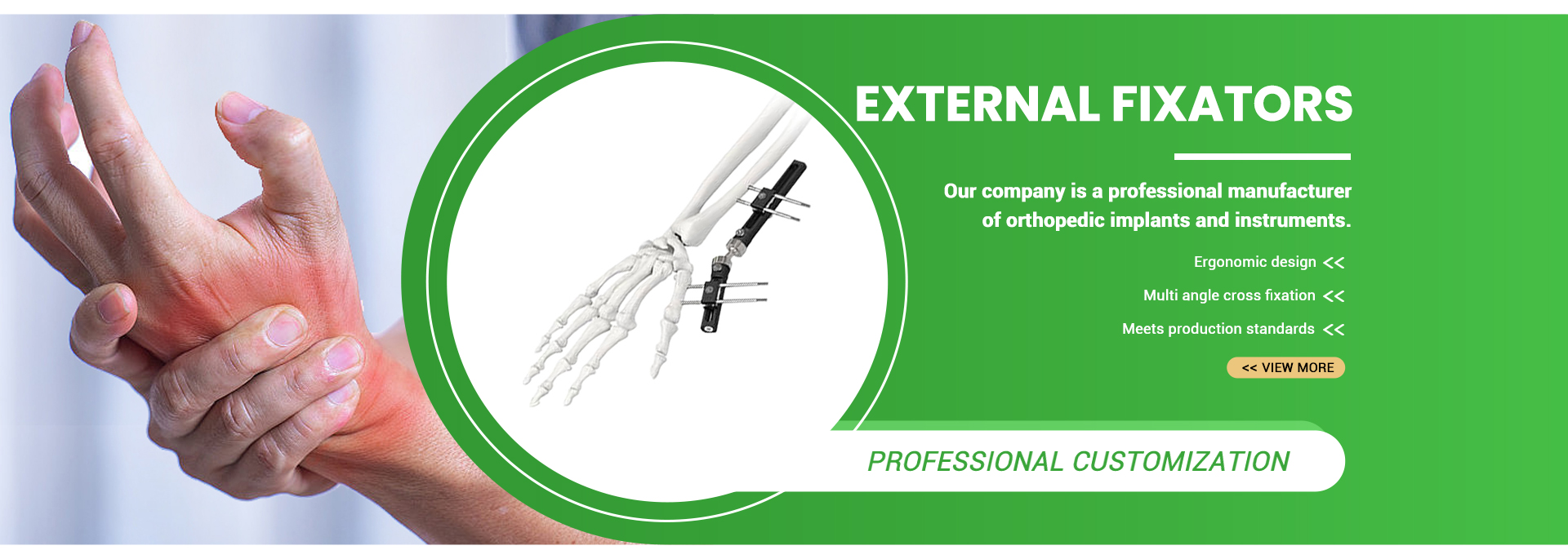
Modular External Fixation Frame System for Damage Control Orthopedics
Why Global Health Systems & Importers Partner with GMV Medical
In critical orthopedic surgery, clinical failure is quantified in patient re-admissions and severe soft-tissue compromise. Based in Jinfeng Town, Suzhou, China, Jiangsu GMV Medical Device Co., Ltd. operates state-of-the-art CNC machining cells and strict metallurgical labs assessed directly on-site by TÜV Rheinland.
Subtractive Multi-Axis CNC Machining
Precision Swiss-type turning and 5-axis vertical machining centers deliver sub-micron repeatability for ringent rod couplings, multi-pin clamps, and high-tolerance threads in medical-grade Ti-6Al-4V ELI (ASTM F136) and AISI 316L (ASTM F138).
- Cleanroom class 100,000 finishing
- Automated surface deburring & electro-polishing
- Total dimensional audit via optical projectors
TÜV Rheinland Audited Quality System
Unlike non-manufacturing brokers or shell trading companies, our full manufacturing cycle—from raw alloy bar slitting to packaging—is verified on-site by TÜV Rheinland under comprehensive ISO 13485 and Medical Device Quality Management Standards.
- 100% Raw material melt certificate traceability
- Destructive tensile & Rockwell hardness testing
- Batch-specific biocompatibility records
Agile OEM / ODM & Private Labeling
We empower international medical distributors, government tender contractors, and hospital networks to deploy branded product lines with bespoke clamp geometries, laser-engraved catalog markings, and custom-molded sterilizable kit trays.
- 3D CAD/CAM custom prototyping within 10 days
- Laser-etched UDI and QR identification
- Multilingual regulatory dossier compilation
Biomechanics of External Fixation: Bridging Damage Control and Callotasis
External fixation systems serve as the vanguard of modern Damage Control Orthopedics (DCO). In high-energy poly-trauma, open Gustilo-Anderson Grade III fractures, and severe articular comminution, immediate definitive internal plating risks catastrophic deep surgical site infections, severe periosteal devascularization, and soft-tissue flap necrotic failure.
Clinical Directive: Rigid external bridging frames preserve endosteal and periosteal micro-circulation, stabilize the inflammatory cascade, and restore mechanical limb length, alignment, and rotation prior to definitive surgical reconstruction.
Jiangsu GMV Medical constructs external fixators around mathematically verified stiffness gradients. Cantilever bending stiffness must be sufficiently robust to resist shear forces at the fracture non-union or osteotomy site, while avoiding pathological stress shielding. Our hybrid configurations, pairing carbon-fiber radiotranslucent connecting rods with high-yield-strength titanium alloy Schanz screws, balance rigidity and dynamic micro-axialization, promoting secondary bone healing through physiologic callus formation under controlled axial loading (Wolff's Law).
| Biomechanical Property | Ti-6Al-4V ELI (Grade 5) | Implant-Grade 316L | Carbon Fiber Composite |
|---|---|---|---|
| Elastic Modulus (GPa) | 110 – 114 (Closer to cortical bone) | 190 – 210 (High rigidity) | 70 – 85 (Optimized for rods) |
| Yield Strength (MPa) | ≥ 860 MPa | ≥ 690 MPa | N/A (Anisotropic tensile > 1200) |
| Radiolucency (C-Arm) | Low Artifact | Opaque | 100% Radiolucent |
| Corrosion Resistance | Superior (Stable Passivation) | Very High (Pitting resistant) | Inert to body fluids |
| Clinical Applications | Schanz pins, clamps, spine | Heavy trauma frames, pins | Connecting bars, ring struts |
Future Procurement Trends in the Global External Fixation Market
Sourcing dynamics for orthopedic implants are shifting rapidly under national healthcare cost-containment frameworks, stringent regulatory transitions (EU MDR 2017/745), and the imperative for supply chain sovereignty.
1. Modular Disaster Stockpiling & DCO Bundling
Militaries, emergency health authorities, and humanitarian organizations are phasing out disparate, non-standardized fixator sets. Modern procurement tenders mandate all-in-one 'Damage Control Orthopedics' emergency kits capable of spanning ankles, knees, or pelvic rings from a single modular container without specialized ancillary tools.
- Universal self-drilling Schanz pin compatibility
- Snap-fit multipoint connecting couplings
2. Direct Manufacturer Disintermediation
To counter escalating distributor margins, Tier-1 hospital networks and government group purchasing organizations (GPOs) are bypassing traditional domestic resellers. Sourcing direct from verified Chinese contract manufacturers reduces procurement outlays by 35% to 55% while maintaining strict Western quality compliance.
- Direct factory lot-release inspection
- Lower capitalization barriers for clinical tenders
3. UDI Compliance & Traceability Demands
Regulatory authorities across the US (FDA GUDID), Europe (EUDAMED), and Asia-Pacific mandate serialized laser-marking on all reusable fixator clamps and connecting bars. Hospital sterile processing departments rely on automated 2D DataMatrix scanning to monitor autoclave cycle fatigue and eliminate cross-contamination risks.
- High-definition fiber laser engraving
- End-to-end serialized digital lot tracking
Engineering Next-Generation External Fixation Devices
The discipline of external fixation is progressing from rudimentary static stabilization into high-precision, software-driven biological reconstruction. Discover the clinical and materials engineering frontiers driven by GMV Medical.
Computer-Assisted Hexapod Spatial Frames
Circular Ilizarov fixation has evolved into hexapod multi-axial systems. Utilizing patient radiograph measurements inputted into proprietary web-based algorithms, surgeons manipulate six telescopic struts simultaneously to resolve complex multi-planar angular deformities, translational shifts, and limb length discrepancies with sub-millimeter precision.
Bioactive Pin-Bone Interfaces & Antimicrobial Coatings
Pin tract infection (PTI) remains the Achilles' heel of external fixation, often precipitating early pin loosening or osteomyelitis. Advanced Schanz screws feature vacuum plasma-sprayed Hydroxyapatite (HA) coatings that stimulate direct osteointegration, combined with silver-nanoparticle and antibacterial finishes to eradicate biofilm formation during prolonged stabilization periods.
Radiotranslucent Carbon & PEEK Structural Struts
High-speed intraoperative fluoroscopy requires an unobstructed view of the fracture reduction plane. Traditional stainless steel connecting bars create visual blind spots that obscure accurate anatomical alignment. Our next-generation high-modulus carbon fiber matrix and carbon-reinforced PEEK components provide 100% radiolucency with zero compromise in torsional rigidity.
Frequently Asked Questions (FAQ) for International Buyers
Essential technical, clinical, and regulatory clarifications address the primary questions asked by hospital procurement departments, biomedical engineers, and medical supply importers.
What raw material certifications accompany GMV Medical external fixators?
Are GMV Medical fixator assemblies compatible with magnetic resonance imaging (MRI)?
How does GMV ensure ringent clamp tightening reliability in the operating room?
What is the standard production lead time for OEM/ODM contract manufacturing orders?
Can international clients perform virtual or on-site facility audits?
What international regulatory documentation and registration assistance is provided?
Equip Your Orthopedic Distribution Portfolio with China's Premier Exporter
Whether you require complete emergency Damage Control Orthopedic fixator trays, customized carbon-fiber hexapod components, or precision OEM instrument manufacturing, GMV Medical delivers uncompromised Swiss-level tolerances directly from our verified production hub in Suzhou.
