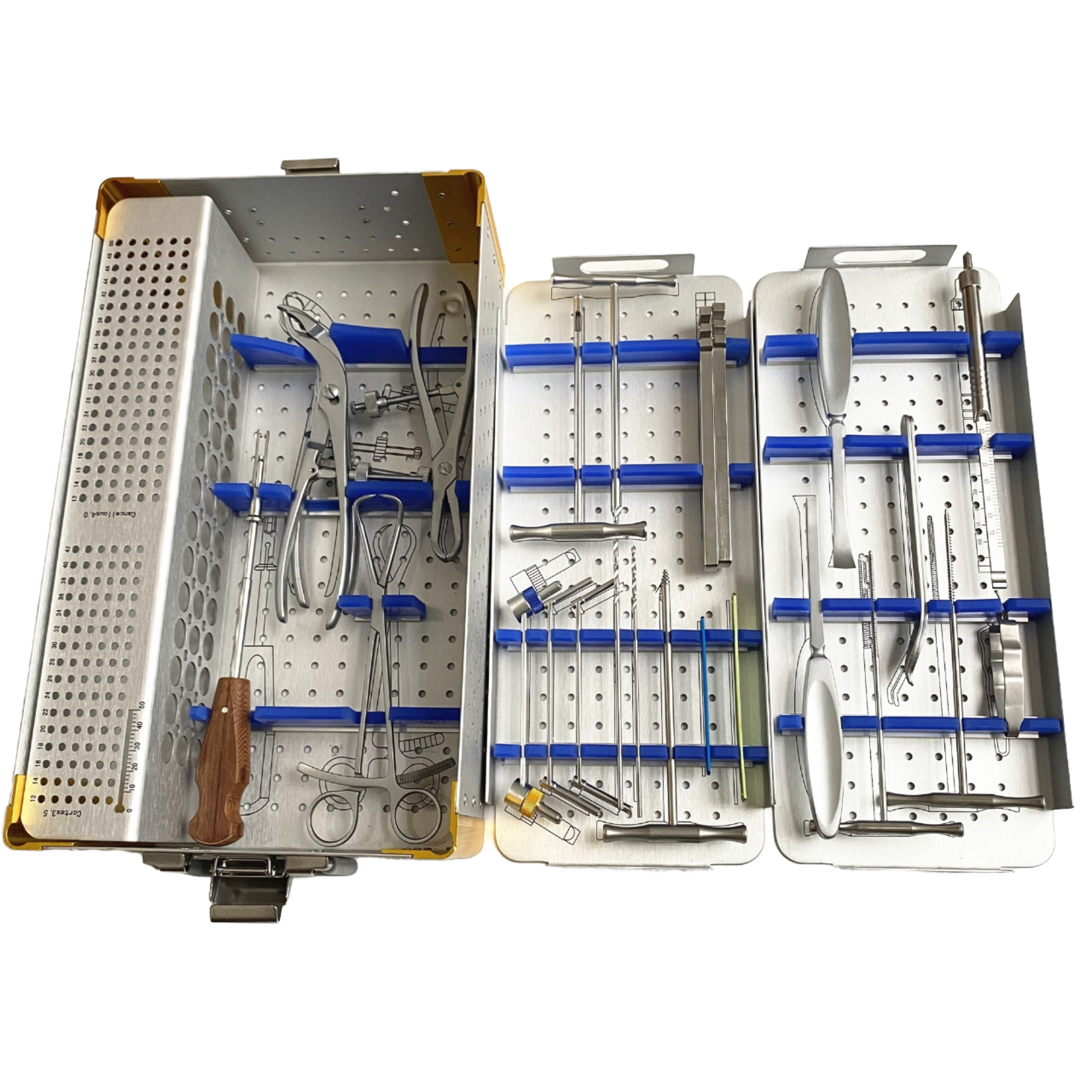
Surgical Grade Portfolio
Orthopedic Rongeurs, Limb Systems & Surgical Power Instruments
Comprehensive orthopedic and neurosurgical instruments engineered for extreme edge retention, ergonomic leverage, and structural resilience during strenuous operative procedures.

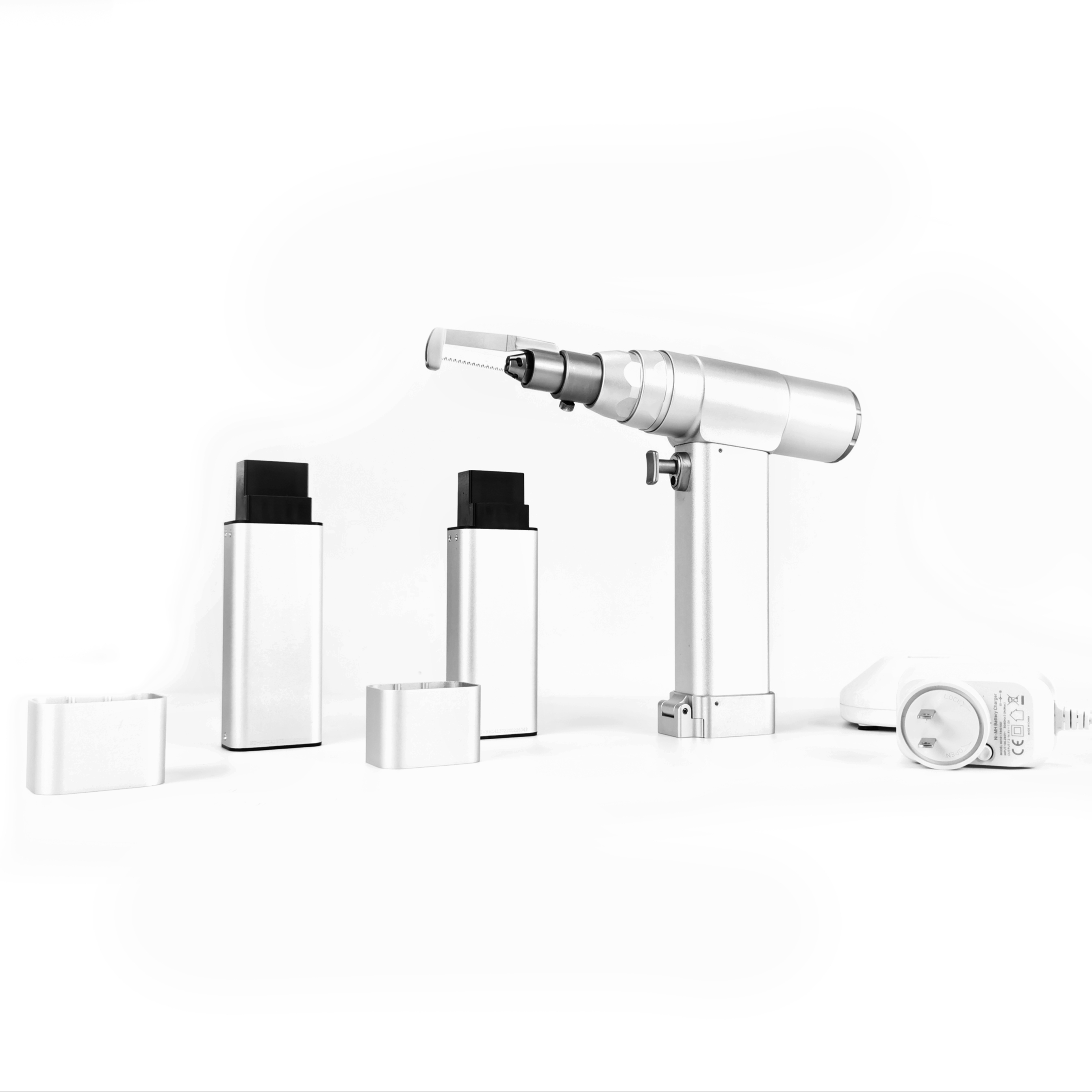
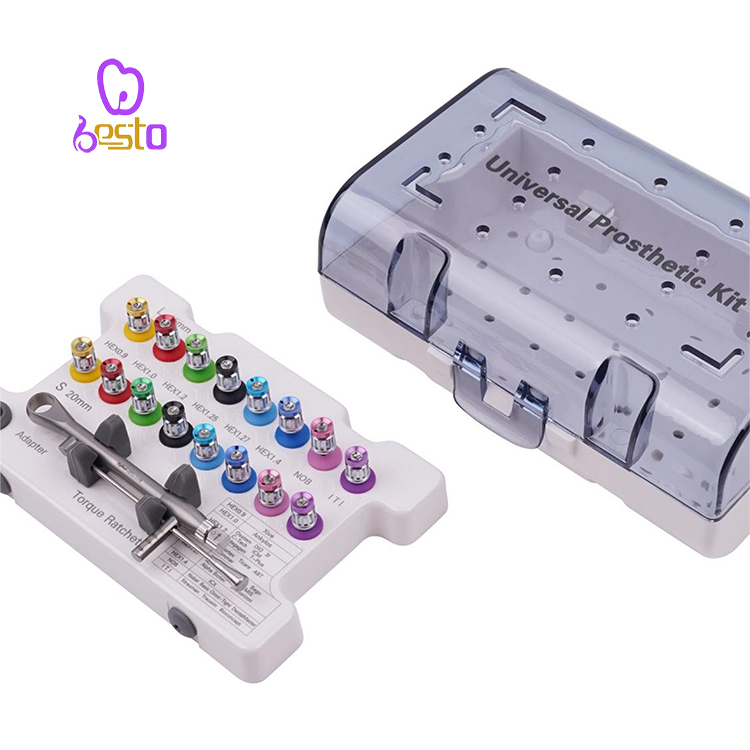

Technical Specification & Global Procurement Whitepaper: Orthopedic Rongeurs
In modern orthopedic, neurosurgical, and maxillofacial procedures, the orthopedic bone rongeur remains one of the most mechanically stressed manual surgical instruments. Designed specifically for cutting tough fibrous tissue, resecting osteophytes, unroofing vertebral laminae, and sculpting delicate bone contours, a bone rongeur must combine surgical precision with extreme structural durability. Choosing an accomplished China rongeur manufacturer allows healthcare distributors and original equipment manufacturers (OEMs) to procure instruments that balance European metallurgical excellence with high-efficiency manufacturing capabilities.
1. Kinematic Mechanics: Single-Action vs. Compound Double-Action Systems
Surgeons routinely face fatigue during multi-hour decompression procedures, such as laminectomies or extensive total joint revision surgeries. A crucial consideration for orthopedic procurement teams is the leverage mechanism of the rongeur:
Single-Action Rongeurs (e.g., Friedman, Ruskin-Mini): Possess a direct hinge axis. While delivering direct tactile feedback, they demand proportional manual grip strength from the surgeon. They are ideal for shallow, soft-tissue-adjacent peripheral bones like the distal radius or metacarpals.
Compound Double-Action Leverage (e.g., Stille-Luer, Beyer, Zaufal): Utilize dual-fulcrum cross-linkage mechanics. This configuration reduces required hand force by over 55% while distributing mechanical shear across multiple heavy-duty pivot pins. For procurement executives selecting sets for high-volume spine and trauma units, dual-fulcrum engineering drastically lowers intraoperative blade slippage and reduces surgeon hand tremor.
Engineering Benchmark: GMV Medical instruments undergo laser micro-welding on pivot pins and high-precision CNC wire-EDM cutting for hinge recesses, eliminating lateral jaw wobble even after more than 1,000 autoclave cycles.
2. Material Metallurgy: Martensitic Stainless Steels & Tungsten Carbide Inlays
The operational lifecycle of a bone rongeur depends strictly on the chemical purity and heat-treatment uniformity of its surgical steel. High-end China manufacturers implement German-grade DIN 1.4117 and 1.4125 (AISI 440C/420B) martensitic steels. Cutting scoops are vacuum heat-treated to achieve a Rockwell hardness of 54 to 58 HRC, ensuring the micro-cutting lip retains its sharpness without succumbing to edge brittleness or chipping when encountering sclerotic cortical bone.
| Metallurgical Attribute | Standard Medical 420 Stainless | Vacuum Martensitic 440C | Tungsten Carbide (TC) Inlay Jaw |
|---|---|---|---|
| Surface Hardness (HRC) | 50 - 52 HRC | 56 - 58 HRC | 68 - 72 HRC |
| Edge Retention Life | Moderate (Resharpen 6-12 mos) | High (Resharpen 18-24 mos) | Exceptional (5+ years under normal usage) |
| Tensile Yield Strength | ~1400 MPa | ~1900 MPa | Composite Structural Bonding |
| Corrosion Resistance (Passivation) | Good (ASTM A967 Standard) | Superior Nitric/Citric Treated | Immune to Micro-Electrolytic Pitting |
| Target Clinical Procedure | General Minor Trauma, Extremities | Complex Trauma, Reconstructive | Cervical/Lumbar Spine, Skull Base |
3. Future Sourcing Trends: The Rise of Detachable "Take-Apart" Kerrison Systems
Hygienic reprocessing standards across North American and European healthcare authorities (such as AAMI ST79 and EN ISO 17664) are driving unprecedented changes in procurement tenders. Traditional bone punch and Kerrison rongeurs possess closed sliding tracks where bone meal, lipids, and denatured blood coagulate. Biofilm buildup within inaccessible internal channels poses severe cross-contamination risks and induces bio-corrosive friction that degrades tool action.
Consequently, forward-looking distributors are shifting budgets toward Take-Apart Kerrison Rongeurs. These models feature tool-free quick-release disassembly hinges that allow sterilization personnel to fully expose internal tracks during pre-wash ultrasonic cleaning. In addition, physical vapor deposition (PVD) coatings—such as Titanium Aluminum Nitride (TiAlN) and diamond-like carbon (DLC)—are transforming instrument longevity by eliminating operating room light glare while reducing sliding surface friction coefficients below 0.15.
Market Evolution
Emerging Technology & Global Procurement Trends
Stay ahead of regulatory, surgical, and supply chain shifts redefining orthopedic instrument acquisition over the next five years.
PVD Ceramic & Anti-Reflective Coatings
Black TiAlN ceramic layers increase surface hardness up to 80 HRC, protecting critical cutting edges from premature dulling and ending ocular fatigue caused by high-lux surgical LED lights.
Ergonomic Featherweight Alloy Handles
Integrating medical titanium-alloy handles with hardened surgical steel jaw heads cuts overall instrument weight by 35%, significantly diminishing hand-strain during protracted multilevel spinal procedures.
MDR (EU) 2017/745 & FDA UDI Strictness
Tenders now mandate direct-part laser marking of GS1-compliant 2D DataMatrix codes, ensuring verifiable tracking through each cleaning, sterilization, and operational iteration.
GMV Advantage
Why World-Class Orthopedic Brands Rely on GMV Medical
Based in Jinfeng Town, Suzhou, Jiangsu GMV Medical Device Co., Ltd. operates a high-precision, vertically integrated plant assessed directly by TÜV Rheinland.
Dedicated In-House Precision Machining
State-of-the-art CNC machining centers, five-axis wire electrical discharge machining (EDM), and high-precision milling eliminate third-party subcontractor variance, delivering dimensional tolerances within ±0.005mm.
TÜV Rheinland On-Site Audited Plant
Our operational capabilities, comprehensive quality assurance infrastructure, cleanrooms, and testing facilities have been rigorously inspected and documented on-site by TÜV Rheinland engineers.
Comprehensive OEM & ODM Customization
From CAD modifications to prototype creation, laser-marking your private label, and custom-formed surgical instrument cases, we transform surgeon drawings into CE-ready market solutions.
Exhaustive In-House Mechanical Testing
Our quality verification lab features calibrated hardness testing, digital optical projectors, dynamic tensile fatigue testers, and multi-cycle autoclave passivation validation baths.
Full System Compatibility
We manufacture both the internal fixation devices (locking plates, IM nails, pedicle screws) and the specialized manual/power instruments, guaranteeing perfect tactile fit inside the sterile field.
Multilingual International Trade Capacity
With more than two decades of proven export pedigree, our documentation desk provides full tender assistance, material declarations, registration dossiers, and support in multiple languages.
Procurement Clarity
Frequently Asked Questions: Sourcing Rongeurs from China
Essential guidance covering technical requirements, order parameters, QA inspections, and regulatory compliance.
What steel grades are used in GMV orthopedic rongeurs, and how is edge retention verified?
Our rongeurs are crafted primarily from high-grade German and medical-specification Japanese martensitic stainless steel (DIN 1.4117 / AISI 420B and 440C). Cutting edges undergo controlled atmospheric vacuum heat treating to establish a hardness rating between 54 and 58 HRC. Edge geometry and cutting performance are verified via optical contour projectors and automated mechanical cycle testing against calibrated artificial bone density blocks (Sawbones) before final passivation.
Can GMV produce custom rongeur jaws, angles, and custom handle lengths under OEM/ODM agreements?
Yes. As an authentic custom manufacturer with 27+ years of clinical tool-making expertise, we offer complete OEM/ODM solutions. Clients can provide engineering drawings, physical samples, or specific clinical design briefs. Our R&D team utilizes solid modeling CAD and CNC tool-paths to create prototype samples, followed by custom laser marking, specialized anodized color-coding, and bespoke graphic sterilizing tray layouts.
How does GMV ensure rongeurs resist micro-corrosion, pitting, and staining during repeated autoclaving?
Corrosion issues in jointed instruments typically stem from residual free iron left during grinding or electrical EDM processes. GMV subjects all finished surgical instruments to automated multi-stage ultrasonic degreasing, followed by electro-chemical polishing and chemical passivation conforming to ASTM A967 and ISO 13485 guidelines. This creates a uniform, passive chromium-oxide surface barrier that readily withstands standard steam vacuum autoclave protocols (134°C).
What documentation and on-site audit facilities are available to overseas tender committees?
Our production premises in Jinfeng Town, Suzhou, China, have been fully assessed on-site by TÜV Rheinland. We gladly provide comprehensive audit assessment reports, raw material mill test certificates (MTC), biocompatibility validation data, and ISO quality management certificates. International distributor evaluation teams can conduct either scheduled in-person plant audits or interactive live high-definition video inspections of our active production floor and QC testing lab.
What are the typical minimum order quantities (MOQ) and production lead times for instrument orders?
For standard catalog configurations (e.g., Stille-Luer, Kerrison, Beyer, Ruskin), our baseline MOQ starts as low as 5 to 10 units per specification to assist with registration sampling. Completely custom-tooled OEM instruments typically require a 50-piece minimum. Standard production turnaround spans 3 to 5 weeks, while fast-track delivery is available for stock configurations via DHL, FedEx, or international air cargo.
