China Top Elastic Nail Factories & Exporters Whitepaper
Clinical Biomechanics, Metallurgy of Ti-6Al-4V ELI & 316LVM, Precision CNC Fabrication, and Global Sourcing Protocols for Pediatric Trauma Fixation Systems
27+ Years
Engineering Heritage
121 Staff
Verified Specialists
20 Yrs
Export Verification
100% In-House
CNC Lathe & QC Lab
Direct Factory Catalog
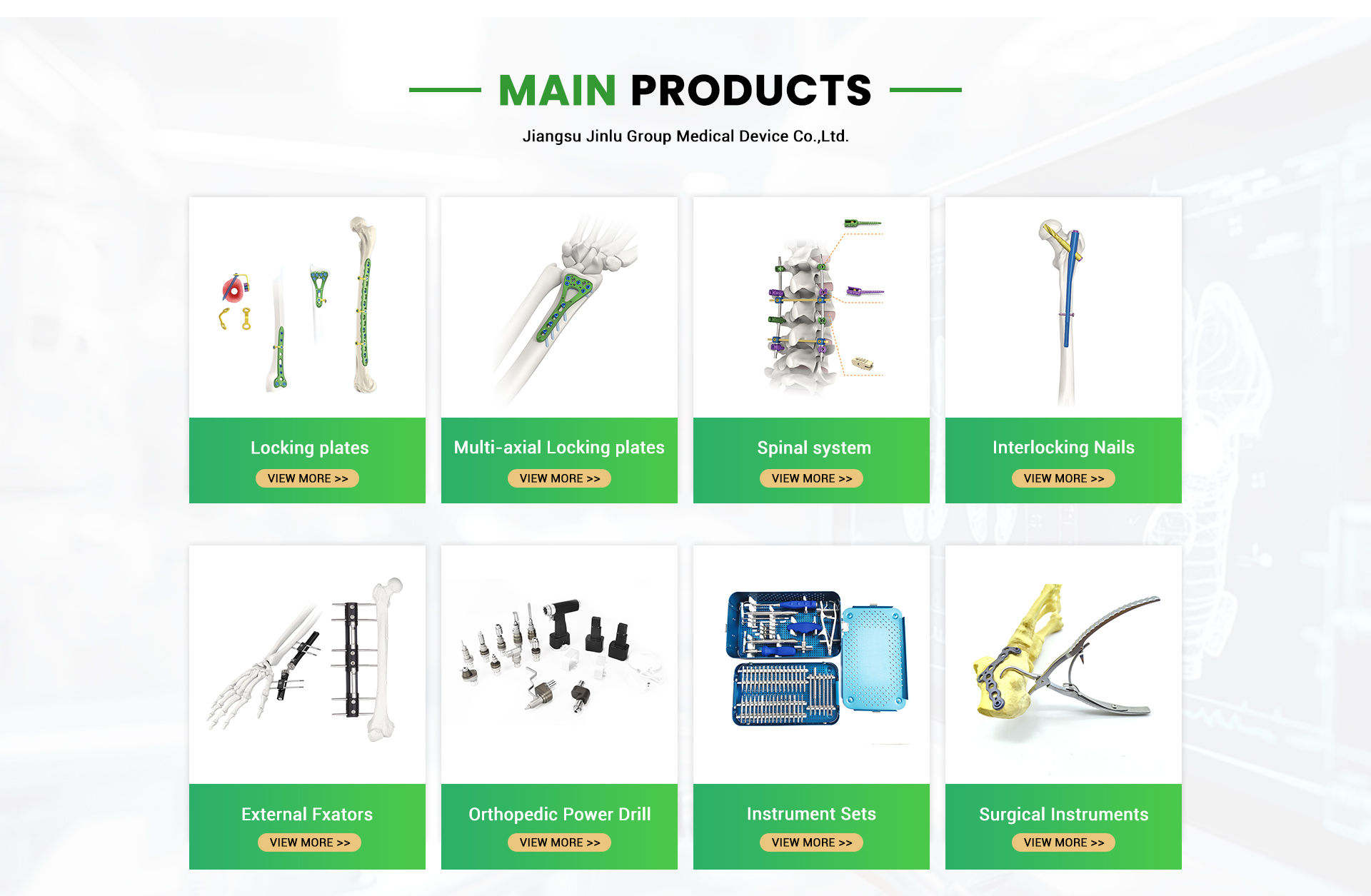
Featured Orthopedic Trauma Implants & Surgical Tool Systems
System-matched implants, precision powered saws, modular external fixators, and diagnostic models engineered for turnkey hospital supply chains and tender submissions.
High-torque brushless DC motor delivering variable oscillating frequencies up to 15,000 cpm. Hermetically sealed for ethylene oxide and steam sterilizers.
Dedicated instrument array including quick-coupling screwdrivers, periosteal elevators, tap sleeves, and calibrated depth gauges for radial/ulnar reduction.
High-precision ceramic bearing handpiece maintaining concentricity within 0.015 mm runout, optimal for micro-trauma and specialized reconstructive osteotomy.
The introduction of Elastic Stable Intramedullary Nailing (ESIN), commonly known as Titanium Elastic Nailing (TEN) or the Nancy nail technique, revolutionized the management of pediatric long-bone fractures across the globe. As pediatric bones possess exceptional remodeling potential, open reduction and rigid plating often pose unacceptable risks of devitalizing the periosteum, risking refracture, physeal arrest, or extensive surgical scarring. Elastic nails provide a physiologically sound internal splint based on the dynamic interaction of symmetrical, opposed pre-bent metallic rods inserted retrograde or antegrade into the medullary canal.
The Biomechanical Principle of Three-Point Contact: Each elastic nail is curved into an arc whose apex corresponds to the fracture site. When two symmetrical nails are driven through opposing cortices, the opposing concave curves generate balanced internal elastic recoil forces. This construct achieves stability through dynamic 3-point fixation at the insertion entry point, the internal cortex at the fracture apex, and the opposing endochondral flare.
According to beam deflection mechanics and Euler-Bernoulli beam theory, the flexural rigidity (bending stiffness) of an intramedullary nail is governed by its product of Elastic Modulus ($E$) and Area Moment of Inertia ($I$), where $I = \frac{\pi d^4}{64}$ for a solid round cross-section of diameter $d$. This quartic relationship implies that even minor manufacturing tolerances in nail diameter radically alter stiffness. For instance, increasing a wire from 3.0 mm to 3.5 mm increases bending resistance by over 85%. Chinese precision manufacturing standards ensure continuous cold-drawn dimensional consistency within ±0.02 mm, providing predictable elastic recoil curves essential for surgeons to maintain anatomical alignment without excessive cortical pressure necrosis.
Symmetrical Dynamic Micro-Motion
Unlike rigid reamed nails, elastic nails permit minute axial micromovement during physiological loading. This dynamic axial elasticity stimulates abundant external periosteal bridging callus, accelerating union times in pediatric patients to 4–7 weeks.
Rotational Stabilization via Dual-Arch
By diverging the nails toward metaphyseal cortices and locking their tips into cancellous bone, rotational forces are resisted through torsional frictional lock against opposing inner cortical walls, eliminating the need for transcortical locking screws.
Bullet-Tip Entry & Physeal Sparing
Nail tips feature an asymmetric, beveled bullet-tip design. The angled curvature allows the nail to bounce off internal cortical margins during insertion, preventing unexpected cortical perforation and avoiding penetration of delicate epiphyseal growth plates.
2. Metallurgy: ASTM F136 Ti-6Al-4V ELI vs. ISO 5832-1 Medical Stainless Steel
Selecting the correct metallurgical substrate is the single most critical quality benchmark when vetting Chinese elastic nail manufacturers. Hospital procurement officers and OEM brands must align raw material specifications with patient anatomy, regulatory registries, and mechanical performance requirements.
Currently, two metallurgical formulations dominate global tenders: Grade 5 Titanium Alloy (Ti-6Al-4V ELI / Extra Low Interstitial, ASTM F136 / ISO 5832-3) and Implant-Grade Stainless Steel (316LVM / ASTM F138 / ISO 5832-1). Titanium offers an elastic modulus (110 GPa) much closer to human cortical bone (18–20 GPa) than stainless steel (200 GPa). This modulus mismatch mitigation prevents stress shielding, reduces the risk of post-removal osteopenia, and permits optimal elastic memory after intraoperative pre-bending.
Evaluation Parameter
Titanium Alloy (Ti-6Al-4V ELI)
Medical Stainless Steel (316LVM)
Clinical / Procurement Significance
Modulus of Elasticity ($E$)
105 – 114 GPa
195 – 205 GPa
Titanium allows easier elastic bending and superior spring-back mechanics.
Ultimate Tensile Strength
≥ 860 MPa
≥ 800 – 1000 MPa (cold worked)
Ensures nail withstands cyclic deformation without plastic fatigue failure.
Yield Strength (0.2% Offset)
≥ 795 MPa
≥ 700 MPa
Determines the threshold at which nail takes permanent deformation.
MRI & CT Artifacts
Minimal scatter; MRI Conditional
High ferromagnetic artifact shadow
Essential for accurate postoperative neurovascular imaging.
Biocompatibility / Passive Film
Dense $TiO_2$ Passivation Layer
Chromium Oxide Film ($Cr_2O_3$)
Titanium exhibits superior resistance to fretting corrosion in marrow fluids.
Flynn Clinical Indication Fit
Standard pediatric diaphyseal trauma
Heavier children (>45-50 kg) or transverse humerus
Top-tier factories in Jiangsu GMV Medical utilize automated Swiss-type sliding headstock lathes and multi-axis CNC grinders to machine the nail's distal spatula geometry, followed by high-vacuum heat treatment that relieves internal lattice stress while preserving the elastic yield point. Every production run undergoes spectrographic chemical titration, hardness testing, tensile pull testing, and surface profilometry to ensure mirror finishes below $Ra \le 0.4\,\mu\text{m}$, preventing soft tissue irritation and nail track adhesions during explantation.
3. Enterprise Strengths & Factory Infrastructure: Jiangsu GMV Medical
Jiangsu GMV Medical Device Co., Ltd., situated in Jinfeng Town, Suzhou, represents the gold standard of Chinese orthopedic device manufacturing. Rather than operating as an unverified broker or trading entity, GMV Medical controls a fully integrated, on-site verified production footprint subjected to thorough third-party quality and factory audits by TÜV Rheinland.
27+ Years of Surgical Tooling Mastery
Founded with a focus on musculoskeletal biomechanics, GMV Medical pairs nearly three decades of engineering experience with verified export operations across 50+ countries and regions.
Integrated In-House CNC Infrastructure
Equipped with imported multi-axis CNC machining centers, precision CNC lathes, automatic slitting machinery, and electrolytic polishing lines, ensuring exact concentricity and tight tolerance control.
Full-Chain Quality Verification Lab
On-site mechanical testing facility outfitted with digital tensile testers, Rockwell hardness meters, and high-precision optical profile projectors to validate every heat-treatment batch.
With over 121 verified staff members, including specialized biomedical design engineers, regulatory compliance specialists, and multilingual export managers, GMV Medical offers global distributors unmatched responsiveness. Whether your enterprise requires standard CE-certified catalogs, private-label laser etching, custom instrument ergonomics, or custom OEM end-cap geometries to prevent nail back-out, GMV Medical’s production lines turn clinical concepts into validated medical hardware.
4. Global Sourcing Dynamics & Future Technological Trends
The global market for pediatric trauma devices and elastic intramedullary systems is undergoing profound structural shifts. Driven by hospital value-based purchasing, stricter healthcare spending, and heightened regulatory barriers, hospital procurement directors are re-evaluating their dependency on premium multinationals in favor of direct contract manufacturing relationships with verified Chinese centers of excellence.
01
Transition to Minimally Invasive Surgery (MIS)
Emerging economies are moving away from traditional open plating toward fluoroscopy-guided closed reduction. Elastic nails are capturing market share due to lower infection rates, minimal blood loss, and preservation of the periosteal hematoma.
02
End-Cap System Integration
First-generation elastic nails suffered from soft tissue irritation and proximal migration at the insertion portal. Future procurement orders increasingly specify proprietary threaded end-caps that lock the nail cut-end directly to the cortical entry site.
03
Bioresorbable Metallic Formulations
R&D pipelines are actively evaluating absorbable magnesium alloy (Mg-Ca-Zn) elastic nails. These matrices provide mechanical splinting throughout the critical 8-week healing window before gradually resorbing, eliminating secondary extraction procedures.
04
EU MDR (2017/745) Harmonization
The expiration of MDD certificates has created widespread supply shortages in Europe. Forward-looking buyers are auditing Chinese OEM manufacturers capable of delivering comprehensive Clinical Evaluation Reports (CER) and ISO 13485:2016 technical files.
05
Modular Sterilization Cassettes
Operating rooms demand pre-configured procedural sets. Sourcing strategies now bundle color-coded titanium elastic nails (from 1.5mm to 4.5mm in 0.5mm increments) with calibrated reamers, benders, cutter pliers, and universal inserter handles in one sterilizable case.
06
Surface Modifications & Anodization
Advanced Type II electrochemical anodization treatments are replacing basic acid etching. This alters the surface micro-topography, reducing bacterial adherence (anti-biofilm) while maintaining low frictional resistance during nail insertion.
5. Quality Assurance Checklist: Auditing an Elastic Nail Exporter in China
Before awarding an annual OEM contract or public hospital supply tender, quality managers and biomedical sourcing auditors should mandate compliance verification across the following 6 technical audit milestones:
A
Raw Material Certifications (MTR)
Demand certified Mill Test Reports verifying conformance to ASTM F136 (ELI Grade Titanium) or ASTM F138 (316LVM). Cross-examine chemical composition percentages, particularly interstitial elements: Nitrogen ≤ 0.05%, Carbon ≤ 0.08%, Hydrogen ≤ 0.012%, Iron ≤ 0.25%, and Oxygen ≤ 0.13%.
B
Geometric Tolerances & Runout
Ensure the supplier verifies straightness and cross-sectional circularity using optical profile projectors. Outer diameter runout must remain within ±0.02 mm across the entire length of the bar to avoid intraoperative jamming inside insertion chucks.
C
Surface Finish & Passivation
Confirm automated ultrasonic chemical cleaning and nitric/citric acid passivation according to ASTM F86 standards. Inadequate passivation leads to micro-pitting corrosion when exposed to body fluids, causing premature implant degradation.
D
Fatigue Bending Life Cycles
Review supplier internal laboratory test logs conducting four-point dynamic fatigue testing (modeled on ASTM F1264 guidelines for intramedullary fixation devices). The nail must withstand at least 250,000 cycles under simulated physiological weight-bearing without fracture.
E
Traceability & Laser Marking
Every individual elastic nail must feature crisp, high-contrast fiber-laser annealing displaying diameter size, alloy grade, and manufacturer lot batch number. The marking process must not induce micro-cracks or heat-affected structural weak points.
F
Packaging & Bioburden Limits
For non-sterile deliveries, verify double-pouch medical barrier packaging with color-changing indicators. If ordering gamma-irradiated sterile-packed variants, demand bioburden testing and endotoxin validation below < 2.15 USP EU/device.
6. Frequently Asked Questions: B2B Sourcing of Elastic Nailing Systems
How is the optimal elastic nail diameter determined for pediatric diaphyseal fractures?
Under Flynn’s universally accepted clinical formula, the combined diameter of the two identical elastic nails should equal approximately 80% of the narrowest width of the intramedullary canal (or roughly 40% of the canal diameter per nail, calculated as: $D_{\text{nail}} = (\text{Narrowest Canal Diameter} \times 0.4)\,\text{mm}$). Sourcing sets must include diameters in increments of 0.5 mm (commonly 1.5, 2.0, 2.5, 3.0, 3.5, 4.0, and 4.5 mm) with consistent color-coded anodization to facilitate swift intraoperative identification.
Why must surgeons use two nails of identical diameter in the same bone segment?
Employing nails of asymmetrical diameters disrupts the mechanical equilibrium of the three-point opposing internal arc forces. Because bending stiffness is proportional to the fourth power of the diameter ($d^4$), a nail that is 0.5 mm thicker will exert significantly higher restitution force than its partner, causing the fracture to deviate toward the side of the thicker nail, producing a secondary varus or valgus angular deformity.
What are the essential instruments required in a complete ESIN surgical kit?
A turnkey surgical container sourced from Jiangsu GMV Medical includes: (1) Ergonomic T-handle inserter with universal quick-coupling chuck; (2) Calibrated bone awls and drill sleeves for entry portal creation; (3) Three-roller contouring bender; (4) Beveled nail guides to manipulate bone fragments; (5) Heavy-duty tungsten carbide rod cutting pliers; (6) Slotted impactors; and (7) Specialized extraction pliers with reverse-striking mallets.
What is the standard lead time, MOQ, and private labeling capability for OEM contracts?
For standard stocked catalogs, orders dispatch within 7–15 working days. For custom OEM/ODM projects requiring private label laser branding, tailored instrument case layouts, and customized packaging, initial production lead times average 30–45 days. Minimum Order Quantities (MOQs) depend on the item: standard implant batches begin around 50–100 pieces per size, while complete instrument kits can be tailored starting from single-set trial runs for hospital qualification.
Can Jiangsu GMV Medical supply registration dossiers (CE, ISO, Free Sale) for local MOH tenders?
Yes. GMV Medical’s international regulatory affairs team provides complete Technical Files according to ISO 13485 standards, including Certificates of Free Sale (CFS), TÜV Rheinland assessment reports, material biocompatibility test data, and localized country registration dossiers (supporting Latin America COFEPRIS/ANVISA, Middle East SFDA, Southeast Asia, and European distributor audits).
Connect Directly with GMV Medical's Orthopedic Engineering Team
Looking to benchmark your supply chain pricing against an audited, ISO-verified factory? Contact our Suzhou technical export center to request our latest 2025/2026 Trauma & Spine catalog, material test reports, or a custom OEM/ODM production proposal.