Featured Orthopedic Solutions & Surgical Tooling
Seamlessly integrating precision metallic implants, bone saw systems, and anatomical reduction instruments for trauma and reconstruction surgeries worldwide.

Factory Price Metal Sternum Saw Medical Electric Saw Orthopedic Drill Saw
CE-certified high-frequency reciprocating bone saw system engineered for rapid osteotomy with minimal thermal necrosis.

Orthopedic Instruments External Fixator Ringent Rod Coupling
Heavy-duty clamping dynamic couplings designed for Kirschner pin integration and rapid structural fracture stabilization.

Lab Teaching Models 3 Parts Human Muscular Skull Skeleton Models
Anatomical precision models designed for pre-operative planning, wire placement simulation, and medical staff education.

Electric Surgical Dental Implant Tool Box Steel Construction
High-grade autoclavable stainless steel organizing container tailored for micro-fixation wires and surgical handpieces.

Small Fragment Orthopedic Upper Limb Instrument Kit Steel
Comprehensive reduction forceps, K-wire tighteners, drill sleeves, and benders optimized for upper extremity osteosynthesis.

High-Speed Surgical Repair Handpiece Turbine Power Source
Micro-vibration precision surgical drill handpiece delivering optimal torque transmission for delicate wire and burr handling.

Lab Teaching Models the Separated Human Skull Model PVC
Dimensional multi-bone craniomaxillofacial study unit for internal fixation demonstration and complex reconstructive modeling.
Trauma Kirschner Wires & Cerclage Fixation Systems
Implant-grade Ti-6Al-4V ELI & 316L medical stainless steel orthopedic wires precision-ground with trocar, diamond, and thread tips.
Comprehensive Strategic Whitepaper: Sourcing Medical Orthopedic Wire in China
In global orthopedic surgery, skeletal traction, small fragment osteosynthesis, and temporary intraoperative pinning rely fundamentally on high-precision Kirschner wires (K-wires), Steinmann pins, and cerclage cable systems. Selecting a qualified China wholesale orthopedic wire supplier requires navigating critical clinical variables: tensile modulus, torsional ductile fatigue, surface passivity, and metallurgical purity. With stringent international regulatory standards evolving—including the European Union Medical Device Regulation (EU MDR 2017/745) and United States FDA 21 CFR Part 820—procurement officers cannot merely assess base commodity metrics. Technical validation across raw material metallurgy, micro-geometry finishing, electropolished surface kinetics, and end-to-end device traceability is essential for operating room safety and procurement efficiency.
1. Clinical Metallurgy: Material Characterization & Biomechanical Load Dynamics
Orthopedic wires are subjected to multi-axis mechanical stresses, including axial tensile loads during tension-band wiring of the patella or olecranon, and cyclic shear forces during percutaneous pinning of pediatric supracondylar humerus fractures. Sourcing from certified Chinese manufacturers requires verifying chemical homogeneity and grain boundary integrity.
Most commercial implementations feature two principal biomaterials: Medical Grade 316L/316LVM Stainless Steel (ASTM F138 / ISO 5832-1) and Extra Low Interstitial Titanium Alloy Ti-6Al-4V ELI (ASTM F136 / ISO 5832-3). Stainless steel wires remain the standard for temporary reduction and tension banding due to their superior ductility, plastic workability, and tactile resistance against bending deformation. Vacuum Arc Remelted (VAR) or Electroslag Remelted (ESR) 316LVM variants reduce non-metallic inclusions, significantly decreasing the risk of stress corrosion cracking (SCC) under physiologic saline immersion.
Conversely, titanium alloy K-wires and cerclage cables provide high fatigue life with a lower elastic modulus (approximately 110 GPa vs. 200 GPa for steel), closer to that of cortical bone. This reduces stress shielding in definitive internal fixations and provides substantial MRI compatibility by minimizing imaging artifacts in postoperative follow-up scans.
| Biomaterial Benchmark | Tensile Strength (Rm MPa) | Modulus of Elasticity (GPa) | Corrosion Resistance Mechanism | Clinical Recommendation |
|---|---|---|---|---|
| 316LVM Stainless Steel (ASTM F138) | 900 – 1450 (Cold Drawn) | 190 – 205 | Cr2O3 Passive Layer (Passivated per ASTM A967) | Tension band wiring, temporary skeletal traction, pin reduction |
| Ti-6Al-4V ELI Grade 5 (ASTM F136) | 860 – 1050 | 110 – 114 | Dense TiO2 Native Oxide (Anodized Type II) | Pediatric trauma, long-term multi-pin constructs, MRI safety |
| Pure Medical Titanium Gr 4 (ASTM F67) | 550 – 750 | 103 – 107 | Spontaneous TiO2 Passivation Barrier | Craniomaxillofacial, plastic reconstructive fixation |
| Nitinol (Nickel-Titanium) (ASTM F2063) | 1000 – 1500 (Superelastic) | 40 – 75 (Austenite) | TiO2 Enriched Passivation Film | Dynamic continuous compression staples and cerclage loops |
2. Precision Machining, Tip Geometries & Surface Integrity
The insertion performance of orthopedic wire depends substantially on distal tip geometry and shaft surface finish. A high-tier manufacturing plant utilizes high-precision Swiss-type sliding headstock lathes and automated centerless cylindrical grinding systems capable of holding outer diameter tolerances within ±0.005 mm (ISO Grade h6 to h8). Distinct procedural demands call for varied tip configurations:
Trocar Tip (Three-Faceted Bevel): Engineered with compound facets ground at acute shearing angles. Provides high cutting efficiency in hard cortical bone, reducing the axial downforce required by the orthopedic surgeon and preventing pin walking or thermal osteonecrosis during high-speed rotation.
Diamond (Spade) Tip: Features a bidirectional dual-relief bevel suitable for oscillating drill chucks, creating a balanced cutting pathway that minimizes directional wander during transfixation pin installation.
Threaded Tip Profiles: Cold-rolled or micro-machined threads over the distal 5 mm to 25 mm engage far cortices, counteracting axial migration—a recognized complication in percutaneous pediatric pin fixations.
Surface treatment directly influences biocompatibility. After CNC grinding, wires undergo multi-stage ultrasonic degreasing, validated chemical passivation, and optional electropolishing. This process eliminates micro-burrs and reduces surface roughness to Ra < 0.2 µm, preventing platelet adhesion and facilitating clean, pain-free extraction when wires are removed post-consolidation.
3. Future Procurement Trends in the Global Orthopedic Wire Market
The global orthopedic market is undergoing rapid technological and regulatory transformations that reshape procurement strategies:
1. Shift Toward Ready-to-Use Sterile Packaging: Hospitals and ambulatory surgical centers (ASCs) are increasingly avoiding non-sterile bulk wire caddies due to decontamination costs and bioburden risks. Demand is growing for single-use, gamma- or EO-sterilized double-barrier peel-pouches that include barcode labeling and 2D GS1 DataMatrix identifiers, ready for immediate operating room deployment.
2. Bioabsorbable & Bio-Composite Polymers: While metallic wires remain dominant in load-bearing scenarios, resorbable osteosynthesis pins made from Poly-L-lactic acid (PLLA) and magnesium-strontium alloys are advancing in small-joint and pediatric applications, reducing the need for secondary implant removal procedures.
3. Advanced Surface Functionality: Development continues around antibacterial nano-coatings (such as silver ions and bioactive glass sputter deposition) designed to lower pin-tract infection rates during extended external fixation.
4. Consolidation of Trauma Supply Chains: Rather than issuing piecemeal tenders, hospital groups favor OEM suppliers providing integrated modular kits: pre-loaded K-wire dispensers, wire tighteners, double-action cutters, and external fixation couplings within standardized sterilization containers.
Why Partner with GMV Medical Device Co., Ltd.
Direct manufacturing execution in Suzhou, China—delivering verifiable consistency, engineering control, and high-volume production for international distributors.
In-House Precision CNC Machining
Over 120 dedicated high-precision CNC multi-axis milling, Swiss-turning, and automated centerless grinding machines ensure consistent mechanical tolerances across bulk orders.
TÜV Rheinland Audited Quality
Our production facilities undergo comprehensive on-site technical audits covering full manufacturing compliance, mechanical testing routines, and cleanroom packaging validation.
100% Raw Material Traceability
Every wire batch is produced using medical-grade ASTM F138 stainless steel or ASTM F136 titanium bar stock, supported by chemical and mechanical mill test certificates.
OEM & ODM Custom Engineering
Tailored outer diameters (0.8mm to 6.0mm), lengths up to 500mm, specialized trocar/diamond grinds, and custom laser-etching with lot-specific depth graduation lines.
Comprehensive Trauma Ecosystem
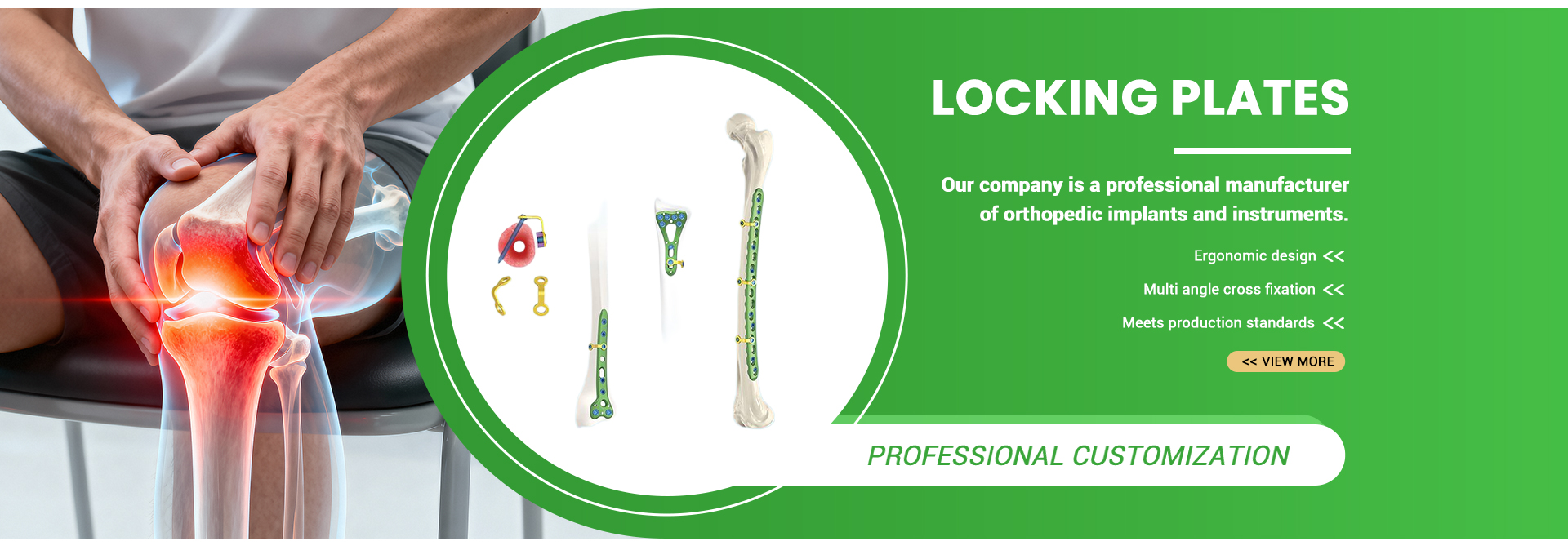
Complete product pairing across locking plates, intramedullary nails, external fixator couplings, power tool saws, and autoclavable instrumentation cases.
Global Tender Regulatory Support
Comprehensive export documentation assistance—including technical dossiers, biocompatibility reports (ISO 10993), sterilization validation, and Certificate of Free Sale (CFS).
Orthopedic Wire Sourcing: Frequently Asked Questions
Addressing core technical, manufacturing, and regulatory questions for wholesale distributors and tender purchasing managers.
Q: What is the primary difference between ASTM F138 and ordinary 316L industrial steel?
ASTM F138 defines surgical implant-grade stainless steel requiring vacuum-arc remelting (316LVM) to minimize carbon content and micro-inclusions, while increasing chromium, molybdenum, and nickel tolerances for enhanced corrosion resistance in physiologic tissue.
Q: How do you prevent temperature-induced bone necrosis when driving Kirschner wires?
We combine precise three-facet trocar tip grinding at verified angles with diamond-buffed surfaces. This reduces friction and heat generation during high-RPM drilling, helping maintain cortical temperatures below the critical 47°C threshold.
Q: Can GMV Medical supply custom laser-etched depth calibration on K-wires?
Yes. Our automated laser-marking systems apply non-destructive, permanent metric calibrations (10 mm, 20 mm intervals) along the wire shaft, enabling surgeons to measure penetration depth without separate fluoroscopic intraoperative gauges.
Q: What packaging and sterilization formats are available for bulk OEM buyers?
We supply non-sterile bulk packages (typically 10 to 100 units per protective tube caddy) as well as medical-grade Tyvek/foil blister packs sterilized via Ethylene Oxide (EO) or Gamma irradiation, fully compliant with ISO 11607 validation standards.
Q: What quality inspection reports accompany each orthopedic wire shipment?
Shipments include complete Material Test Reports (MTR) detailing chemical heat analysis, mechanical tensile yield values, optical comparator dimensional inspections, passivated surface verification, and lot release certificates.
Q: What is the standard production lead time for high-volume custom procurement orders?
Standard inventory specifications dispatch within 5 to 7 working days. Custom OEM productions requiring specific diameters, thread configurations, or specialized packaging typically ship in 3 to 4 weeks depending on production volume.
Connect Directly with Our Orthopedic Technical Engineering Team
Inquire today to receive our comprehensive orthopedic trauma implant catalog, complete material certifications, OEM pricing structures, and sample evaluation packages.
Get Catalog