Precision Systems & Arthroplasty Reconstruction Solutions
System-matched clinical instruments, surgical power tools, fixation couplers, and anatomical models designed to meet strict surgical tolerances and international medical standards.

Lab Teaching Models Separated Human Skull Model of PVC
High-precision anatomical reproduction for pre-operative templating, biomechanical education, and surgical training protocols.

Orthopedic Instruments External Fixator Ringent Rod Coupling
High-rigidity clamping mechanism engineered with aerospace-grade alloys for damage control and limb alignment fixation.

Factory Price Metal Sternum Saw CE Certified Electric Saw
Ergonomic oscillating saw delivering reliable cutting performance for primary osteotomy and joint resection surgeries.

Electric Surgical Dental Implant Tool Box Steel Construction
Heavy-duty autoclave-ready sterilization cassette customized for surgical handpieces and specialized surgical tools.

Small Fragment Orthopedic Upper Limb Instrument Kit
Full-spectrum stainless steel manual reduction and fixation kit configured for trauma cases and extremity reconstructions.

High-Speed Surgical Repair Handpiece Turbine Steel Material
High-torque rotational accuracy and internal cooling for bone sculpting, pilot drilling, and fine implant bed preparation.

Lab Teaching Models 3 Parts Human Muscular Skull Skeleton
Detailed musculoskeletal model highlighting muscle attachment zones for orthopedic resident education and surgical planning.
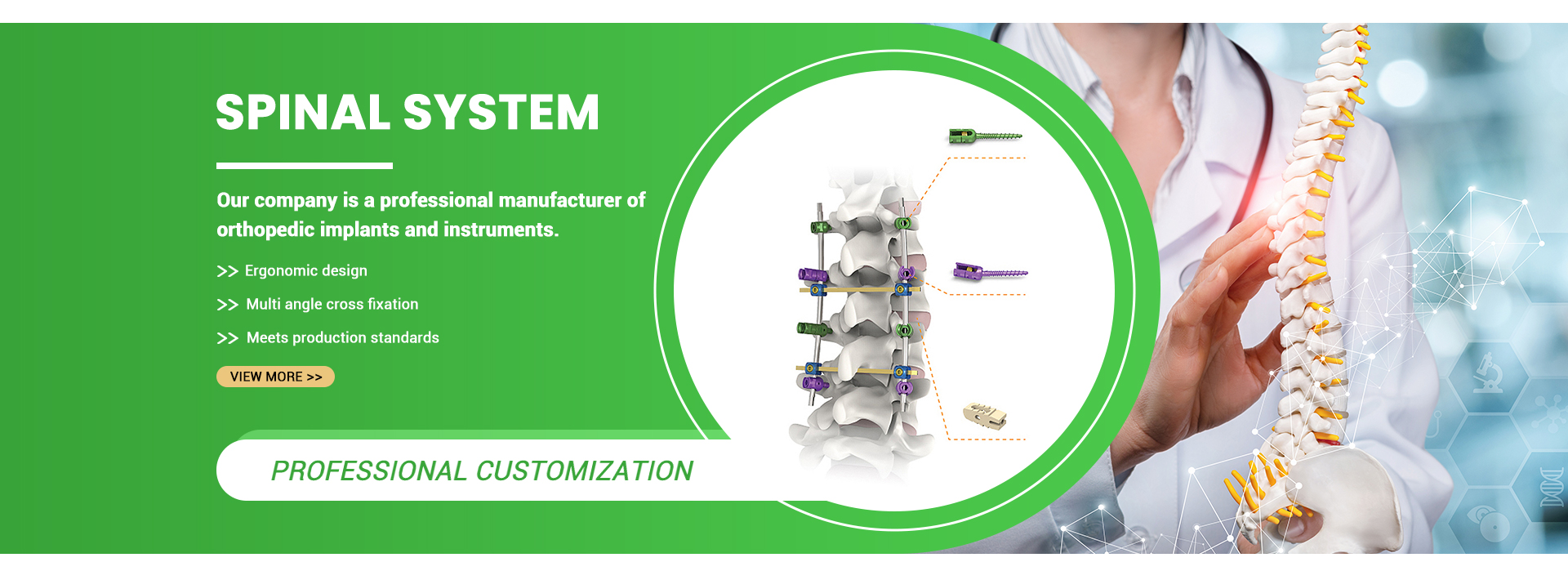
Pedicle Screws & Joint Reconstruction Construct System
Multi-axial titanium locking assemblies providing stable load transfer for spinal internal fixation and reconstructive cases.
Future Sourcing & Procurement Trends in Arthroplasty (2025–2030)
Strategic market analysis for medical device distributors, orthopedic brand owners, and hospital tender groups optimizing supply chain resilience.
Near-Net Additive & Subtractive Convergence
Global arthroplasty supply chains are shifting rapidly toward hybrid production methods. Sourcing managers now prefer OEM partners who combine 3D electron beam titanium melting (EBM) for trabecular bone-ingrowth structures with 5-axis CNC high-speed milling for precise articular bearing surfaces.
Shortened Lead Times & Low-Volume Flexibility
Distributors are moving away from massive warehouse stockpiles toward agile manufacturing programs. Modern contracts require OEM facilities to handle responsive batch runs (50 to 500 sets) with lead times under 4 weeks to adapt quickly to regional hospital tender requirements.
MDR & Strict Multi-Jurisdiction Compliance
With the European Medical Device Regulation (EU MDR 2017/745) fully implemented and US FDA 510(k) clearances becoming more data-intensive, OEMs must supply clean technical documentation, full material heat-number traceability, and verified bio-cleaning validation protocols.
Engineering Trends: Next-Generation Joint Arthroplasty Innovations
The total joint replacement (TJR) sector is moving past conventional cobalt-chromium femoral stems and standard ultra-high-molecular-weight polyethylene (UHMWPE) bearings. As revision arthroplasty cases increase and joint replacement indications expand to younger, more active cohorts, suppliers must adapt to major engineering transformations:
First, highly cross-linked polyethylene stabilized with Vitamin E (VE-HXLPE) has become the benchmark for hip acetabular liners and knee tibial inserts. By preventing long-term in-vivo oxidative degradation, this bearing material protects against aseptic loosening caused by particulate wear debris. Second, cementless biological fixation systems are replacing polymethylmethacrylate (PMMA) bone cements, driven by modern 3D trabecular titanium surfaces with 60%–75% open interconnected porosity, matching human cancellous bone elasticity.
| Evaluation Parameter | Legacy Arthroplasty Supply (Cast CoCr) | Modern OEM Standard (Forged Ti-6Al-4V ELI) | Advanced Porous Additive Construct |
|---|---|---|---|
| Elastic Modulus (GPa) | 210–230 (High stress shielding risk) | 110–114 (Moderate bone adaptation) | 3–18 (Closest match to cancellous bone) |
| Friction Coefficient | 0.08–0.14 against UHMWPE | Optimized for taper interfaces | Engineered for primary friction grip |
| Traceability Standard | Batch box level marking | Permanent 2D DataMatrix laser code | Digital UDI + laser code on component |
| Typical Lead Time | 12–16 Weeks | 6–8 Weeks | 3–4 Weeks |
Third, surgical instrument sets are shifting toward integrated, multi-use modular configurations. Our production workshop designs and builds complete system-matched instrument kits—including precise bone reamers, alignment guides, and quick-release handles—ensuring seamless tactile feedback and reliable fit during critical surgical procedures.
Why Global Brands Source From Jiangsu GMV Medical
We are a dedicated manufacturer with in-house precision equipment, rather than a trading intermediary, certified and verified on-site by TÜV Rheinland.
TÜV Rheinland Audited Facility
Our complete operational footprint in Jinfeng Town, Suzhou—covering precision workshops, cleanroom packing, and physical-chemical test labs—is fully inspected and certified on-site by TÜV Rheinland.
In-House 5-Axis Multi-Tasking CNC
Equipped with high-precision CNC lathes, multi-axis machining centers, and slitting lines, we hold tight tolerances down to ±0.005 mm across our trauma, spinal, and reconstructive component lines.
Full In-House Quality Assurance
Our in-house QA laboratories feature optical profile projectors, digital hardness testers, and multi-axis tensile testing equipment, ensuring all mechanical metrics meet international standards before release.
Comprehensive OEM & ODM Capabilities
From converting customer 2D sketches and 3D CAD files into production-ready blueprints, to custom private labeling, laser marking, and sterile packaging, we build strong competitive advantages for your brand.
Complete Regulatory Dossiers
We supply full material heat traceability certificates, biocompatibility test records, and comprehensive dimensional reports, smoothing the approval path with regional regulatory health authorities.
Experienced Multilingual Trade Desk
With more than 20 years of active global distribution, our international trade specialists provide support across multiple languages, managing customs clearance, export paperwork, and logistics worldwide.
Step-by-Step OEM/ODM Manufacturing Workflow
We use a structured stage-gate development process to turn clinical ideas and drawings into qualified, commercially ready orthopedic implants:
DFM Engineering Analysis
Evaluation of 3D CAD models, finite element analysis (FEA) reviews, and precision alloy selection.
Prototype & Tooling Setup
CNC programming, jig customization, toolpath optimization, and rapid pilot sample creation.
Surface & Passivation
Bead blasting, deburring, mirror polishing, electrochemical anodization, and ultrasonic cleaning.
Validation & Packaging
Optical dimensional verification, laser UDI marking, cleanroom sealing, and export packing.
Frequently Asked Questions (FAQ)
Key technical, regulatory, and logistical answers for international medical supply chain executives.
What specific materials are used in your orthopedic implant manufacturing?
We work exclusively with certified medical-grade raw materials sourced with complete chemical and physical mill test reports. For permanent implants, we use medical-grade titanium alloy (Ti-6Al-4V ELI conforming to ASTM F136 / ISO 5832-3), pure titanium (ASTM F67), and implant-grade 316L stainless steel (ASTM F138 / ISO 5832-1). Bearing components utilize Ultra-High-Molecular-Weight Polyethylene (UHMWPE, ASTM F648), while our surgical instruments and external fixators are machined from medical stainless steel and high-tensile aircraft aluminum alloys.
How does Jiangsu GMV Medical ensure lot-to-lot traceability for custom OEM orders?
Every production batch is assigned a unique alphanumeric traveler number that stays with the material from raw bar cutting to warehouse storage. We use high-precision fiber laser marking machines to engrave catalog numbers, batch IDs, and 2D DataMatrix (UDI) barcodes directly onto implants and instruments where geometry permits, guaranteeing full digital traceability throughout clinical shelf life.
Can our engineering team conduct an on-site or virtual quality audit before placing volume orders?
Yes, we actively encourage supplier audits. International buyers and hospital procurement directors can visit our modern facility in Jinfeng Town, Suzhou, Jiangsu Province, China. For international teams unable to travel immediately, we offer live, scheduled video audits covering our CNC workshops, cleanrooms, QA testing laboratories, and raw material storage areas.
What are your typical Minimum Order Quantities (MOQ) and production lead times?
For standard catalog products—such as locking plates, bone screws, and instrument kits—we maintain inventory buffers that allow dispatch within 5 to 10 working days. For custom OEM/ODM designs requiring dedicated tooling and initial validation runs, our standard MOQ starts at 50 to 100 sets depending on complexity, with initial prototypes delivered in 2 to 4 weeks and volume production batches completed in 30 to 45 days.
What documents are provided to assist with international product registration?
We assist our global distribution partners with comprehensive regulatory documentation packs. These include Certificates of Free Sale (CFS), raw material chemical mill test certificates, dimensional inspection records, biocompatibility test summaries, process sterilization validation data, and ISO 13485 / CE technical file dossiers to streamline approval with local Ministries of Health.
