Medical Grade
High-Speed Surgical Repair Handpiece for Dental Implants
Stainless steel construction with micro-balanced turbine technology for low-vibration bone access and precise osteotomies.
Engineered to operate seamlessly across high-load limb reconstruction, damage control surgery, and complex bone transport protocols. Explore our core OEM/ODM systems below.
Medical Grade
Stainless steel construction with micro-balanced turbine technology for low-vibration bone access and precise osteotomies.

Trauma Fixation
High-tensile modular clamp coupling engineered for quick-locking frame interconnectivity, multi-angle rod stability, and zero slip.
Anatomical Model
High-fidelity medical PVC construction calibrated for clinical bone structure training, surgical simulation, and educational demonstration.
CE Certified
Ergonomic high-torque surgical motor delivering consistent cutting oscillation speeds, low heat transfer, and complete autoclave compatibility.
OR Organizers
Laser-perforated sterilization cassette with custom silicone clamping nests designed for surgical drills, burs, and fixator accessories.
Surgical Kit
Comprehensive system featuring surgical drill guides, depth gauges, reduction forceps, and torque-limiting screwdrivers.
Anatomy Simulation
Segmented anatomical skull model displaying muscular insertion points, neurovascular pathways, and cranial suture topography.
OEM Flagship
Complete Ilizarov and TrueLok-compatible circular frames made from carbon-fiber composite or aerospace aluminum alloy for non-union treatment.
A rigorous examination of multiplanar stability, axial micromotion, osteogenesis induction, and structural alloy performance for international procurement heads.
External ring fixation systems, originating from the pioneering work of Professor Gavriil Ilizarov and evolved through modern multi-axial hexapod systems, represent the gold standard in definitive orthopedic stabilization. Unlike internal plates or intramedullary nails, the ring external fixator construct provides uniform circumferential tension. The transfixion wires (Kirschner wires) and half-pins (Schanz screws) maintain an elastic trampoline biomechanical environment. This specific axial elasticity allows controlled physiological micromotion (typically 0.2 mm to 0.5 mm) under weight-bearing loading while rigidly counteracting destructive shear, bending, and rotational torques.
This dynamic axial micro-compliance stimulates intramembranous and endochondral ossification, dramatically shortening healing cycles in complex non-unions, osteomyelitis sequelae, severe comminuted open fractures (Gustilo-Anderson Type IIIB/IIIC), and post-traumatic limb lengthening protocols. For original equipment manufacturers (OEMs) and contract brands, the engineering challenge lies in ensuring that clamp interfaces, wire-fixation bolts, and threaded connecting rods withstand repetitive cyclical loading without micro-slippage or plastic deformation.
Clinical Engineering Insight: Ring rigidity is mathematically proportional to the square of wire tension (typically tightened to 90–130 N·m) and inversely proportional to the diameter of the ring. Supplying high-yield strength alloy rings (6061-T6 aluminum or medical-grade Ti-6Al-4V) ensures that torsional rigidity remains constant even during intense patient ambulation.
Modern hospital tenders demand specific material combinations to balance patient comfort, surgical ease, radiolucency, and structural load capacity. GMV Medical manufactures ring constructs across three core metallurgy paradigms:
| Engineering Property | Aviation Aluminum Alloy (6061-T6) | Carbon Fiber Composite | Titanium Alloy (Ti-6Al-4V ELI) | 316L Implant Stainless Steel |
|---|---|---|---|---|
| Density (g/cm³) | 2.70 (Ultra-lightweight) | 1.55 (Lowest profile) | 4.43 (Balanced weight) | 7.98 (Heavy construct) |
| Tensile Yield Strength | ~276 MPa | >600 MPa (Directional) | >860 MPa (Exceptional) | ~310 MPa (Standard) |
| Radiolucency (X-Ray / C-Arm) | Semi-Radiopaque | 100% Radiolucent | Partially Radiopaque | Dense Radiopaque |
| MRI Compatibility | Conditional (Up to 3.0T) | Safe (Artifact-Free) | Safe (Minimal Artifact) | Severe Imaging Artifacts |
| Autoclave Cycle Endurance | >500 Steam Cycles (Anodized) | Requires Matrix Verification | Unlimited Industrial Cycles | Unlimited Industrial Cycles |
| Cost-Benefit Position | High-Volume Tender Preference | Premium Reconstruction Lines | High-End Trauma Systems | Low-Budget Tenders |
By operating multi-axis CNC milling machines and automated deburring processes, our factory ensures each ring exhibits micro-radiused edge contours, preventing stress-riser concentration and localized corrosion pitting during prolonged patient wear in aggressive environments.
A primary failure mode documented in clinical literature is post-operative construct loosening at the ring-rod or wire-clamp junction. Our R&D engineering has incorporated serrated locking faces (radial tooth pitch calibrated at 1.5° increments) and conical wedge interfaces into our external fixator ringent rod couplings and universal wire bolts. These mechanical geometries deliver mechanical interlocking in addition to frictional resistance, eliminating angular slippage during dynamic gait loads.
Strategic analysis for enterprise importers, hospital consortium procurement officers, and private label distributors adapting to evolving clinical criteria.
The global market is rapidly shifting from manual Ilizarov ring adjustments to software-guided six-axis spatial frames. Procurement teams now mandate hexapod strut compatibility with automated mathematical web solvers to achieve simultaneous translation, angulation, and rotational correction.
Emergency medical centers and military field hospitals prioritize pre-sterilized, rapid-deployment modular ring assemblies. Procurement tenders increasingly specify unified single-pin clamp designs that handle both 4.0 mm and 6.0 mm Schanz screws without adapter switches.
Pin-tract infection remains the leading complication in circular fixation. B2B buyers now prioritize manufacturers with verified OEM surface treatments, including hydroxyapatite (HA) plasma spraying, silver-ion vapor deposition, and diamond-like carbon (DLC) anti-adhesive coatings.
Tighter global medical device regulations demand that every ring segment, rod, and nut carry individual Direct Part Marking (DPM) 2D DataMatrix codes. Exporters must supply comprehensive Biocompatibility (ISO 10993) and Biomechanical Verification (ASTM F1541) documentation dossiers.
Procurement directors are shifting away from heavy pure-steel constructs. The dominant request is for hybrid assemblies featuring carbon composite arch rings paired with titanium grade 5 connection nodes, maximizing CT/MRI diagnostic clarity without compromising yield point integrity.
Hospital chains and regional distribution networks are bypassing intermediate trading brokers. Importers partner directly with verified Chinese manufacturing facilities capable of CAD-to-prototype conversions within 14 business days, lowering total landed system procurement costs by 35%–45%.
Headquartered in Jinfeng Town, Suzhou, China, GMV Medical operates a high-precision manufacturing complex verified on-site by TÜV Rheinland, delivering uncompromised orthopedic reliability to international partners.
Independent on-site assessment verifies our physical plant, cleanroom packaging integrity, operator skill qualifications, and zero-defect QA/QC management protocols across trauma and ring fixator lines.
Over two decades of specialized orthopedic fabrication. From early trauma bone plates to multi-component circular external fixation frames, our manufacturing maturity mitigates risk for global distributor tenders.
Every step—raw stock metallurgical verification, bar slitting, Swiss-type CNC lathe turning, 5-axis milling, ultrasonic deburring, electrochemical polishing, and laser marking—is contained under one roof.
Distributors supply technical CAD drawings (STEP, IGES, DXF) or surgical reference samples. Our engineering team converts custom ring curvatures, specialty pin clamps, and unique hexapod geometries into industrial production runs.
We eliminate assembly mismatch risks by delivering integrated kits: rings, telescopic connecting rods, pin-gripping bolts, Kirschner wire tensioners, torque wrenches, and dedicated steam-sterilizable storage trays.
Exporting across Latin America, the Middle East, Southeast Asia, and Europe. Our trade compliance department supports buyers with commercial declarations, COO, legalized documentation, and country-specific registration dossiers.
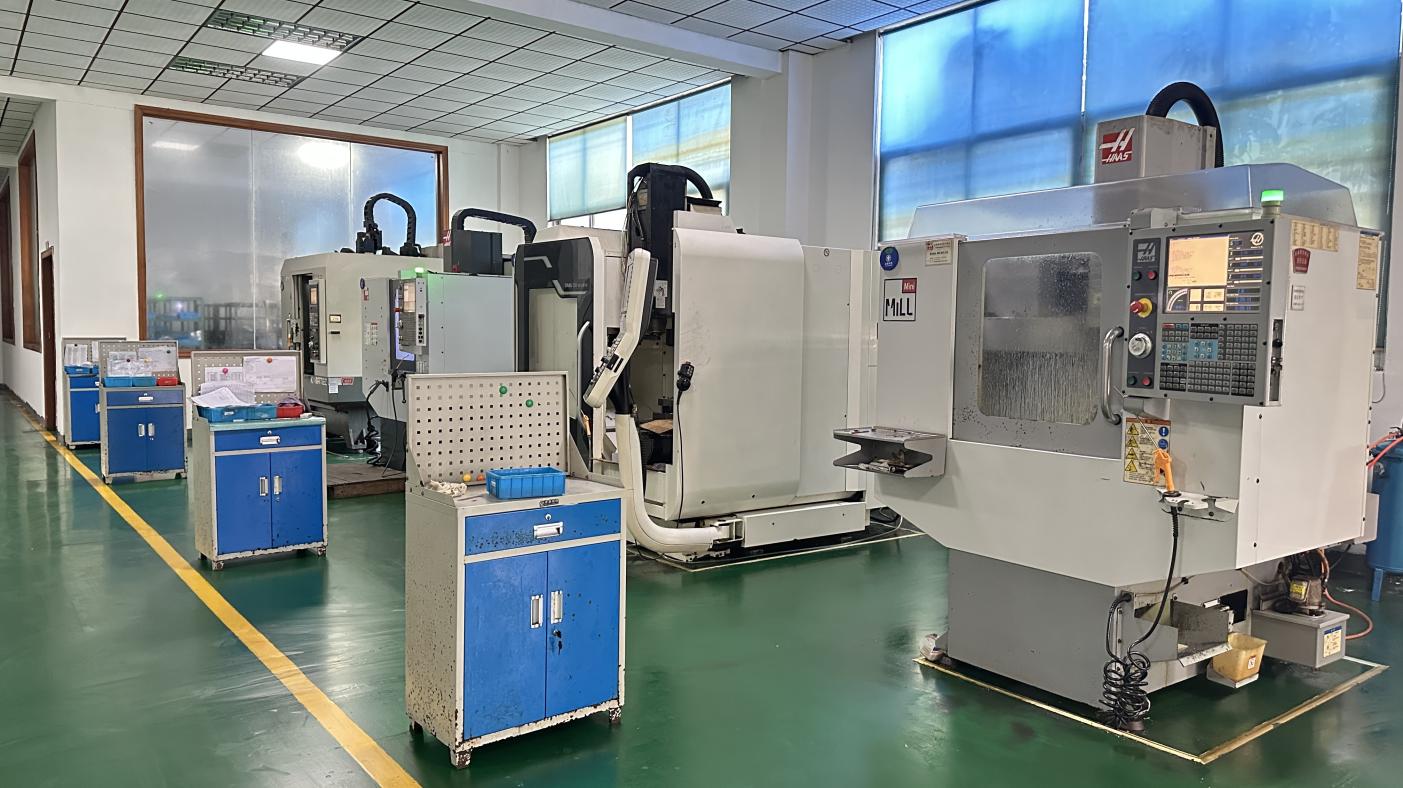
Examine the advanced instrumentation and CNC centers operating daily inside our Suzhou facility to guarantee micrometer-level mechanical precision.
Essential guidance covering technical tolerances, regulatory submissions, minimum order quantities, and OEM supply chain integration.
Our standard external fixator circular rings (Ilizarov format) are produced in internal diameter steps ranging from 80 mm up to 240 mm (80 mm, 100 mm, 120 mm, 140 mm, 160 mm, 180 mm, 200 mm, 220 mm, and 240 mm) with standard 5/8 ring, 2/3 ring, and full ring configurations. Hole spacings are precision-milled at uniform 15 mm or 8 mm increments with strict CNC hole position tolerances within ±0.03 mm. Custom geometric contours, elliptic arches, and pediatric micro-rings (50 mm–70 mm) can be manufactured directly via our ODM engineering service.
We source all implant and external frame raw stock solely from audited medical-grade bar and sheet mills. Every incoming batch of Titanium (Ti-6Al-4V ELI conforming to ASTM F136 / ISO 5832-3), Stainless Steel (316L conforming to ASTM F138 / ISO 5832-1), and Aviation Aluminum (6061-T6 hard anodized) arrives with full chemical composition analysis and physical heat-treatment mill certificates. We perform in-house optical emission spectrometry checks and optical tensile tests, retaining material record archives for over 15 years.
Yes. As a custom OEM/ODM manufacturer, we offer comprehensive turnkey private-label solutions. We utilize high-resolution fiber laser marking machines to engrave your registered brand trademark, catalog reference code, size indicator, and unique device identifier (UDI) DataMatrix codes directly onto components. In addition, our sheet-metal tooling workshop manufactures tailored anodized aluminum sterilization cassettes with silicone brackets engineered precisely to hold your complete circular frame set.
For standard catalog configurations (aluminum rings, threaded rods, universal clamps), our flexible export MOQ is typically 5 to 10 sets to facilitate clinical trial batches and national registration requirements. For custom ODM components requiring dedicated CNC tooling or custom extrusion profiles, production batches generally commence at 50 to 100 units. Standard prototype lead time is 10 to 14 days, with full containerized production orders shipping within 30 to 45 calendar days.
Our quality control laboratory operates in accordance with ASTM F1541 (Standard Specification and Test Methods for External Skeletal Fixation Devices). We conduct rigorous static axial compression tests, cantilever bending stiffness evaluations, torsional grip torque tests on wire fixation bolts, and fatigue cycling tests up to 1,000,000 cycles to evaluate long-term cyclic loading resistance without clamp slippage, thread stripping, or ring deformation.
We welcome hospital procurement boards, technical auditors, and distributor executives to visit our physical facilities in Jinfeng Town, Suzhou, China (conveniently accessible from Shanghai). For buyers unable to travel immediately, we host interactive live video audits featuring high-definition workshop tours of our CNC machining centers, QA/QC metrology lab, and clean packaging bays, complete with TÜV Rheinland verification documentation reviews.
Partner directly with Jiangsu GMV Medical Device Co., Ltd.—a TÜV Rheinland verified manufacturer with 27+ years of clinical manufacturing excellence. Request comprehensive technical engineering catalogs, material test reports, or custom OEM/ODM production quotes today.