
Executive Abstract & Market Intelligence: Orthopedic saw blades are precision Class II surgical cutting accessories where micrometric tooth geometry, alloy composition, heat treatment, and mechanical concentricity determine intraoperative osteotomy efficiency and thermal necrosis thresholds. This comprehensive guide synthesizes empirical manufacturing data, regulatory compliance frameworks (CE MDR, FDA 510(k), ISO 13485), and audited factory competencies to provide healthcare supply chain directors, hospital tender managers, and medical distributors with an authoritative supplier evaluation model.
Factory Engineered Solutions
Precision Powered Instruments & Clinical Systems
Explore direct-from-manufacturer surgical saw units, anatomic teaching systems, fixators, and trauma instruments calibrated for demanding surgical settings.



High-Speed Micro System
High-Speed Surgical Repair Handpiece for Dental Implants Turbine Power Source



27+
Years Engineering Heritage
121
TÜV Audited Technicians
20 Yrs
Verified Export Capability
100%
Batch Traceability & Testing
Comparative Analysis
Top 10 Orthopedic Saw Blade Factories & Exporters Worldwide
Benchmarking the international landscape across metallurgical standards, hub compatibility, customization agility, and total cost of ownership.
| Manufacturer / Brand | HQ Location | Core Blade Technology | Hub Interface Architecture | Quality Certifications | Primary Market Dominance |
|---|---|---|---|---|---|
| Jiangsu GMV Medical Device Co., Ltd. | Suzhou, China | Laser-cut 420J2/440C stainless steel, micro-kerf anti-necrosis grind | Multi-fit Universal, Stryker®, ConMed®, Synthes® compatible | ISO 13485, CE, TÜV Rheinland Audited | Global Tier 1/2 Hospitals, OEM Brand Private Labeling |
| Stryker Corporation | Kalamazoo, MI, USA | Precision sagittal, SmartSpace oscillating, proprietary tooth set | Proprietary System 6/7/8 dedicated locking collar | FDA 510(k), CE MDR | US & Western Europe Academic Medical Centers |
| DePuy Synthes (Johnson & Johnson) | Raynham, MA, USA | Anatomic cut guides, high-tensile fatigue-resistant blades | Trauma & Large Bone quick-coupling proprietary hubs | FDA 510(k), CE MDR | Global Hospital Chains, Multi-Center Trauma Units |
| Zimmer Biomet | Warsaw, IN, USA | Arthroplasty specific resection blades, diamond-honed edges | Zimmer Hall surgical power tool hub configuration | FDA 510(k), CE MDR | Total Joint Reconstruction, Arthroplasty Clinics |
| ConMed Corporation | Largo, FL, USA | Linvatec micro-reciprocating and sternum cutting profiles | Hall & ConMed quick-mount hub designs | FDA 510(k), CE MDR | Cardiothoracic Surgery, Sports Medicine Ambulatory Centers |
| Brasseler USA Medical | Savannah, GA, USA | Cross-compatible replacement blades, specialized tooth geometry | Universal retrofit adapters for major OEM handpieces | FDA 510(k), ISO 13485 | Hospital GPOs, Outpatient Surgical Centers (Cost containment) |
| Adeor Medical AG | Munich, Germany | High-alloy precision micro-saws for cranial and neurosurgical use | Adeor high-speed pneumatic and battery connections | CE MDR, ISO 13485 | Neurosurgery and ENT Specialty Centers (Europe, Asia) |
| B. Braun Melsungen AG (Aesculap) | Tuttlingen, Germany | German precision forged stainless blades, micro-vibration dampening | Aesculap Acculan series battery power connections | CE MDR, FDA 510(k) | European Central Sterile Supply & Operating Suites |
| Ruijin Medical Instrument Co., Ltd. | Wenzhou, China | Autoclavable electric saw and drill replacement blades | Standard multi-pin and key-chuck connections | ISO 13485, CE | Emerging Market Public Tenders, General Orthopedics |
| Aygun Surgical Instruments | Samsun, Turkey | Cold-stamped and laser-welded sternum and oscillating blades | Aygun & OEM cross-compatible connection shanks | CE MDR, ISO 13485 | Middle East, North Africa, Eastern Europe Public Hospitals |
Strategic Procurement Trends
The Evolution of Surgical Bone Cutting: 2026–2030 Trends
How robotic surgery integration, micro-kerf reduction, and single-use sterilization protocols are disrupting global procurement models.
Thermal Necrosis Mitigation
Clinical data confirms that osteocyte viability deteriorates when cortical bone temperatures exceed 47°C during resection. Next-generation blade engineering prioritizes aggressive cross-cut tooth geometry with internal saline flushing channels, clearing particulate bone swarf instantly and maintaining intraoperative cutting temperatures safely below necrosis thresholds.
Robotic Arthroplasty Calibration
With haptic-guided robotic knee and hip platforms (e.g., Mako®, ROSA®) expanding worldwide, blade tolerances have tightened from ±0.05mm to ±0.01mm. Suppliers must deliver blades featuring ultra-rigid deflection resistance, preventing structural blade flexing during automated boundary-controlled cuts across dense sclerotic bone.
Single-Use Sterile Packaging
Cross-contamination risks and the heavy overhead of Central Sterile Services Departments (CSSD) are shifting procurement toward pre-sterilized, double-blister packed single-use blades. Pre-sterile packaging eliminates hospital reprocessing costs, minimizes wear-induced blunt cuts, and ensures razor-sharp virgin tooth profiles for every patient.
Factory Verification
Jiangsu GMV In-House Precision Manufacturing
TÜV Rheinland verified facility in Jinfeng Town, Suzhou, China. 27+ years controlling tolerances under one roof with multi-axis CNC machines and dedicated testing laboratories.

Multi-Axis CNC Lathes
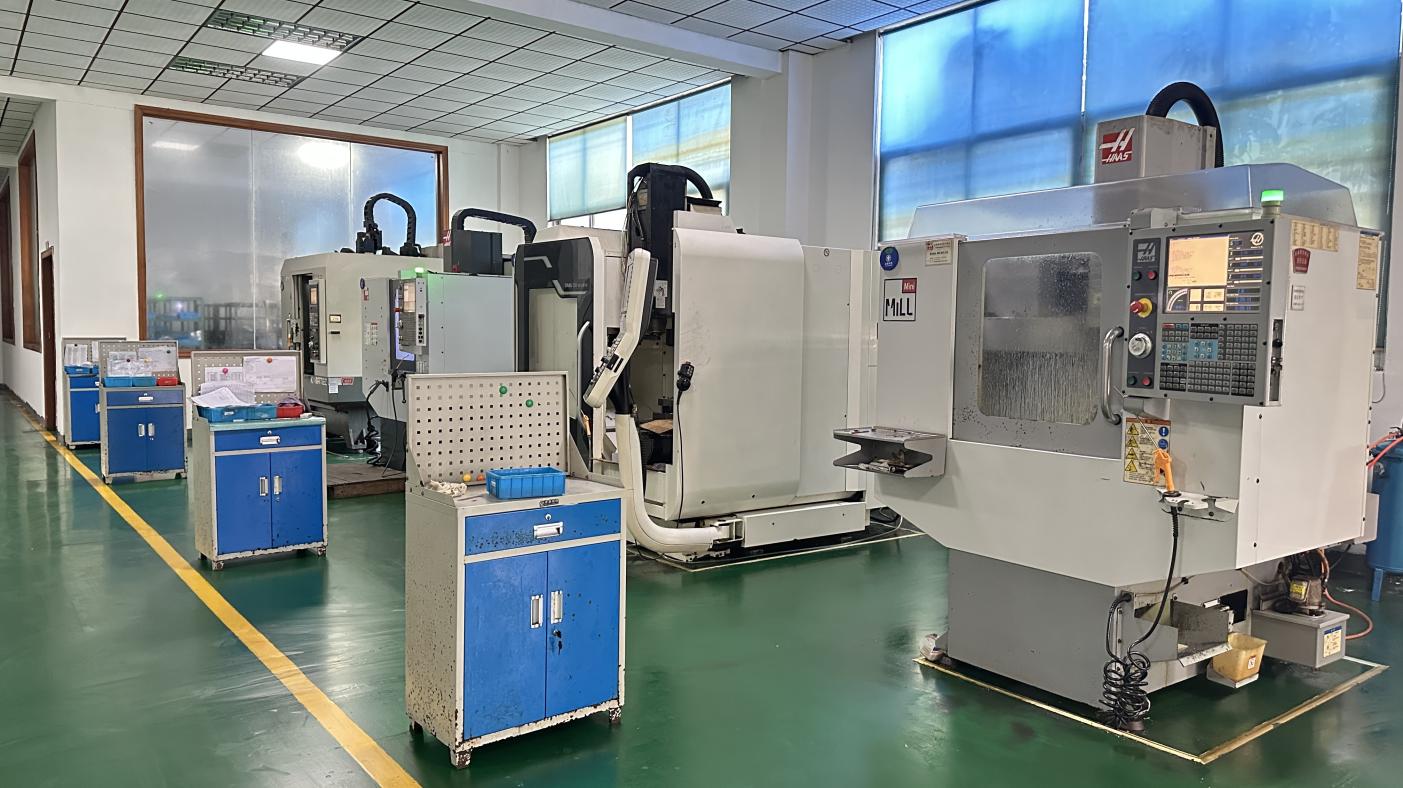
CNC Machining Centers

Optical Projector Testing

Tensile & Fatigue Tester
Due Diligence Guide
How to Audit an Orthopedic Saw Blade & Power Tool Exporter
Essential technical checkpoints required by hospital engineering and biomedical procurement boards before qualifying vendor agreements.
1
Metallurgical Grade & Hardness Verification
Ensure medical-grade martensitic stainless steel (such as AISI 420 or 440C) vacuum heat-treated to 50–55 HRC. Insufficient hardness causes rapid tooth dulling within 30 seconds of dense cortical bone contact; excessive brittleness risks catastrophic intraoperative blade fracture.
2
Hub Coupling Precision & Runout Tolerances
Blade shank interfaces must fit handpiece drive pins precisely (collet concentricity within 0.03mm). Excessive shank play leads to micro-vibrations, diminished cutting force transfer, handpiece overheating, and hand fatigue for the operating surgeon.
3
Burr-Free Micro-Finish & Passivation
All saw teeth must undergo electrochemical deburring and ASTM A967 citric/nitric acid passivation. Microscopic burrs dislodge into surgical sites causing foreign-body osteolysis, while unpassivated edges oxidize rapidly during repeated autoclave cycles.
4
Laser Marking & UDI Traceability
High-contrast, corrosion-resistant fiber laser marking must provide part numbers, cutting width/thickness, lot numbers, and GS1-compliant 2D DataMatrix Unique Device Identification (UDI) to ensure seamless regulatory tracking from factory to operating suite.
5
TÜV On-Site Independent Factory Verification
Eliminate intermediary trading vendors by validating independent third-party audit reports (such as TÜV Rheinland). Confirm manufacturing lines, cleanroom facilities, staff capacity, and coordinate measuring machines (CMM) operate at the declared physical location.
6
Full Ecosystem Compatibility (Implant & Instrument)
Procuring surgical cutting tools from a vertically integrated manufacturer producing matching plates, intramedullary nails, external fixators, and screws eliminates clinical friction and guarantees consistent performance across trauma and arthroplasty procedures.
Purchasing FAQ
Frequently Asked Questions on Orthopedic Saw Blade Procurement
Answers to critical questions asked by international buyers, biomedical engineers, and medical device distributors.
What stainless steel alloys are optimal for surgical oscillating saw blades?
Surgical saw blades require high carbon-chromium martensitic stainless steels, specifically AISI 420J2, 420B, or custom-hardened 440C. These alloys allow precise heat treatment achieving a Rockwell Hardness (HRC) between 50 and 55. This metallurgical profile provides the optimal balance of tensile rigidity—preventing blade deflection during guided total knee cuts—and edge retention, avoiding tooth micro-fracture against dense cortical bone.
How does hub shank geometry impact compatibility across major surgical power tool brands?
Power tool handpieces use distinct chuck mechanisms: Stryker uses multi-pin locking collars, ConMed/Hall utilizes radial locating pins, and Synthes employs dedicated quick-lock geometries. Jiangsu GMV manufactures both brand-matched shanks and engineered universal hubs. Universal hubs integrate proprietary multi-aperture geometry that locks securely into 95% of standard surgical power chucks without wobble, minimizing inventory overhead for distributor networks.
Can Jiangsu GMV provide customized OEM blade thicknesses and teeth profiles?
Yes. We operate complete in-house design and prototyping facilities offering full OEM/ODM services. Buyers can supply custom CAD step files, 2D drawings, or clinical samples. We can adjust kerf thicknesses from ultra-thin 0.6mm micro-saws to rigid 1.47mm knee arthroplasty blades, configure specialized cross-cut or wavy-set tooth patterns, apply laser markings with your company logo, and prepare customized private-label packaging.
How are manufacturing quality and lot-to-lot consistency verified at the factory?
Our manufacturing site in Suzhou has been assessed on-site by TÜV Rheinland. Our quality management system executes five strict inspection stages: (1) Spectral and tensile incoming raw material verification, (2) In-process CNC dimensional monitoring with high-precision optical profile projectors, (3) Surface roughness and micro-burr inspection via digital stereomicroscopy, (4) Rockwell micro-hardness verification, and (5) Complete laser-etched lot traceability documentation conforming to ISO 13485 standards.
What is the standard production lead time and minimum order quantity (MOQ) for international orders?
Standard catalog configurations and universal replacement blades carry a flexible low MOQ (typically starting at 50–100 pieces per specification) to support distributor trial audits. Production lead times for standard batches range from 15 to 25 business days. Custom OEM configurations involving unique tooling or bespoke packaging formats typically take 30 to 45 business days, supported by expedited courier dispatch worldwide.
Partner with an Audited Orthopedic Device Manufacturer
Source high-precision bone saw blades, powered drill systems, locking trauma plates, and spinal implants directly from our TÜV Rheinland verified Suzhou factory. Download our comprehensive OEM product catalog and technical specifications.
