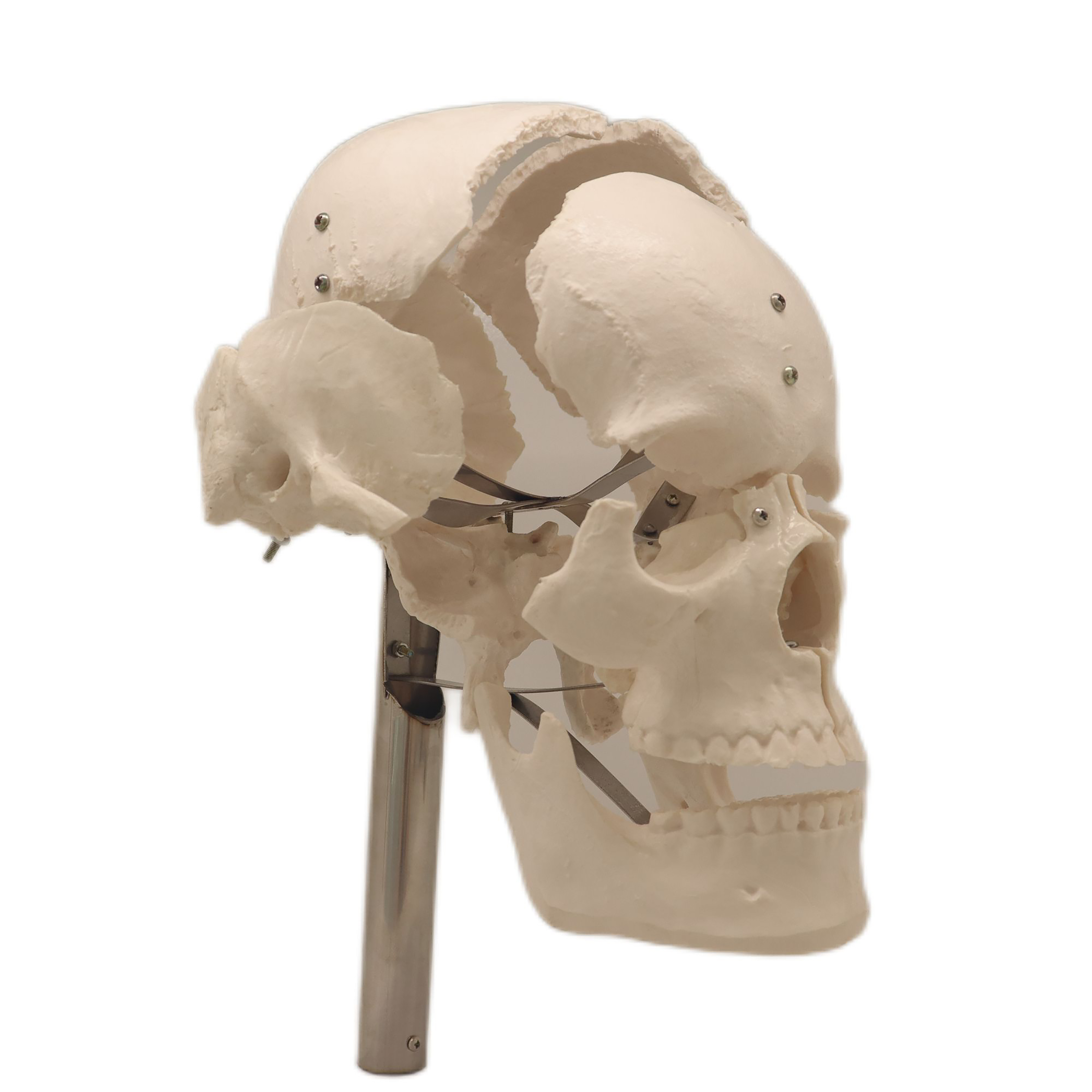
Lab Teaching Models Separated Human Skull PVC
High-fidelity medical teaching model engineered for surgical residency labs and anatomical reconstruction training, highlighting cranial suture morphology and cranial bone osteotomy planning.
Explore high-precision implant modules, specialized joint preparation tools, reconstructive assemblies, and procedural instrument systems engineered to international biocompatibility protocols.
High-fidelity medical teaching model engineered for surgical residency labs and anatomical reconstruction training, highlighting cranial suture morphology and cranial bone osteotomy planning.
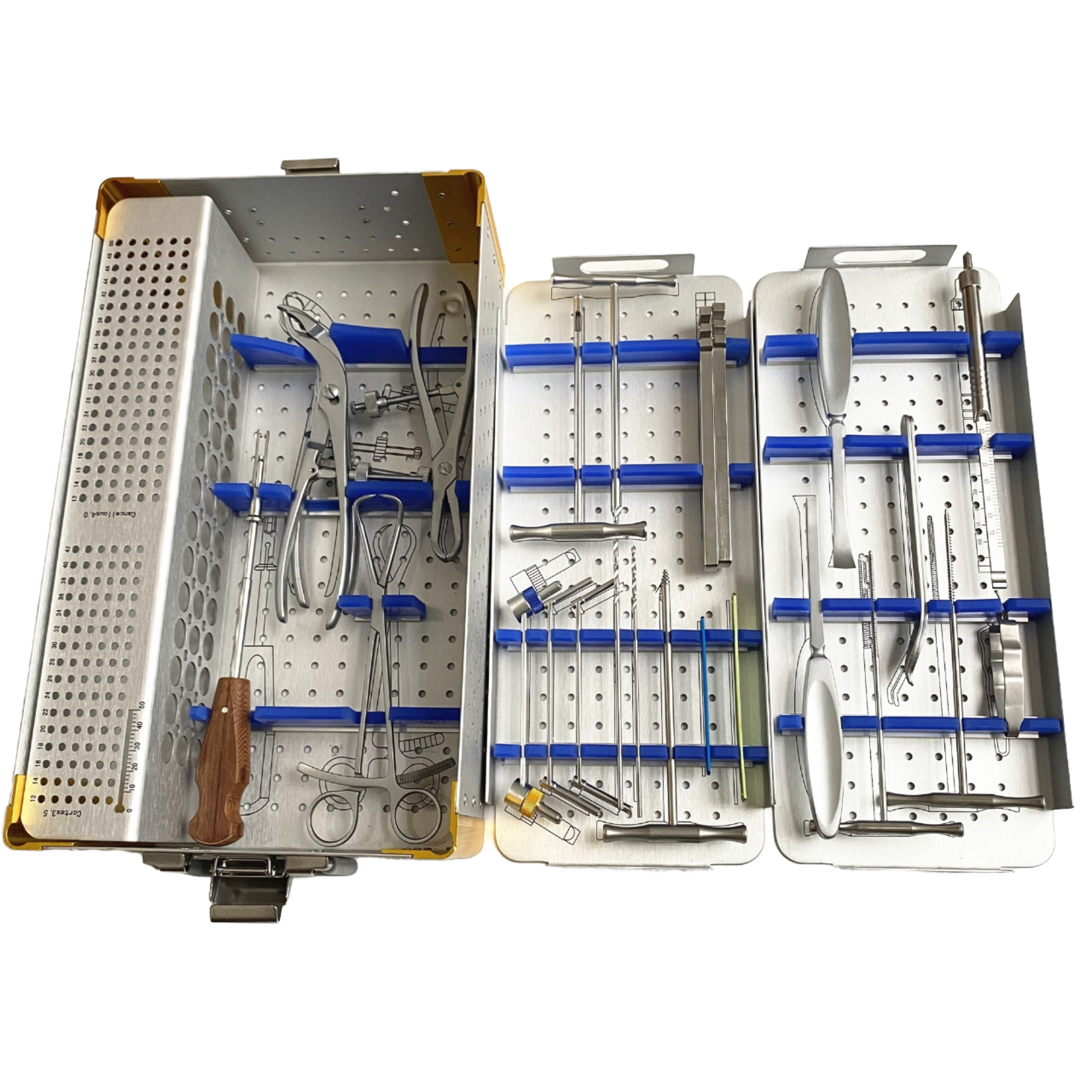
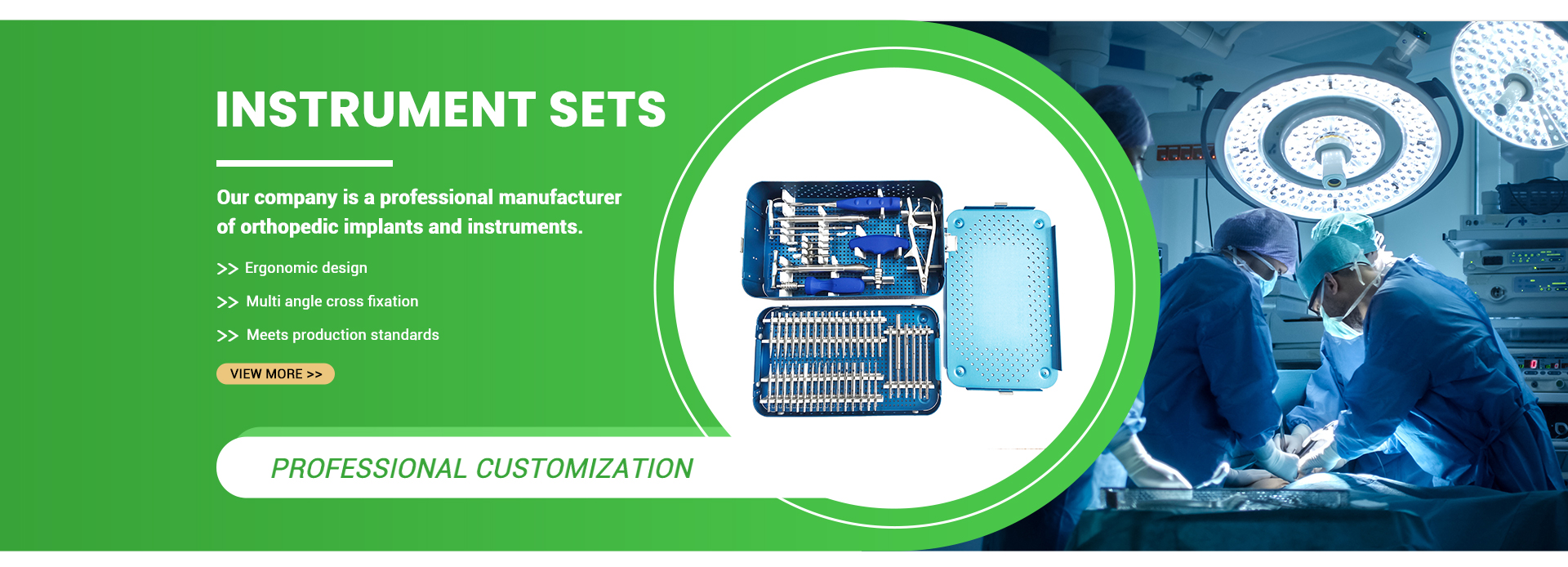
Comprehensive orthopedic trauma instrumentation set containing countersinks, quick-coupling depth gauges, locking drill sleeves, and bone-holding reduction forceps for periarticular reconstructive procedures.
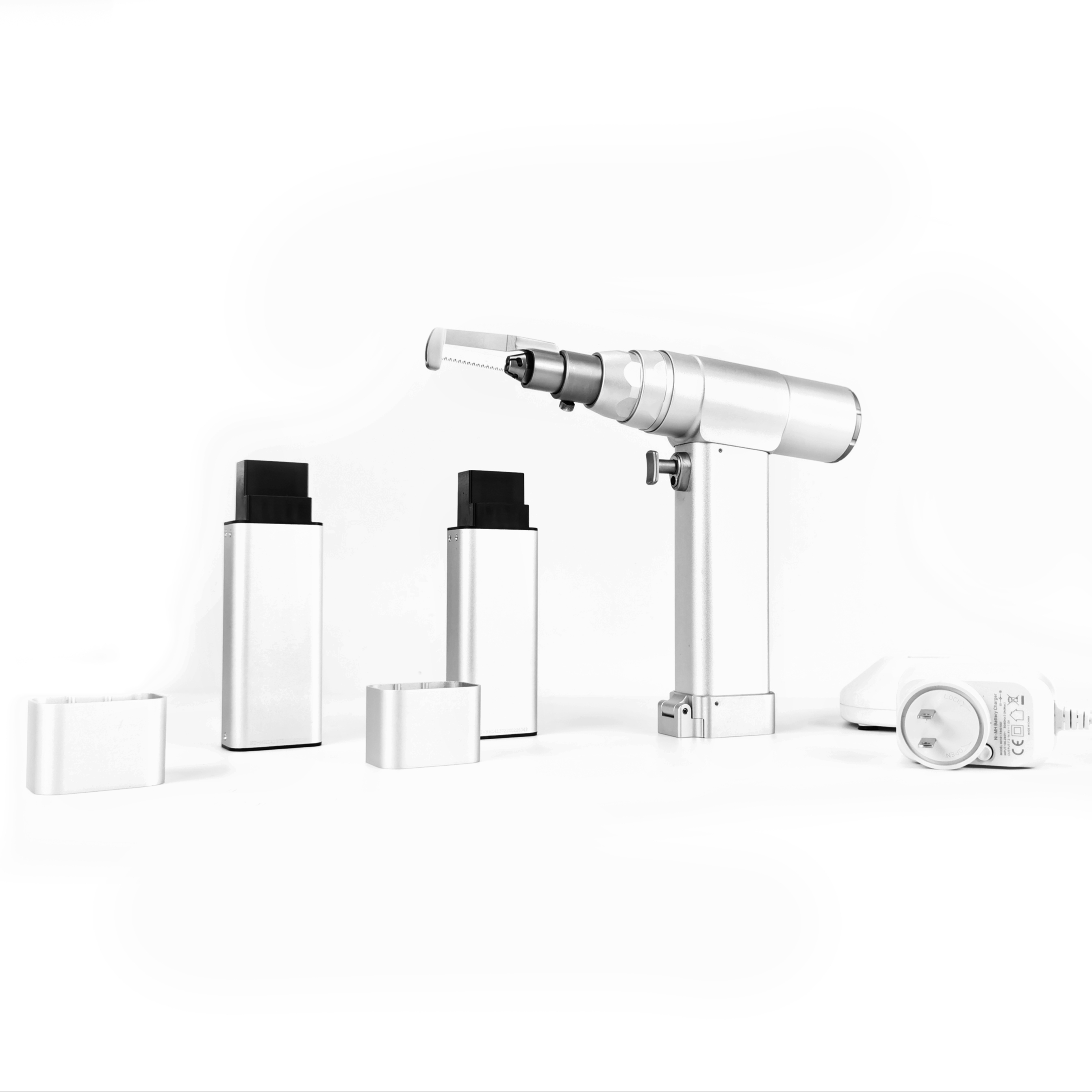
CE-certified ergonomic surgical electric saw with autoclave-tolerant brushless motor technology, rapid oscillation control, and high torque consistency for arthroplasty osteotomies and sternotomy interventions.
Aircraft-grade lightweight titanium alloy clamp assembly designed for unilateral and modular pelvic or femoral external fixation systems, enabling stable multi-vector damage control orthopedic reduction.
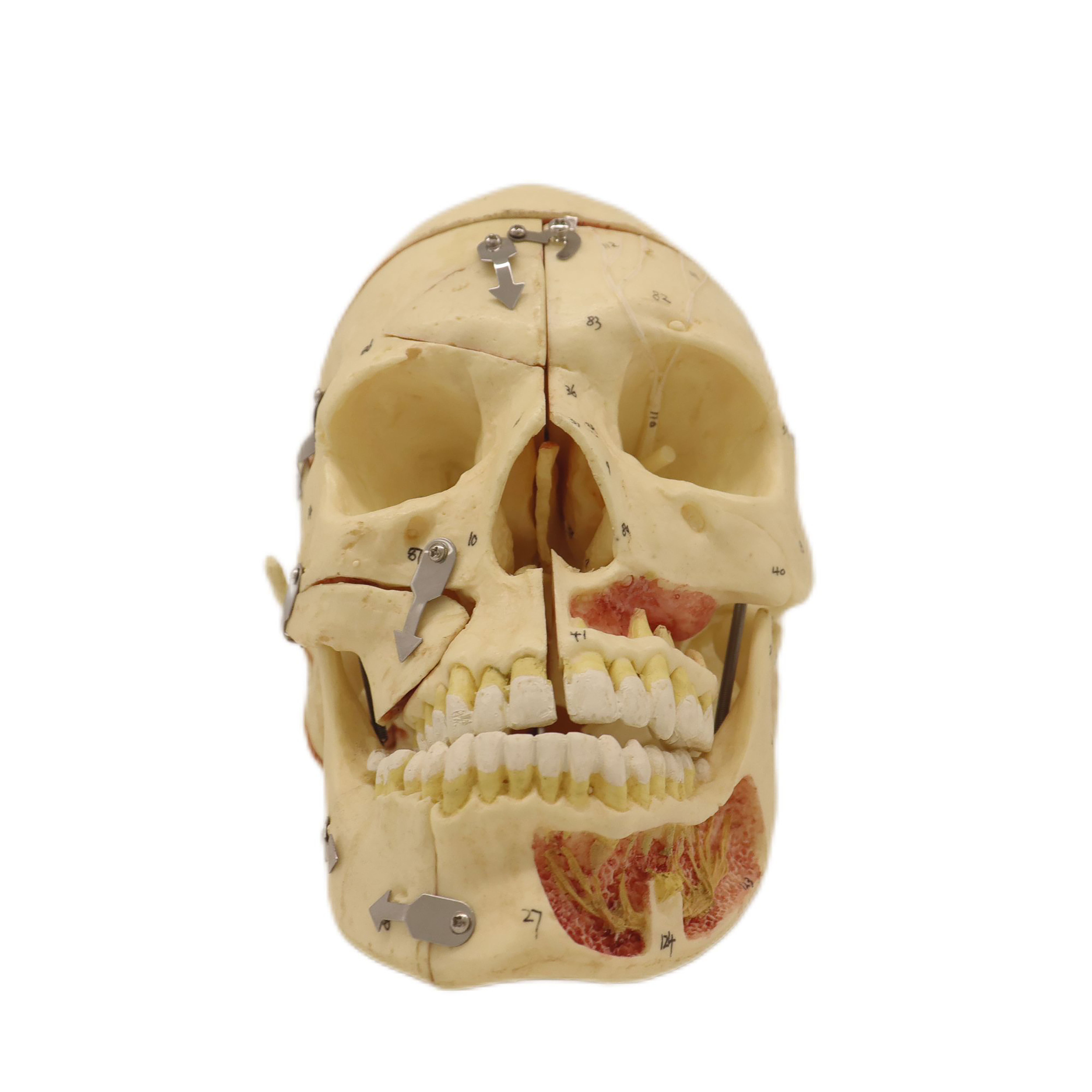
Accurately color-coded anatomical skeleton model portraying muscle origins and insertions, designed for surgical education facilities, medical university demonstration theaters, and biomechanical orthopedic clinics.
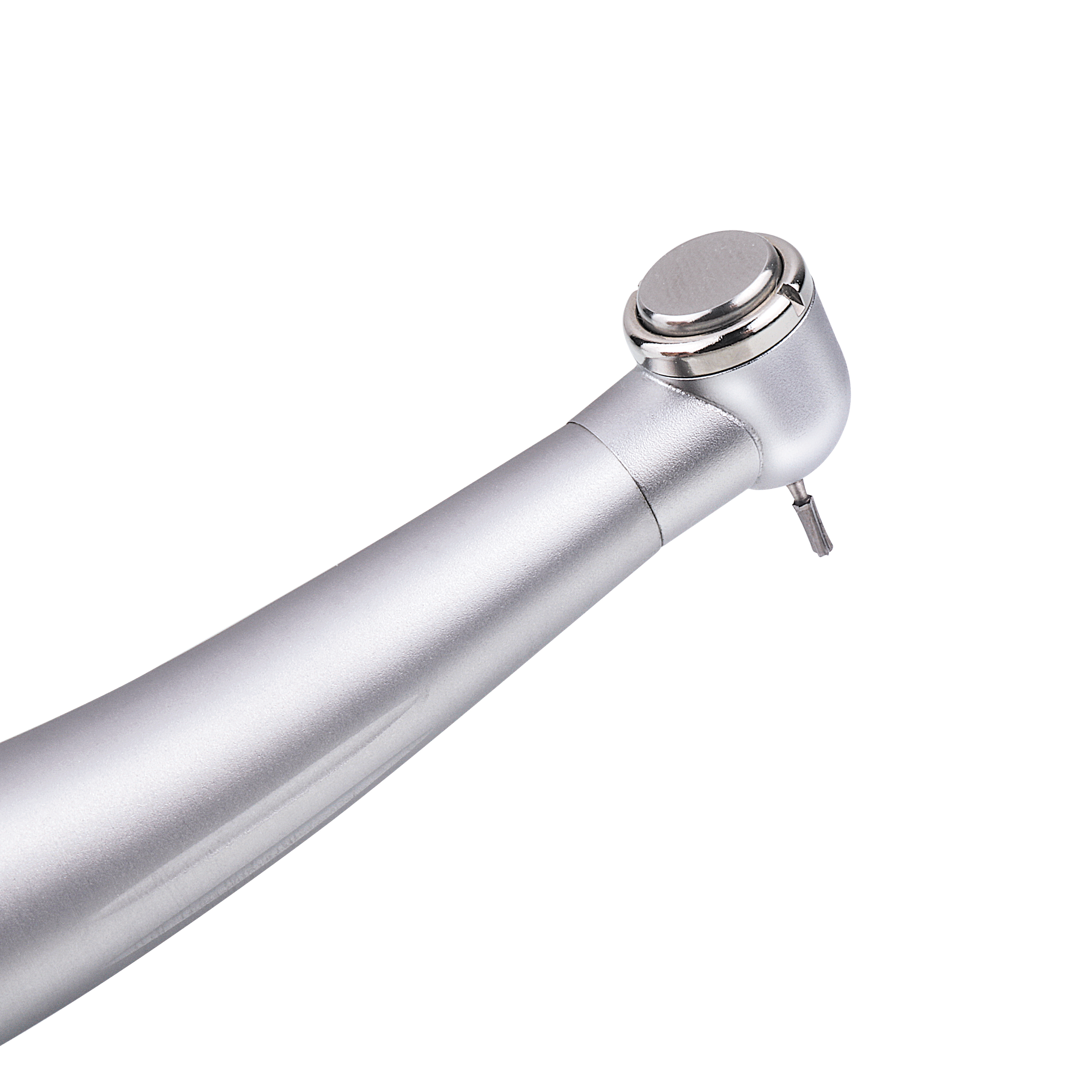
Micro-machined surgical turbine handpiece with triple-port internal irrigation, dynamic ceramic bearings, and zero-back-siphonage technology for specialized maxillofacial, dental reconstructive, and micro-bone sculpting.
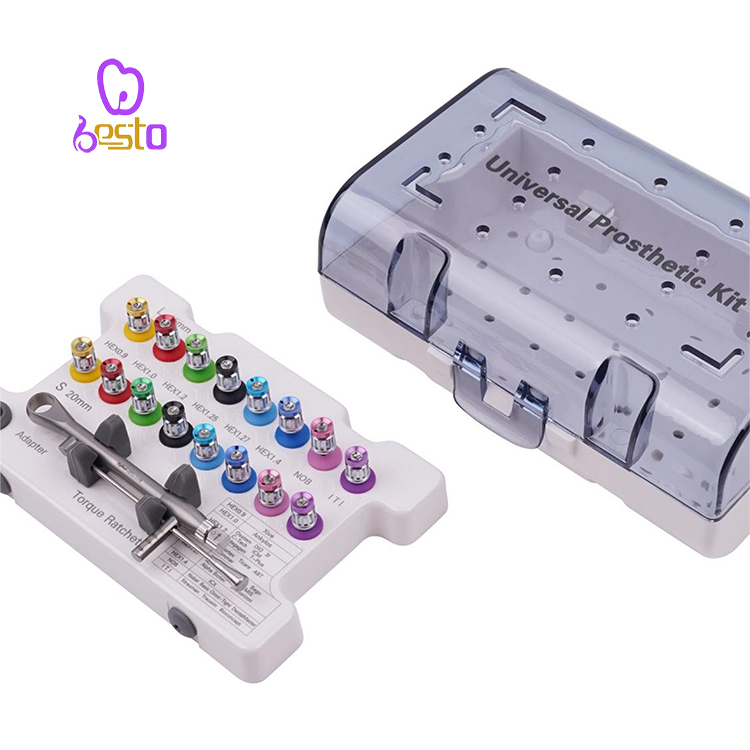
Passivated medical-grade 316L stainless steel storage and sterilization container with custom silicone fixation brackets, engineered to withstand repeated high-pressure vacuum steam sterilization cycles.
System-matched acetabular reamers, femoral rasp broaches, offset impactors, and cup positioners designed for both primary total hip arthroplasty (THA) and complex revision hip joint reconstructions.
A comprehensive examination of clinical bearing couples, femoral stem biomechanics, trabecular titanium surface coatings, and regulatory compliance standards for international tender contractors.
Total Hip Arthroplasty (THA) remains one of the most successful surgical interventions in modern orthopedics. Over the past three decades, Chinese orthopedic manufacturing has evolved from basic mechanical forging to state-of-the-art additive manufacturing, electron beam melting (EBM), and high-precision multi-axis CNC subtractive engineering. When international buyers evaluate hip prosthesis manufacturers in China, the primary consideration must center on the biomechanical paradigm of the femoral stem and acetabular shell constructs.
Femoral stems fall into two distinct mechanical categories: cemented polished taper-slip or composite-beam designs, and cementless biological fixation stems. Cementless stems, typically manufactured from forged Ti-6Al-4V ELI (ASTM F136 / ISO 5832-3), rely on initial scratch fit followed by secondary osseointegration. Chinese Tier-1 exporters utilize precise proximal plasma-sprayed titanium coatings or crystalline hydroxyapatite (HA) layers conforming to ISO 13779 specifications. The pore size of the trabecular porous coating is tightly calibrated between 300 µm and 600 µm with an interconnected porosity rate exceeding 65%, matching the natural trabecular architecture of cancellous bone to eliminate stress shielding and micromotion-induced aseptic loosening.
On the acetabular side, modern press-fit hemispherical shells leverage dual-mobility articulation principles. Originally pioneered to treat recurrent joint instability in active geriatrics and neuromuscular deficit patients, dual-mobility hip prosthesis constructs manufactured in Suzhou and Changzhou incorporate a highly polished CoCrMo or ceramic inner head articulating inside a mobile ultra-high-molecular-weight polyethylene (UHMWPE) bearing, which in turn moves within a metal acetabular backing. This system expands the effective head-to-neck ratio and jump distance, virtually eradicating postoperative dislocation risks.
Implant longevity is fundamentally governed by wear particle tribology. Friction between the femoral head and acetabular liner generates microscopic debris; sub-micron particles are engulfed by synovial macrophages, triggering a cascade of inflammatory osteolysis via TNF-alpha and interleukin signaling that precipitates premature implant revision. Leading Chinese export manufacturers prioritize two ultra-low-wear tribological couples:
Sourcing reference for tender directors, biomedical engineers, and commercial orthopedic distributors.
| Implant Component | Material Specification | Tensile / Yield Strength | Modulus of Elasticity | Clinical Indication / Advantage |
|---|---|---|---|---|
| Cementless Femoral Stem | Ti-6Al-4V ELI (ASTM F136 / ISO 5832-3) | Yield ≥ 795 MPa, Tensile ≥ 860 MPa | 110 GPa (Closer to cortical bone) | Mitigates proximal stress shielding; promotes robust osseointegration via porous HA coating. |
| Cemented Polished Stem | High-Nitrogen CoCrMo (ISO 5832-4 / 5832-12) | Yield ≥ 500 MPa, Tensile ≥ 900 MPa | 210–240 GPa (High rigidity) | Immediate fixation in osteoporotic Dorr Type C bone canals with PMMA bone cement. |
| Acetabular Outer Shell | Grade 2 Pure Titanium / Ti-6Al-4V with Porous Mesh | Yield ≥ 275 MPa (Gr2) / 825 MPa (Alloy) | 105–115 GPa | Press-fit hemispherical friction locking with additional dome screw fixation options. |
| Modular Femoral Head | ZTA Ceramic or Forged CoCrMo (12/14 Euro Taper) | Compressive strength > 2000 MPa (ZTA) | 380 GPa (Ceramic) | Ultra-low surface roughness (Ra ≤ 0.01 µm) reducing abrasive liner wear. |
| Acetabular Bearing Liner | Vitamin E Crosslinked UHMWPE (ASTM F2565) | Tensile yield ≥ 21 MPa, Elongation ≥ 250% | 0.8–1.2 GPa | High oxidative stability, ultra-low wear rates without long-term material embrittlement. |
Key technological, regulatory, and supply chain shifts redefining orthopedic joint arthroplasty procurement across Asian manufacturing hubs.
Additive manufacturing via Direct Metal Laser Sintering (DMLS) and Electron Beam Melting (EBM) has transitioned from revision cups to mainstream primary stems. This allows variable gradient porosity, replicating native bone modulus (E ≈ 10-30 GPa) to completely overcome periprosthetic osteolysis.
Ambulatory Surgical Centers (ASCs) and private orthopedic clinics in Latin America and the Middle East increasingly demand pre-sterilized, single-use trial kits. Eliminating hospital autoclaving lowers per-procedure processing costs and eradicates cross-contamination vectors.
China's centralized Volume-Based Procurement (VBP) policy has refined domestic manufacturers, compelling top exporters to invest heavily in EU MDR (Regulation EU 2017/745) technical documentation, MDSAP, and US FDA 510(k) clearances for global regulatory frictionless importation.
Precision matching between implant morse tapers and femoral heads is now tracked via micro-QR codes laser-etched onto component trunnions. Digital optical inspection at the factory guarantees taper tolerances within sub-micron bands, avoiding taper corrosion and fretting wear.
A 27-year manufacturing legacy verified on-site by TÜV Rheinland. We combine precision Japanese and German multi-axis machining with validated ISO Class 7 cleanroom packaging to support premier global OEM/ODM orthopedic brands.
We operate 100% verified in-house production lines in Jinfeng Town, Suzhou, China. Eliminating trading intermediaries gives hospital procurement officers direct oversight of raw material provenance and batch-specific metallurgy.
Our quality management systems, manufacturing capacity, machine calibrations, and physical testing laboratories have undergone extensive on-site audit verification by TÜV Rheinland, documented with uncompromised compliance dossiers.
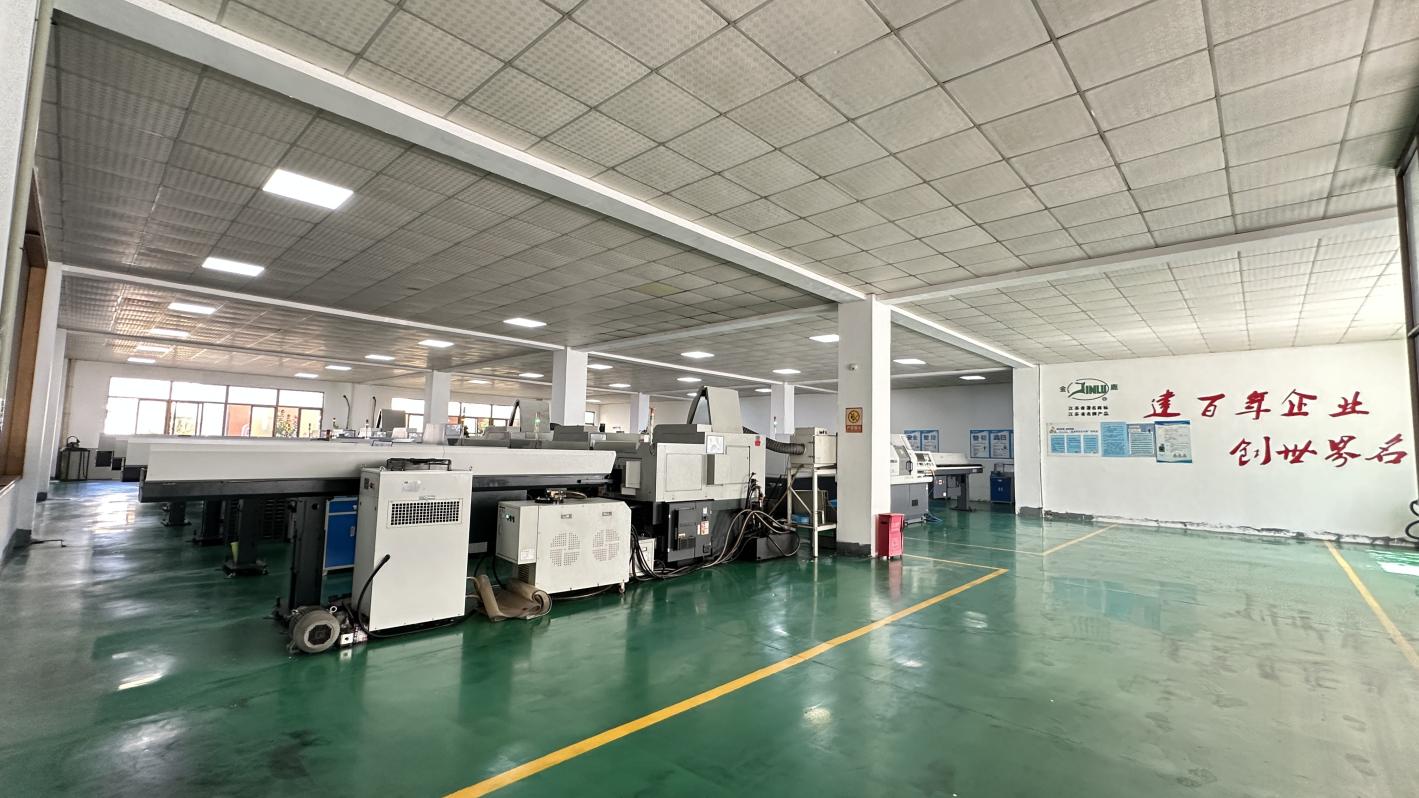
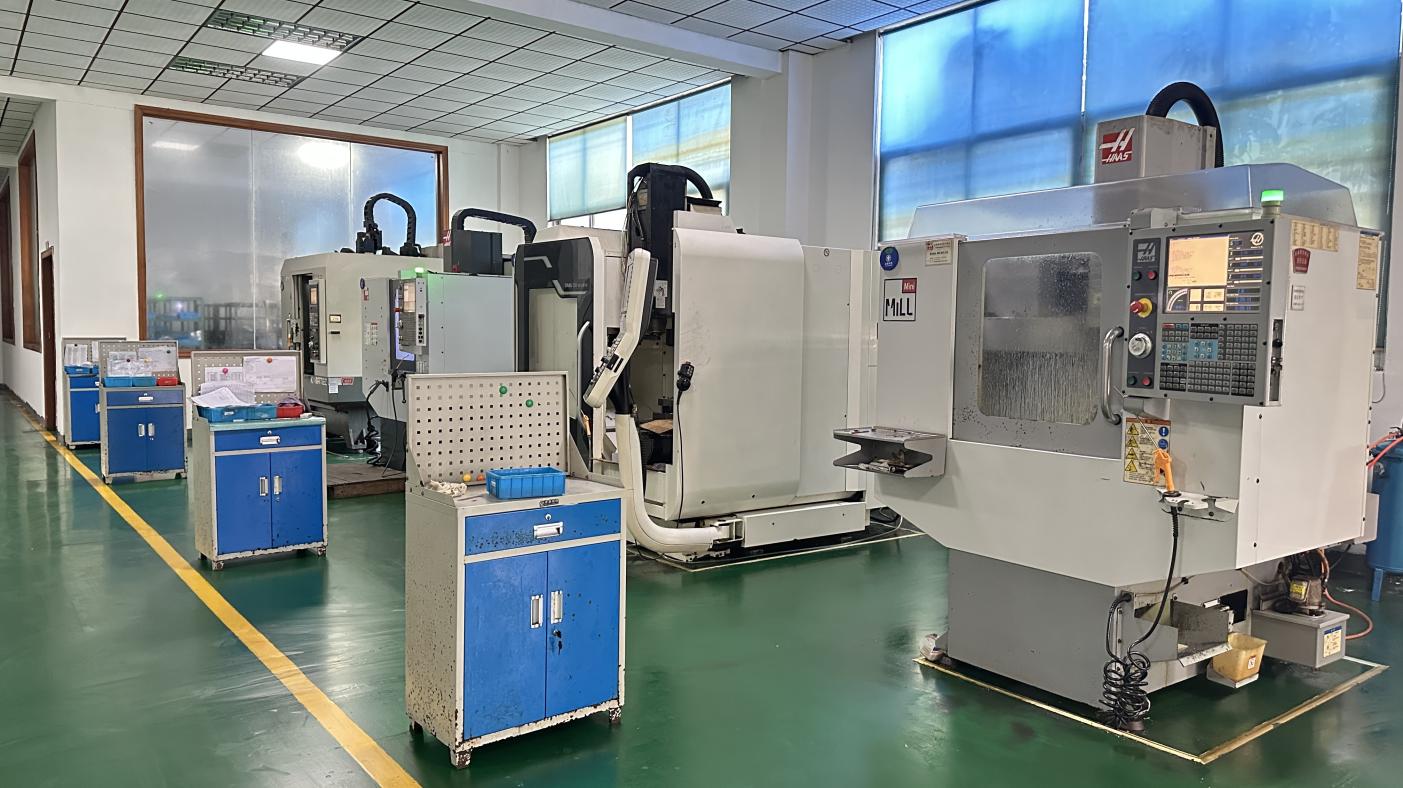
We maintain an advanced fleet of multi-axis CNC lathes, high-precision milling machines, automated robotic surface-polishing bays, and fiber laser marking centers capable of maintaining component tolerances within ±0.005 mm.
Our metrology laboratory utilizes computerized optical profile projectors, Rockwell/Vickers micro-hardness testers, hydraulic tensile testing rigs, and surface roughness interferometers to validate each forging run prior to batch clearance.
We provide full design-to-manufacture development for foreign brands. From customer CAD blueprints or CT reconstruction files to 3D prototype machining, custom laser branding, multilingual IFU creation, and specialized blister packaging.
With more than 20 years of direct medical export operations, our technical regulatory division delivers customized export documentation, Certificate of Free Sale (CFS), consular legalization, and country-specific registration dossiers in 16 languages.
Actionable guidance compiled by GMV Medical device regulatory and engineering specialists to streamline hospital tender qualification and supplier auditing.
Our femoral stems are manufactured exclusively from wrought Ti-6Al-4V ELI (Extra Low Interstitial) conforming strictly to ISO 5832-3 and ASTM F136, or medical-grade high-nitrogen Cobalt-Chromium-Molybdenum (CoCrMo) conforming to ISO 5832-12 and ASTM F1537. Acetabular liners use GUR 1020 or GUR 1050 medical-grade UHMWPE cross-linked with gamma-irradiation and stabilized with Vitamin E according to ASTM F2565 and ASTM F2695 standards. Mill test reports (MTR) verifying chemical composition and mechanical properties accompany every single raw material lot.
We utilize the standardized international 12/14 Euro Taper trunnion geometry. Our Quality Assurance protocol includes 100% taper angle and straightness inspection using pneumatic multi-point air-gauging tools and optical coordinate measuring machines (CMM) calibrated to ±0.001 mm. Pull-off force, axial displacement, and fretting corrosion tests are conducted according to ASTM F2009 and ISO 7206-10 protocols to guarantee micro-motion stability and eradicate trunnionosis risks.
Jiangsu GMV Medical Device Co., Ltd. holds ISO 13485:2016 medical device quality management accreditation and Chinese National Medical Products Administration (NMPA) Class III registration certificates. Our production environment has been independently audited and verified on-site by TÜV Rheinland. We supply comprehensive Technical Construction Files (TCF), biocompatibility evaluations (ISO 10993 series), sterilization validation dossiers (ISO 11137 / ISO 11135), and accelerated shelf-life aging test reports.
Yes. As an authentic custom manufacturer offering both OEM and ODM services, we provide comprehensive private labeling. This includes clean fiber-laser marking of client logos, catalogue reference numbers, lot tracking codes, and UDI (Unique Device Identification) data-matrix barcodes directly onto the implants. Furthermore, we design and produce retail hospital boxes, sterile dual-barrier Tyvek® blister packaging, and multi-language Instructions for Use (IFUs).
For standard catalog configurations (stems, shells, modular heads, and liners), our MOQ is flexible to support regional registration trials and initial tender submissions (typically 10 to 50 sets per line). Standard delivery lead times range from 3 to 4 weeks upon order confirmation. For custom ODM geometry modifications or bespoke rasp/broach instrument kits, tooling and pre-production validation typically require 6 to 8 weeks.
Yes. Safe surgical implantation requires dedicated instruments. We produce complete, color-coded, system-specific instrument sets including straight and offset broach handles, modular femoral rasps, spherical acetabular reamers, trial heads, cup impactors, and depth gauges. All instruments are housed in anodized aluminum or 316L stainless steel autoclavable containment trays with silicone brackets tailored to Central Sterile Services Department (CSSD) workflows.
Distributors and tender evaluation committees are always welcome to conduct on-site factory audits at our facility in Jinfeng Town, Suzhou, Jiangsu Province, China (situated within 90 minutes of Shanghai Hongqiao International Transportation Hub). For clients unable to travel internationally, our engineering department facilitates scheduled interactive live-video audits covering our CNC machining workshops, cleanroom packaging areas, testing facilities, and warehouse dispatch lines.
We maintain rigorous Post-Market Clinical Follow-up (PMCF) registries and comprehensive risk assessment matrices adhering to ISO 14971. In the event of health ministry regulatory inquiries or post-market tender audits, our regulatory affairs team provides multi-year clinical literature reviews, failure mode and effects analysis (FMEA) dossiers, and traceable quality assurance records for all exported production batches.
Contact our biomedical engineering and export team today to receive CAD specifications, mechanical fatigue test reports, competitive tender price matrices, and regulatory dossiers tailored to your local healthcare market.