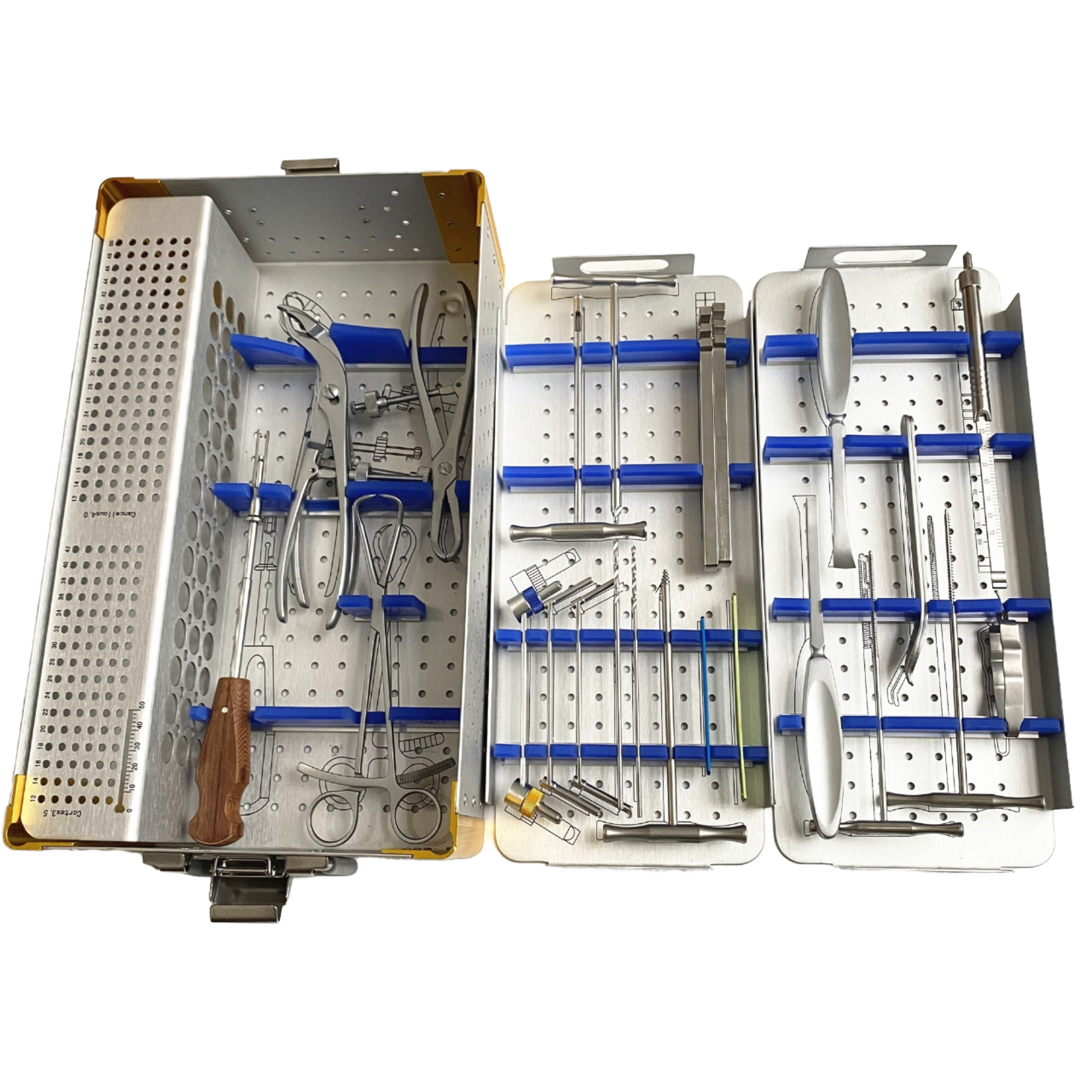
Orthopedic Trauma
Explore our system-matched instruments, motorized orthopedic systems, and anatomical guides manufactured under stringent Class 100k cleanroom conditions and verified by optical coordinate metrology.

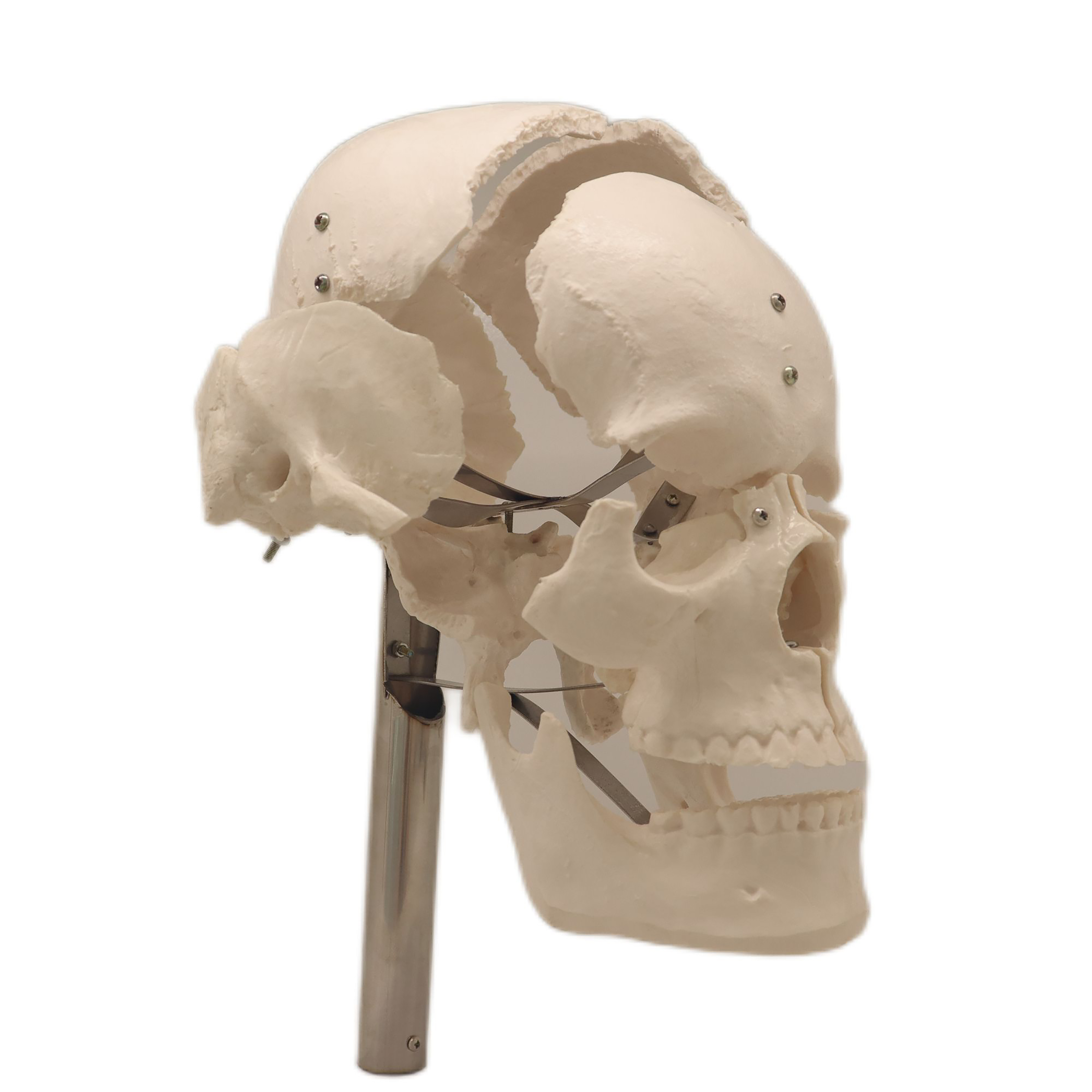
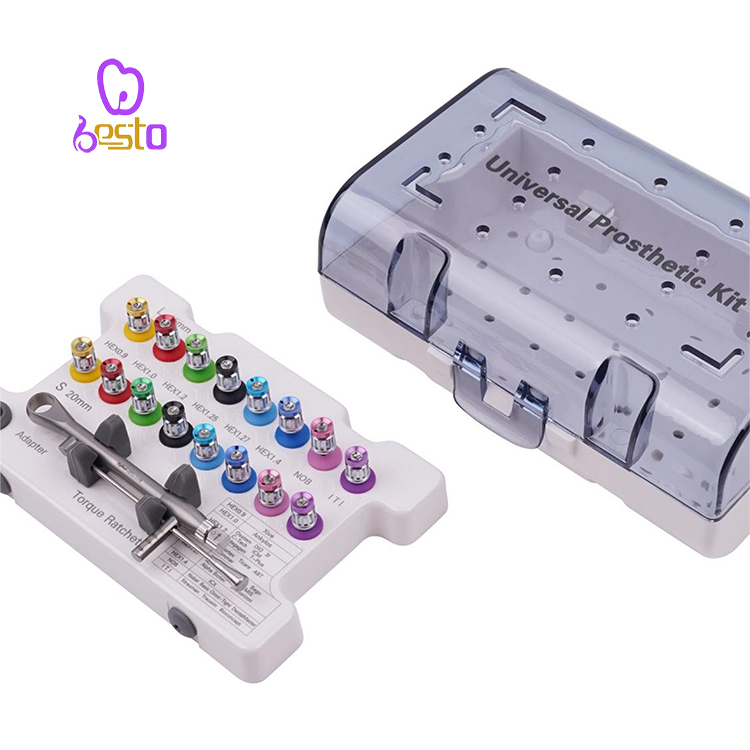
A comprehensive examination of curvature radii, subperiosteal tissue dissection, lumen chamfering, and vascular preservation in long bone trauma reconstruction.
Surgical wire passers (also clinically designated as cerclage wire guides, suture passers, or circum-ferential cable passers) serve as critical instruments during the anatomical reduction of spiral, oblique, and comminuted diaphyseal fractures. When stabilizing periprosthetic femoral fractures or performing trochanteric reattachment, passing a stainless steel or cobalt-chromium cerclage cable around the osseous shaft poses significant risks to adjacent neurovascular structures, notably the deep femoral artery branches and sciatic nerve tracks.
Top-tier Chinese manufacturers like Jiangsu GMV Medical Device Co., Ltd. engineer wire passers with a meticulously calculated blunt olive-tip or spatulated distal lead. This contour facilitates tactile subperiosteal gliding directly against the cortical bone surface, displacing muscular envelopes without blind periosteal stripping or vascular laceration.
The mechanical efficiency of a wire passer depends heavily on the geometry of its internal lumen or open groove. In dual-curve and semi-circular models (such as Demel or Judet variations), internal bore surface roughness directly affects wire feed resistance. Sub-micron surface irregularities cause high-tensile 1.0mm–1.8mm monofilament or braided cerclage wires to scuff, bind, or kink.
GMV Medical utilizes high-precision 5-axis CNC gun-drilling and micro-abrasive flow machining to maintain internal bore cylindricity tolerances within ±0.015 mm. By deburring and electro-polishing the entry and exit orifices, surgical teams experience uniform, predictable tactile transmission without unexpected cable fraying or jamming during critical reduction maneuvers.
Unlike standard retractors or bone levers, cannulated wire passers possess enclosed hollow geometries that challenge standard passivation and ultrasonic cleaning. As a verified manufacturer audited by TÜV Rheinland, Jiangsu GMV Medical implements specialized immersion nitric/citric acid passivation cycles under continuous ultrasonic agitation. This guarantees a durable chromium oxide (Cr2O3) passive layer across the inner lumen wall, eliminating intra-luminal micro-pitting caused by trapped body fluids and repeated autoclave cycles.
Eliminate intermediary trading margins. Source surgical instruments and implants directly from our TÜV Rheinland on-site assessed production facility in Jinfeng Town, Suzhou, China.
Our complete production, QA/QC testing capability, and export compliance have been independently verified on-site by TÜV Rheinland. Hospital procurement teams and OEM buyers can request third-party verified assessment documentation, ensuring full compliance with international regulatory tenders.
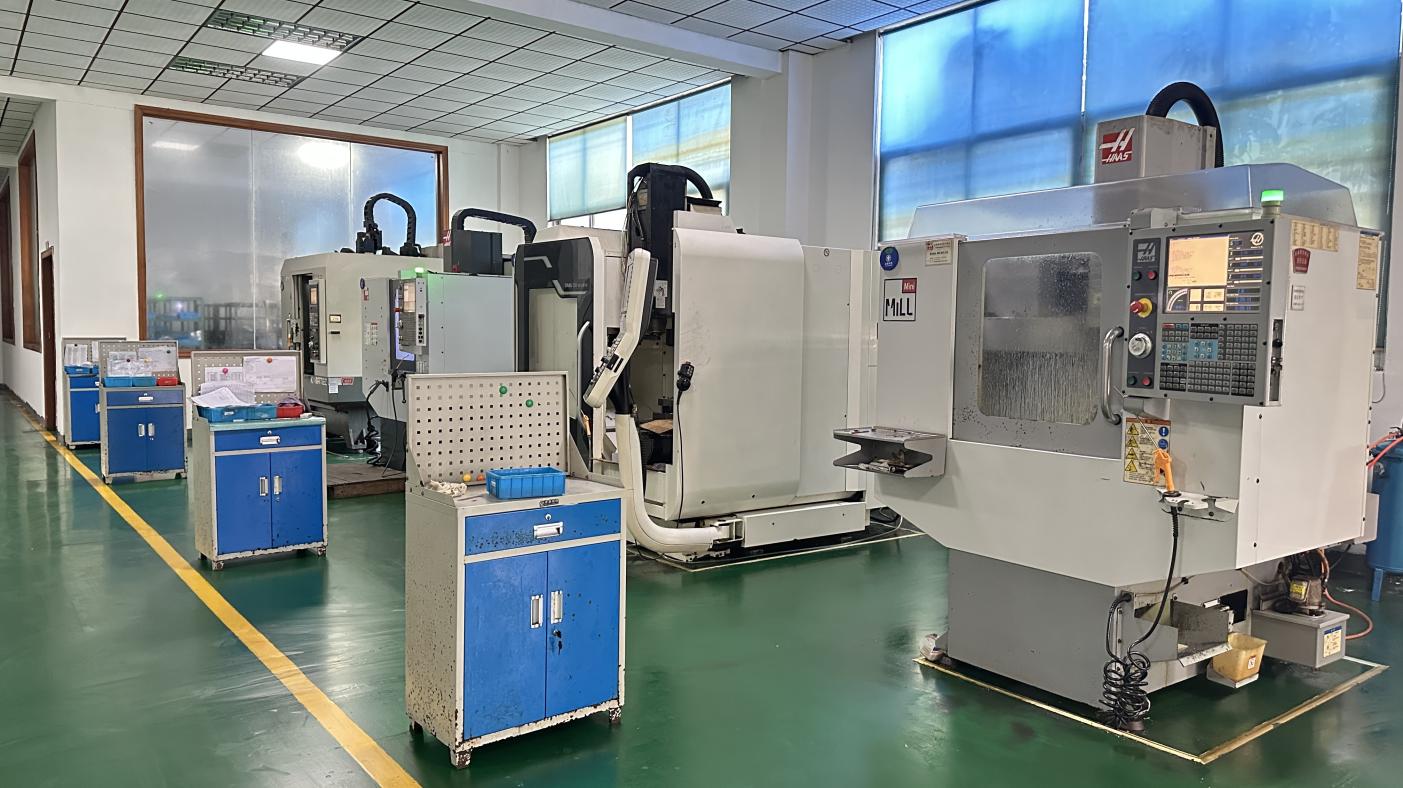
From multi-axis CNC Swiss-type automatic lathes to precision vertical machining centers, our factory handles slitting, rough turning, milling, and fine contoured curvature forming under one roof. Maintaining tight control across raw bar stock to finished instruments guarantees repeatable lot-to-lot tolerances.
Our in-house analytical testing center features calibrated tensile testing rigs, Vickers & Rockwell hardness testers, and non-contact optical profile projectors. Every heat-treated batch of surgical grade steel (316L, 17-4PH, 420B) undergoes rigorous destructive and non-destructive evaluations.
We provide full design-based manufacturing. Provide CAD drawings, clinical prototypes, or reverse-engineering samples. Our engineering team refines geometries for cost-effective manufacturing, implementing bespoke laser marking, custom shaft knurling, and customized modular sterilization tray layouts.
Surface finishing determines life cycle longevity. GMV operates automated electropolishing and chemical passivation suites followed by ultrasonic bath degreasing. All packaging operations occur in temperature- and humidity-controlled cleanroom zones meeting medical device manufacturing directives.
With more than 20 years of active global export experience, our export division provides fluent consultation in 16 languages. We handle comprehensive shipping documentation, legalization, Certificates of Free Sale (CFS), and technical construction files (TCF) tailored for overseas health authorities.



Evaluate alloy physical properties, corrosion resistance thresholds, and fabrication tolerances to determine the ideal material selection for your brand's instrumentation sets.
| Evaluation Parameter | Medical-Grade 316LVM (ASTM F138) | Precipitation Hardened 17-4PH | Titanium Alloy (Ti-6Al-4V ELI) | Martensitic 420B Stainless Steel |
|---|---|---|---|---|
| Primary Application | Cannulated shafts, anatomical wire guide loops | Locking jaws, wire tightener mechanisms | MRI-compatible guides, lightweight probes | Cutting jaws, high-wear hinged pivots |
| Tensile Strength (MPa) | 580 – 860 (Annealed to Cold Worked) | 930 – 1310 (H900 to H1150 condition) | 860 – 960 (Solution treated & aged) | 700 – 950 (Quenched & tempered) |
| Corrosion Resistance (Autoclave) | Exceptional (High nickel/moly matrix) | Very High (Passivated copper-doped) | Superior (Inert stable TiO2 barrier) | Moderate (Requires strict drying protocols) |
| Surface Roughness (Ra) | Ra ≤ 0.2 μm (Electro-polished lumen) | Ra ≤ 0.4 μm (Precision milled) | Ra ≤ 0.3 μm (CNC micro-finished) | Ra ≤ 0.4 μm (Satin vapor-honed) |
| Bending & Fatigue Yield | High ductility, ductile fracture safe | High elastic limit, zero permanent bow | High strength-to-weight, low modulus | Lower ductility, high surface hardness |
| Economic Index for OEM | Optimal standard production balance | Premium mechanism component cost | Specialty boutique procurement tier | Cost-effective wear component base |
Key supply chain shifts shaping how hospital groups, defense procurement agencies, and orthopedic multinational corporations qualify Chinese manufacturers.
Global procurement teams are shifting away from piecemeal instrument sourcing. Purchasing departments prefer single-source contract manufacturers capable of delivering the entire trauma chain: anatomical locking plates, matched cannulated bone screws, external fixators, and customized wire passers within an integrated, validated sterilization container. Jiangsu GMV Medical addresses this via matched procedural instrument trays that simplify autoclave turnover and eliminate component mismatch in operating suites.
Under the European Medical Device Regulation (EU MDR 2017/745), Class I reusable surgical instruments (Class Ir) require independent notified body assessment of cleaning, disinfection, and steam sterilization validation. Buyers now demand China-based partners who furnish exhaustive documentation: biocompatibility reports (ISO 10993), reprocessing validation (ISO 17664), and permanent laser Unique Device Identification (UDI) marking capable of enduring >500 autoclave cycles.
Open surgical incisions for long bone cerclage are being replaced by Minimally Invasive Percutaneous Osteosynthesis (MIPO). Modern procurement contracts mandate wire passers with articulated shafts, radiolucent carbon-fiber handles, or memory-alloy nitinol delivery conduits. These allow surgeons to navigate around deep femoral shafts through stab incisions under fluoroscopy, reducing intraoperative blood loss and surgical site infection rates.
How advanced material science and CAD-driven rapid prototyping are redefining tactile responsiveness and patient outcomes.
Conventional rigid wire passers possess fixed curvature radii, requiring surgical theaters to stock separate small, medium, and large patterns for pediatric, humeral, and adult femoral indications. The next generation of wire passers developed at GMV Medical features modular quick-connect tips with variable radius indexing (25mm, 45mm, 70mm, and 95mm).
While monofilament 316L wire remains the gold standard in emerging markets, premium trauma centers are shifting to Ultra-High-Molecular-Weight Polyethylene (UHMWPE) braided tension cables to eliminate metal-on-metal fretting and sharp wire-twist hazards. Traditional wire passers frequently snag fibrous braided cables.
A rigorous inspection blueprint designed for biomedical supply managers, OEM account directors, and regulatory auditors.
Demand certified Mill Test Certificates (MTC) linked to specific heat lots. Verify chemical composition via Optical Emission Spectroscopy (OES). For 316LVM, ensure carbon content is strictly ≤ 0.030% to prevent intergranular sensitization during cleaning and heat-treatment cycles.
Employ pin go/no-go gauges along the entire internal cannulated length to verify zero localized necking. Use fiber-optic boroscopes to inspect internal walls for swarf, burrs, or micro-cracking from deep-hole drilling operations.
Perform copper sulfate (CuSO4) testing in accordance with ASTM A967/A380 to verify a defect-free passive barrier. Execute accelerated boiling water testing (autoclave stress cycles at 134°C for 50 repeated cycles) to evaluate resistance to rust and crevice oxidation.
Clear, direct answers regarding lead times, minimum order quantities (MOQ), custom tooling, and certification support.
Consult with our orthopedic manufacturing engineers to receive custom 3D design analysis, detailed metallurgical certifications, volume pricing tiers, and complete OEM/ODM production timetables.
Inquire Now