Featured Surgical Instruments & Systems Catalog
Direct factory configurations matching Ministry of Health procurement standards across Belarus, Gomel, Vitebsk, and Minsk. Sourced directly from our TÜV-inspected precision facilities.

High-Speed Surgical Repair Handpiece for Dental
Turbine power source with medical-grade stainless steel architecture, offering optimal torque and runout control during precision osteotomies and bone debridement.

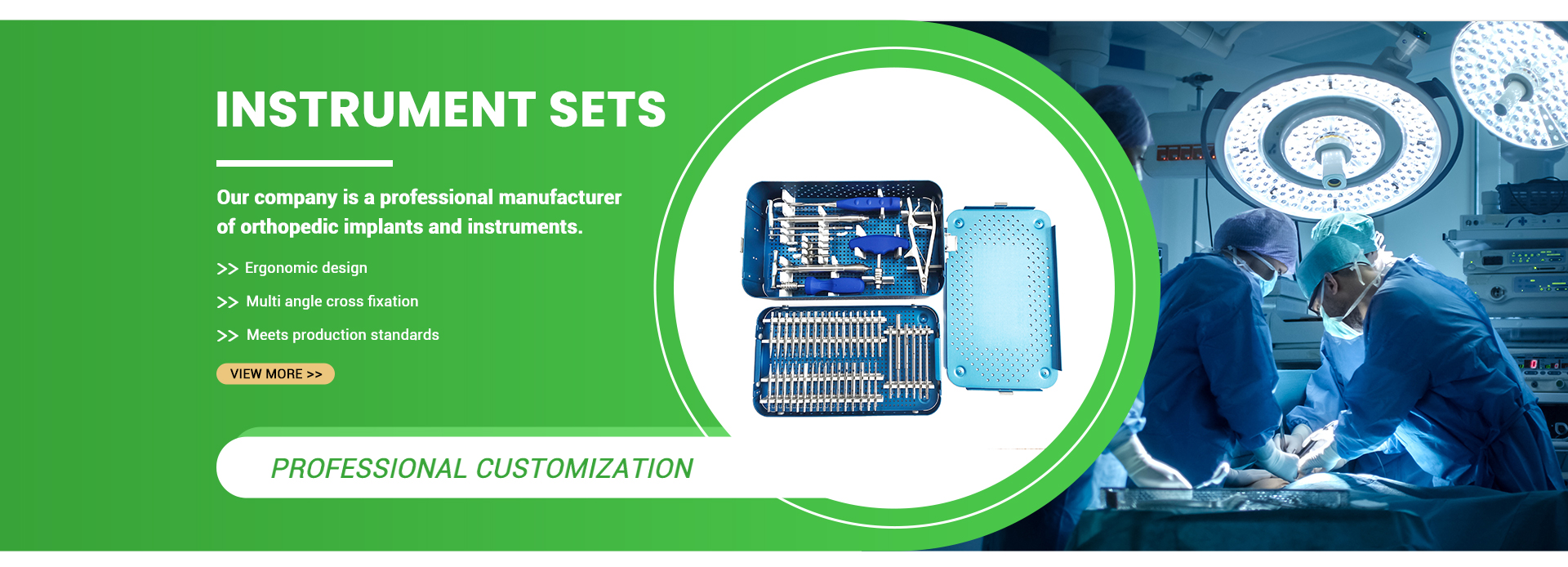
Small Fragment Orthopedic Upper Limb Instrument Kit
Comprehensive set with manual bone curettes, periosteal elevators, bone hooks, and reduction instruments organized in an autoclavable sterilization container.

Lab Teaching Models 3 Parts Muscular Skull Skeleton
Anatomical simulation model designed for surgical training centers in Minsk, demonstrating surgical entry corridors, muscular origins, and bony landmarks.

Separated Human Skull Teaching Model (Medical PVC)
High-fidelity bone simulation model engineered for craniotomy practice, curettage training, and anatomical bone restructuring for neurosurgical trainees.

Electric Surgical Implant Tool Box (Steel Construction)
Rigid surgical-grade stainless steel cassette with high thermal resistance, engineered for rigorous autoclave cycles in centralized sterile processing departments.

Orthopedic External Fixator Ringent Rod Coupling
High-tensile clamping components for rapid external fixator montage, providing dependable mechanical rigidity in open trauma cases and complex limb fractures.

Medical Electric Sternum Saw & Orthopedic Drill Saw
High-torque, low-vibration surgical saw system with CE certification. Fully autoclavable motor units built for thoracic access and major reconstructive procedures.
Specialized Volkmann & Brun Bone Curette Set
Surgical bone curettes ranging from size 000 to 6 with ergonomic phenolic handles and polished teardrop/oval cups for precise osteotomy site debridement.
Bone Curette Implementations Across Belarus Healthcare Facilities
From state republican research centers to regional clinical hospitals (ОКБ), bone curettes fulfill an indispensable role across traumatology, oncology, spinal surgery, and septic bone management.
Trauma & Septic Osteomyelitis Debridement
Widely utilized in republican traumatology departments in Minsk and Gomel for acute sequestrectomy. The razor-sharp cutting edge on Volkmann-pattern oval cups allows aggressive removal of avascular, necrotic cortical bone and infected granulation tissue while sparing healthy osteogenic margins.
Spinal Discectomy & Endplate Decortication
Essential for degenerative disc interventions and spinal arthrodesis performed at specialized neurosurgical units. Angled curettes (Brun and Cobb styles) prepare cartilage endplates without breaching subchondral trabeculae, facilitating high-rate interbody fusion when installing PEEK cages or titanium meshes.
Bone Graft Harvesting & Cavity Filling
Utilized in non-union fracture repair and maxillofacial reconstructive interventions. Rigid round and teardrop curettes extract autologous cancellous bone from the iliac crest or proximal tibia with minimal mechanical compression, preserving the osteoconductive scaffold matrix.
Clinical Insight for Belarusian Procurement Managers: In regional emergency trauma departments across Brest and Vitebsk, surgical teams emphasize the balance between handle weight and shank rigidity. Curettes engineered from hardened martensitic stainless steel (HRC 52-56) withstand repetitive force along sclerotic cortical envelopes without edge rolling or vibrational flexure.
Belarus Medical Instrumentation Dynamics & Procurement Trends
An overview of regulatory, economic, and logistical factors shaping orthopedic equipment procurement across the Republic of Belarus.
Stringent Autoclave Durability Requirements
Belarusian hospital sterilization units rely heavily on steam autoclaving cycles at 134°C with high chemical alkalinity detergents. Curettes must demonstrate total immunity to intergranular corrosion, pitting, and passivation breakdown over hundreds of sterilization cycles.
Supply Chain Re-orientation toward Direct OEM
Hospital procurement committees are migrating away from multi-layered European brokers to establish direct partnerships with verified Tier-1 Chinese manufacturers. This shift significantly mitigates lead-time volatility and reduces capital expenditure by 35% to 50% without compromising metallurgical purity.
Standardized EAEU Registration Compliance
The transition toward unified Eurasian Economic Union (EAEU) medical device registration directives requires comprehensive mechanical qualification, biocompatibility testing certificates, and ISO 13485 manufacturing validation—all integral to GMV Medical’s standard documentation packet.
Technical Comparison: Bone Curette Material Specifications
A clear technical reference for hospital biomedical engineers and procurement committees selecting surgical instrumentation.
| Evaluation Parameter | GMV Martensitic 420B Stainless Steel | Standard Commercial 304 Stainless | Medical Titanium Alloy (Ti-6Al-4V) |
|---|---|---|---|
| Cup Edge Hardness | 52 - 56 HRC (High Retention) | 25 - 30 HRC (Prone to dulling) | 34 - 38 HRC (Moderate cutting hold) |
| Torsional Shank Rigidity | Superior (Zero deflection in cortical bone) | Elastic (Bends under high torque) | High Strength / Modulus closer to bone |
| Autoclave Passivation Integrity | Electropolished passivation layer (ASTM F86) | Moderate corrosion resistance | Exceptional oxide passivation immunity |
| MRI Compatibility | Ferromagnetic (OR removal required) | Weakly magnetic | 100% MRI-Safe / Zero artifact distortion |
| Primary Clinical Indication | General Orthopedics, Sclerotic Trauma | Low-cost basic dissection | Neurosurgery, Spine & Titanium Cages |
| Factory Cost Ratio | Optimal price-performance balance | Low initial cost / High replacement rate | Higher capital investment |
End-to-End In-House Production Process
We control every manufacturing phase in our Suzhou facility—from raw certified bar stock inspection to micro-edge honing, ultrasonic cleaning, and laser traceability marking.
Material Inbound QC
Optical spectrometry and hardness testing verify that every batch of medical-grade steel meets international biocompatibility standards.
Multi-Axis CNC Milling
Precision multi-axis CNC lathes and machining centers carve the cup curvature, shaft angles, and ergonomics with micro-millimeter tolerance.
Heat Treatment & Quenching
Controlled vacuum atmosphere heat treatment achieves uniform crystalline hardness across the working cup without introducing brittle points.
Precision Edge Honing
Master instrument craftsmen hand-hone the scraping boundary under magnification to create an edge that stays sharp through repeated clinical use.
Passivation & Polish
ASTM F86-compliant electrochemical polishing forms a passive chromium oxide protective barrier against repetitive steam sterilization.
Laser Marking & UDI
Indelible fiber-laser marking records product size, catalogue number, CE identifiers, and production lot codes for lifecycle hospital traceability.
Dimensional Inspection
High-resolution optical profile projectors measure the cup depth, wall thickness, and shaft angles against master CAD engineering models.
Cleanroom Packaging
Double-barrier protective packaging with anti-impact tip sleeves prevents damage during international transit to Minsk, Brest, or Gomel.
Factory Strengths Built for Global Healthcare Partners
Over 27 years of surgical engineering, third-party TÜV Rheinland on-site audit verification, and dedicated international trade infrastructure.
Direct Manufacturer, Not a Trading Agent
Every instrument is engineered inside our dedicated Suzhou factory. By dealing directly with our engineering division, purchasers eliminate agency markups and secure immediate technical modifications.
TÜV Rheinland On-Site Assessed
Our production facilities, testing laboratories, cleanrooms, and quality management protocols are verified through independent, on-site assessments by TÜV Rheinland.
Custom OEM & ODM Engineering
From customized curette handles tailored to regional surgeon preferences to specialized shaft curvatures and custom sterilization cases, our design team turns concepts into physical samples rapidly.
Rigorous Mechanical Testing Lab
Every instrument batch undergoes mechanical stress evaluations, optical magnification measurements, and Rockwell hardness verification before shipping documentation is finalized.
Multilingual Export Support
Our dedicated international trade team assists with complete registration dossiers, customs clearance paperwork, and certificate of origin documentation for smooth delivery to Belarus.
Complete Implant & Tool Ecosystem
Beyond curettes, GMV manufactures anatomical locking bone plates, bone screw systems, intramedullary nails, pedicle spinal fixators, and orthopedic power drills for an integrated surgical catalog.
Frequently Asked Questions by Belarusian Buyers
Clear answers to common questions on customs, quality standards, ordering, and delivery logistics for medical instruments in Belarus.
We supply complete technical dossiers—including material test reports, ISO 13485 certificates, biocompatibility data, and sterilization cycle guidelines—to support your submissions to the Ministry of Health of Belarus and EAEU regulatory authorities.
Standard catalog models are held in stock for dispatch within 5 to 7 business days. Custom OEM configurations usually require 25 to 35 production days. Goods can be shipped by air cargo directly to Minsk National Airport (MSQ) or via rail/sea multimodal routes.
Yes. We manufacture traditional round knurled handles, hexagonal grips, and ergonomic silicone-coated handles. We can also produce customized Volkmann, Brun, Cobb, or Schede designs according to technical drawings or physical hospital samples.
We offer flexible MOQs for surgical instruments. Standard catalog items can be ordered in quantities as small as 5 to 10 units per size for evaluation sets. Custom laser branding and OEM packaging typically start at 50 units per specification.
Our curettes utilize vacuum-hardened martensitic stainless steel with an HRC rating of 52 to 56. Clinical trials show cutting-edge retention and torsional strength comparable to tier-one European brands at a significantly more competitive acquisition cost.
We welcome on-site visits to our facility in Jinfeng Town, Suzhou, China. We also regularly host live remote video audits where your biomedical engineers can inspect our CNC machinery, testing labs, and cleanrooms in real time.
Equip Your Surgical Departments with Precision Bone Instruments
Contact our clinical instrumentation engineering team today to request product catalogs, material certifications, sample sets, or tailored OEM quotations for hospital tenders in Belarus.
Inquire Now