Certified Surgical Systems & Auxiliary Hardware
Direct factory engineering supporting trauma fixation, power osteotomy, high-precision instrumentation, and surgical models for the Zurich medical distribution network.




Electric Surgical Dental Implant Tool Box Steel Construction for Handpiece



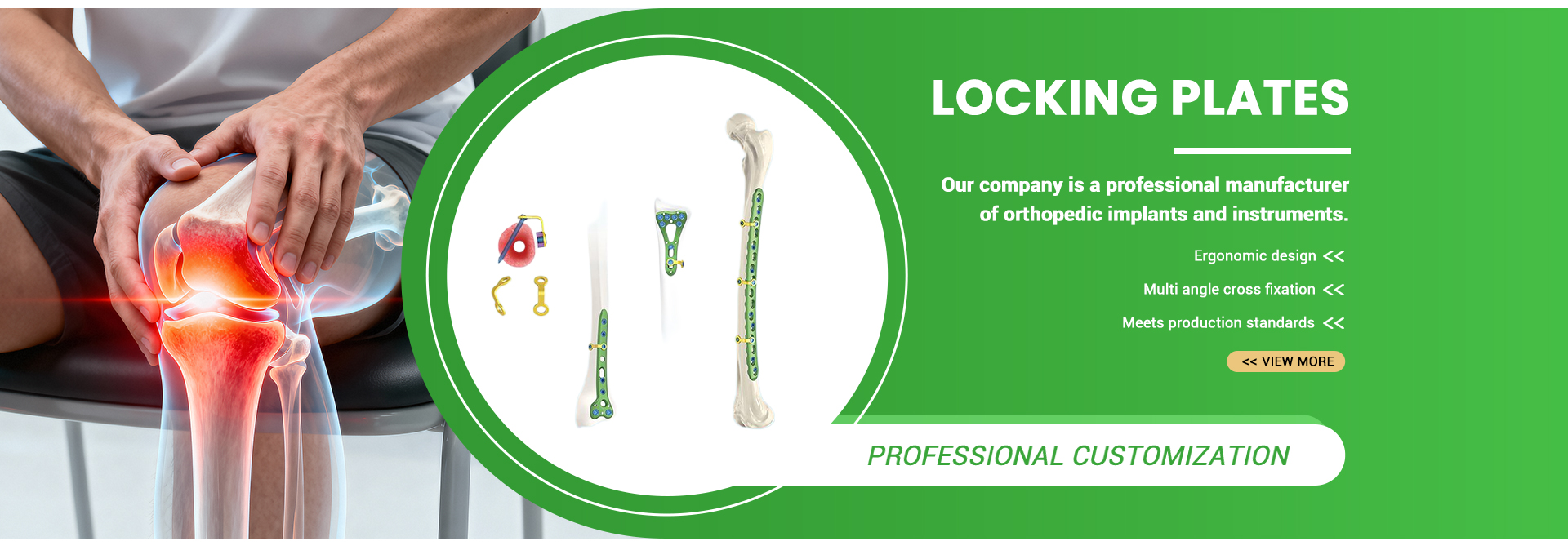
Locking Bone Screw & Anatomical Plate Fixation Construct System (Ti-6Al-4V ELI)
The Strategic Role of Bone Screw Systems in Zurich's Advanced Healthcare Network
Zurich stands as one of Europe's premier hubs for orthopedic trauma excellence, sports injury rehabilitation, and advanced spine surgery. Anchored by institutions like the University Hospital Zurich (Universitätsspital Zürich - USZ), Balgrist University Hospital, and private hospital networks across the greater Canton of Zurich such as Hirslanden, surgical expectations mandate zero-compromise fixation mechanics. In high-demand orthopedics, a bone screw is never merely a fastener; it is an active biomechanical load-sharing component designed to achieve primary stability, maintain interfragmentary compression, and resist dynamic micro-shear forces throughout the bone healing cascade.
For Swiss medical purchasing executives, chief surgical officers, and orthopedic supply distributors, sourcing bone screw systems requires balancing rigorous regulatory parameters under the Swiss Medical Devices Ordinance (MedDO / MedPV) and European Medical Device Regulation (EU MDR 2017/745) with the economic imperatives of Swiss DRG hospital reimbursement structures. Jiangsu GMV Medical Device Co., Ltd. addresses this precise requirement, providing direct OEM and ODM manufacturing partnerships with full technical documentation, dimensional validation records, and material traceability straight from state-of-the-art CNC precision workshops.
Regulatory & Procurement Note for Switzerland: In accordance with Swissmedic mandates and the bilateral medical device agreements, high-risk Class IIb orthopedic implantables require documented Swiss Authorized Representative (CH-REP) coordination, UDI labeling compliance, and comprehensive technical files containing mechanical test evidence under ASTM F543 benchmarks.
Biomechanical Engineering & Metallurgy: Titanium vs. Stainless Steel
Every bone screw system leaving GMV Medical's Jinfeng production hub undergoes continuous in-process verification to optimize shear resilience, axial pull-out strength, and insertion torque limits. When catering to specialized surgery in Zurich, metallurgical consistency is the foundational baseline.
1. Medical Grade Titanium Alloy (Ti-6Al-4V ELI / ISO 5832-3 & ASTM F136)
Ti-6Al-4V Extra Low Interstitial (ELI) represents the material of choice for permanent and semi-permanent internal fixation systems. With an elastic modulus of approximately 110 GPa—significantly closer to cortical bone (18-20 GPa) than surgical stainless steel—our titanium bone screws significantly reduce the stress shielding phenomenon, encouraging natural bone remodeling according to Wolff's Law. Furthermore, titanium exhibits superior biocompatibility via its spontaneous titanium dioxide (TiO2) passivation layer, generating superior cellular adhesion and virtually zero magnetic deflection, ensuring artifact-reduced postoperative MRI imaging at Swiss diagnostics centers.
2. High-Strength Implant Stainless Steel (316L / ISO 5832-1 & ASTM F138)
Vacuum Arc Remelted (VAR) 316L stainless steel provides an elevated modulus of rigidity (approx. 200 GPa) alongside exceptional ductile yield behavior. In complex periarticular trauma procedures where intraoperative plate contouring and high shear loads are anticipated—such as osteotomies or severe non-union reconstructions—our 316L screws provide cost-efficient, high-rigidity fixation while adhering strictly to nickel-release biocombatibility limits.
| Biomechanical Attribute | Ti-6Al-4V ELI (ISO 5832-3) | 316L Surgical Steel (ISO 5832-1) | Clinical Advantage in Zurich Trauma Care |
|---|---|---|---|
| Elastic Modulus (GPa) | 110 - 114 GPa | 195 - 205 GPa | Lower modulus minimizes stress shielding in osteoporotic bone. |
| Tensile Yield Strength | ≥ 860 MPa | ≥ 690 MPa | Exceptional fatigue endurance under alpine sports trauma loads. |
| Post-Op MRI Compatibility | Minimal Artifact | Artifact Present | Facilitates high-resolution neurovascular and soft tissue scans. |
| Surface Finishing | Anodized Type II / Micro-peened | Electro-polished (Ra ≤ 0.2 μm) | Anti-galling screw head engagement in multi-axial locking holes. |
| Traceability & Marking | Laser-Etched UDI DataMatrix | Laser-Etched UDI DataMatrix | Seamless integration with Swiss hospital ERP and sterilization logistics. |
Thread Geometry & Drive Configurations for Clinical Efficacy
Modern surgical fixation demands that screw heads, shafts, and cutting flutes cooperate seamlessly with bone densities ranging from dense young diaphyseal cortex to porous metaphyseal trabeculae:
- Hexalobe / Torx Drive Mechanism: Replaces outdated cruciate and conventional hex recesses. The vertical sidewalls and rounded lobe geometries transmit peak insertion torque without axial cam-out, eliminating driver slippage and stripped screw heads during complex revisions.
- Self-Tapping Flute Geometries: Dual and triple cutting flutes with reverse clearance relief angles effectively evacuate bone debris and carve clean micro-threads into hard cortical bone without inducing thermal osteonecrosis.
- Variable Pitch & Headless Compression Screws: Engineered specifically for scaphoid fractures and intra-articular osteochondral fragments, featuring an aggressive leading thread with a longer pitch and a trailing thread with a finer pitch to achieve continuous, controlled interfragmentary compression as the screw is seated completely beneath articular cartilage.
- Conical Locking Threads: Precision-milled male threads on screw heads that interface cleanly with the female locking holes of our anatomical and multi-axial plates, converting the construct into a rigid fixed-angle internal fixator that preserves periosteal blood supply.
Engineered Advantages for Swiss Medical Distributors
Direct manufacturing control from raw bar stock to individual sterile packaging ensures Swiss procurement teams achieve uncompromised supply continuity.
Micron-Tolerance CNC Machining
Utilizing high-precision multi-axis Swiss-type automatic lathes and machining centers, ensuring thread profiles, cannulation concentricity, and lead angles conform within ±5 μm tolerances.
TÜV Rheinland Assessed Facility
Our production facilities, cleanroom operations, and quality management protocols undergo rigorous on-site qualification by TÜV Rheinland, providing documentary transparency for Swiss hospital audits.
Full UDI & Batch Traceability
Every bone screw is laser-etched with readable lot identification and 2D DataMatrix codes, allowing instantaneous recall verification and compatibility with Canton Zurich hospital inventories.
Localized Clinical Application Scenarios in Zurich and Cantonal Clinics
The clinical demands across Zurich hospitals are defined by two dominant healthcare realities: high-velocity seasonal sports injuries and an aging demographic requiring delicate osteoporotic care.
Alpine & Outdoor Sports Trauma (Winter & Summer Peaks)
Given Zurich's geographic proximity to the Swiss Alps, metropolitan trauma theaters frequently triage rotational ankle fractures (bimalleolar and trimalleolar), tibial plateau fractures, clavicle non-unions, and wrist fractures resulting from skiing, snowboarding, mountain biking, and mountaineering. High-energy fracture patterns require our 3.5mm and 4.5mm locking cortical screws paired with anatomically pre-contoured plates to withstand early postoperative weight-bearing rehabilitation.
Geriatric Fragility Fractures & Osteoporotic Bone Fixation
With an increasing life expectancy in Switzerland, proximal femoral neck fractures, periprosthetic fractures around hip/knee arthroplasties, and proximal humeral fractures represent frequent surgical indications. Our large-diameter cannulated screws (6.5mm / 7.3mm) with coarse cancellous threads provide expanded bone-implant contact area, minimizing the risk of cut-out in poor quality trabecular bone.
Outpatient Ambulatory Surgery Centers (Tageskliniken)
Health economic trends in the Canton of Zurich increasingly divert minor orthopedic procedures—such as hallux valgus corrections, hand reconstructions, and syndesmosis repairs—to outpatient surgical clinics. These settings prioritize complete, pre-sterilized screw caddies, modular instrumentation trays, and intuitive driver couplings that reduce sterilization cycle times and turnaround delays.
Current Procurement Trends & Supply Chain Shifts in Switzerland
Traditionally, Swiss healthcare procurement relied almost exclusively on localized tier-1 multinational brands. However, several tectonic shifts are driving Zurich hospital groups and independent medical importers to evaluate verified OEM manufacturers like Jiangsu GMV Medical:
- Cost Pressure from DRG & TARDOC Reforms: The ongoing restructuring of outpatient tariffs under TARDOC and tight inpatient SwissDRG case-based flat rates have tightened operating margins. Purchasing groups can reduce implant procurement expenses by 30% to 50% without sacrificing material specs by working directly with certified device manufacturers.
- Supply Chain Resilience & Buffer Inventory: Geopolitical disruptions and European regulatory bottlenecks have occasionally resulted in regional hardware shortages. Zurich procurement teams now maintain secondary factory-direct supply agreements to guarantee implant availability for trauma emergency rooms.
- Customized OEM/ODM Private Labeling: Specialized Swiss distribution companies are launching their proprietary brand lines, requiring an experienced partner to deliver custom screw thread pitches, unique driver interfaces, and private-label packaging compliant with Swissmedic and EU MDR technical documentation standards.
Zurich Procurement & Engineering FAQ
Detailed technical, regulatory, and logistics answers for hospital procurement committees, biomedical engineers, and Swiss distribution executives.
How do your bone screw systems comply with Swiss MedDO and EU MDR standards?
Our manufacturing facility operates under an audited ISO 13485 quality management system verified on-site by TÜV Rheinland. We provide complete technical documentation files including biocompatibility dossiers (ISO 10993), mechanical verification reports (ASTM F543), cleanroom sterilization validation, and risk management analyses (ISO 14971) required by your Swiss Authorized Representative (CH-REP) for Swissmedic notification.
What raw material mill certificates do you provide with each production batch?
Every shipment of bone screws includes mill test certificates (EN 10204 3.1) tracing chemical composition and mechanical properties directly back to the vacuum-melted ingot. Whether sourcing Ti-6Al-4V ELI (ASTM F136 / ISO 5832-3) or surgical stainless steel 316L (ASTM F138 / ISO 5832-1), our in-house metallurgical testing validates tensile strength, yield limits, and grain size conformity before machining commences.
Can your factory support custom dimensions or customized driver recess designs?
Yes. As a dedicated OEM/ODM manufacturer with 27+ years of machining mastery, we can convert your CAD blueprints, IGES/STEP models, or clinical concepts into high-precision reality. We routinely produce customized core diameters, dual-pitch thread combinations, cannulation bores from Ø0.8mm to Ø3.2mm, and specialized Torx, square, or hexalobe drive geometry.
How do you ensure compatibility between screws and matching plate systems?
Implant failure in the operating room often occurs when third-party screws wedge improperly into plate locking holes. Because GMV Medical manufactures both anatomical locking plates and screws in the same workshop, our engineers calibrate thread pitch synchronization and conical head tolerances simultaneously, ensuring frictionless engagement and secure anti-cross-threading performance.
What are the typical lead times and logistics arrangements for delivery to Zurich?
For standard catalog configurations and bulk components, stock orders dispatch within 7 to 10 working days. Custom OEM/ODM runs generally require 4 to 6 weeks for prototype validation and production tooling. Cargo is routinely routed via express air freight directly to Zurich Airport (ZRH - Kloten), with full customs documentation, air waybill, and packing lists arranged to expedite Swiss customs clearance.
Partner with a Verified Orthopedic Implant Manufacturer
Upgrade your supply chain margins, secure uncompromised precision, and obtain comprehensive regulatory dossiers tailored to the Swiss healthcare ecosystem. Our technical team is ready to evaluate your procurement specifications.
