Surgical Implants & Power Instrumentation Systems
OEM/ODM trauma instrumentation and orthopedic solutions built to withstand high clinical turnover in demanding surgical theaters.

Electric Surgical Dental Implant Tool Box Steel Construction
Product Details →
Small Fragment Orthopedic Upper Limb Instrument Kit
Product Details →
Lab Teaching Models Separated Human Skull PVC
Product Details →
Lab Teaching Models 3-Part Human Muscular Skull
Product Details →
Orthopedic Sternum Saw & Medical Electric Drill System
Product Details →
Orthopedic External Fixator Ringent Rod Coupling
Product Details →
High-Speed Surgical Repair Turbine Handpiece Steel
Product Details →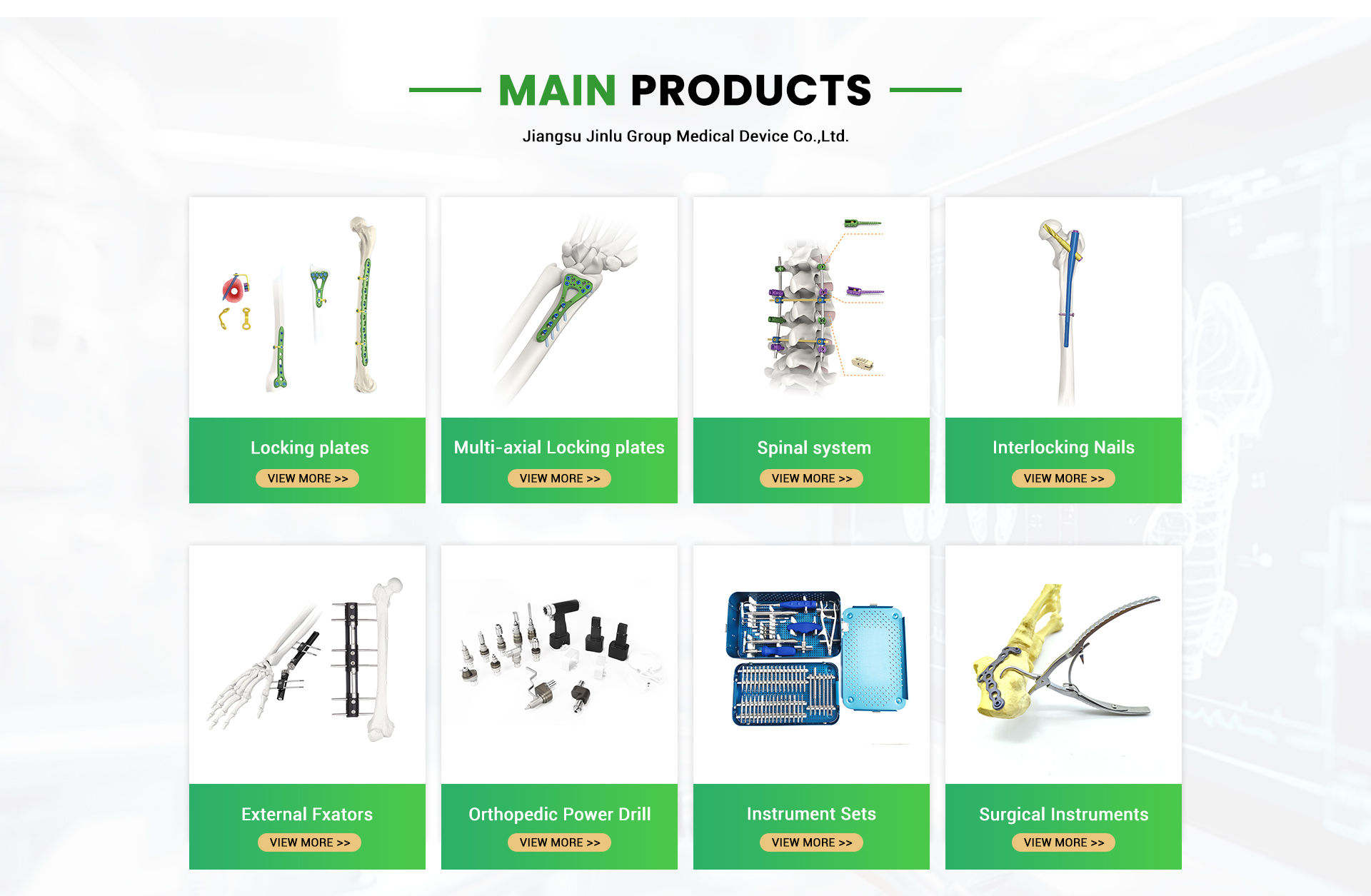
Full Cannulated Bore Screw System (2.4mm - 7.3mm)
Contact UsCannulated Bone Screw Biomechanics in Modern Guyana Trauma Protocols
Analyzing clinical demand, material integrity, and delivery stability across South America's fastest-growing healthcare frontier.
The Co-operative Republic of Guyana is experiencing unprecedented macroeconomic and infrastructure expansion. Driven by offshore energy growth and sustained capital deployment, the nation's public healthcare infrastructure is modernizing rapidly under the administration of the Ministry of Health (Guyana). Key tertiary facilities—including Georgetown Public Hospital Corporation (GPHC), New Amsterdam Hospital, Linden Hospital Complex, and emergent private tertiary institutions like St. Joseph Mercy and Woodlands Hospital—face escalating clinical demand for advanced trauma and orthopedic internal fixation products. Historically reliant on indirect intermediaries and geographically fragmented procurement chains, Guyanese healthcare providers require dependable direct relationships with ISO 13485 accredited manufacturers capable of delivering high-precision osteosynthesis devices.
Cannulated bore screws represent a cornerstone of minimally invasive orthopedic surgery (MIOS). Characterized by a continuous, precision-drilled longitudinal hollow channel, cannulated screws enable surgeons to insert a precise Kirschner wire (K-wire) across fracture fragments under intraoperative fluoroscopy. Once anatomic reduction and guidewire placement are radiographically verified, the cannulated screw is driven over the wire with microscopic trajectory accuracy. This technique eliminates the substantial soft-tissue stripping, periosteal devascularization, and extensive surgical dissection inherent to traditional open reduction and internal fixation (ORIF).
In Guyana’s coastal demographic hubs and interior mining or agricultural settlements (such as Bartica, Lethem, and the Rupununi), traumatic injuries from vehicular collisions, industrial machinery, and recreational transport require rapid, biological fracture stabilization. By drastically reducing operating room duration, intraoperative blood loss, and post-operative infection risks, cannulated bore screw instrumentation has evolved into an indispensable medical technology across emergency and elective orthopedic theaters.
Localized Clinical Applications Across Guyana's Healthcare Network
Engineered for procedural precision across femoral neck fractures, extremity trauma, and periarticular injuries.
Intracapsular Femoral Neck Fractures
In geriatric and high-impact osteoporotic trauma presentations common at GPHC, using three parallel inverted-triangle 6.5mm or 7.3mm cannulated screws provides rigid axial interfragmentary compression. This biomechanical construct resists shear forces while protecting the fragile ascending retinacular blood supply to the femoral head, mitigating avascular necrosis risks.
Ankle Syndesmotic & Malleolar Fractures
Addressing sports collisions, domestic slippage, and transport injuries across Demerara-Mahaica, partially and fully threaded 4.0mm and 4.5mm cannulated cancellous screws provide precise dynamic or static syndesmotic stabilization without requiring wide anterolateral arthrotomies, thereby encouraging immediate anatomical stability.
Distal Radial & Carpal Scaphoid Fixation
2.4mm, 2.7mm, and 3.0mm headless cannulated compression screws provide stable fixation for scaphoid waist non-unions and intra-articular distal radius shearing fractures. Headless designs sit flush beneath cartilage surfaces, preventing soft-tissue impingement during early wrist rehabilitation.
Slipped Capital Femoral Epiphysis (SCFE)
In pediatric orthopedic units handling complex cases transferred from hinterland communities, centrally positioned single 6.5mm or 7.3mm cannulated screws stabilize proximal femoral epiphyses without inducing premature chondrolysis or physeal disruption, safeguarding skeletal maturation.
Tibial Plateau & Periarticular Metaphyseal Trauma
High-energy polytrauma resulting from mining operations in Region 7 (Cuyuni-Mazaruni) and Region 8 (Potaro-Siparuni) frequently manifests as depressed tibial condylar fractures. Cannulated lag screws are inserted subchondrally through minimal cutaneous portals to hold elevated articular fragments firmly against anatomic buttress plates.
Jiangsu GMV Medical Cannulated Screw Technical Matrix
Strict dimensional engineering, aerospace tolerances, and high-performance metallurgical criteria.
| System Type | Outer Diameter (mm) | Cannulation Bore (Ø mm) | Guide Pin (Ø mm) | Material Standard | Primary Clinical Indications |
|---|---|---|---|---|---|
| Micro Cannulated | 2.4mm / 2.7mm | 0.9mm / 1.1mm | 0.8mm / 1.0mm | Ti-6Al-4V ELI (ISO 5832-3) | Hand, wrist, carpus, scaphoid, osteotomies |
| Mini Cannulated | 3.0mm / 3.5mm | 1.25mm / 1.35mm | 1.1mm / 1.2mm | Ti-6Al-4V ELI / 316L (ISO 5832-1) | Metatarsal, ankle, calcaneus, radial head |
| Small Fragment | 4.0mm / 4.5mm | 1.6mm / 1.75mm | 1.35mm / 1.5mm | Ti-6Al-4V ELI / 316L Stainless | Malleolar, tibial plateau, pelvic brim lag |
| Large Fragment | 6.5mm / 7.0mm | 2.8mm / 3.0mm | 2.0mm / 2.5mm | Ti-6Al-4V ELI (High Fatigue Grade) | Femoral neck, distal femur, sacroiliac joint |
| Heavy Large Cannulated | 7.3mm | 3.2mm | 2.8mm Threaded Tip | Ti-6Al-4V ELI (Medical Grade 5) | Intracapsular subcapital fractures, SCFE |
Emerging Procurement Trends in Guyana's Surgical Market
A strategic overview of national healthcare investments, logistical routes, and the shift to direct supplier partnerships.
Guyana’s surgical ecosystem is traversing a decisive structural transition. Historically, Caribbean regional supply chains relied on tiered trading conglomerates based in Trinidad, Barbados, or North American third-party exporters. This legacy framework routinely imposed 35% to 65% distribution markups, extended delivery windows, and caused fragmented instrumentation compatibility in Georgetown's emergency rooms. Three macro trends now redefine how Guyana purchases orthopedic implants:
1. Direct Factory Contracting and Public Tender Modernization: The National Procurement and Tender Administration Board (NPTAB) and institutional procurement committees have transitioned toward rigorous supplier qualification. Hospital executives and biomedical department heads prioritize direct partnerships with audited manufacturing facilities holding comprehensive quality dossiers (CE, ISO 13485, TÜV Rheinland verification). Direct factory agreements eliminate markups, safeguard batch consistency, and guarantee direct technical accountability.
2. Standardization of Matched Instrumentation Trays: Implant failure or surgical delays in isolated settings occur when drills, depth gauges, and screwdrivers fail to match screw tolerances. Modern procurement tenders in Region 4 (Demerara-Mahaica) stipulate matched instrumentation kits, including precision cannulated drills, hard-anodized cleaning wires, calibrated depth gauges, and ergonomic torque drivers in autoclavable containment cases.
3. Resilience Under Tropical Climatic and Logistical Pressures: Guyana experiences year-round equatorial humidity and marine salinity. Implants, packaging, and instruments must withstand demanding physical conditions. Suppliers must deliver vacuum-sealed, tamper-evident, peel-pack sterilization barrier packaging and electrochemically passivated alloys resistant to micro-pitting and stress corrosion during transport into interior mining basins.
Jiangsu GMV Medical: In-House Production & Global Reliability
Factory-direct engineering excellence verified on-site by TÜV Rheinland for total procurement security.

Concentric Cannulation Gun-Drilling
Utilizing high-speed Swiss-type CNC automatic lathes, we maintain runout tolerances under ±0.015mm across the entire longitudinal cannulated bore. This concentric precision prevents K-wire binding, drill wandering, or intraoperative sheath jamming.

Certified Aerospace & Medical Alloys
We source exclusively certified medical-grade Ti-6Al-4V ELI (ASTM F136 / ISO 5832-3) and implant-grade 316L stainless steel (ASTM F138 / ISO 5832-1). Every delivery lot includes full raw material chemical and mechanical test certificates.

Full Individual Lot Traceability
Every cannulated screw features high-contrast fiber laser etching denoting thread diameter, total length, and production heat code. This ensures complete traceability across central sterile supply departments (CSSD) and simplifies clinical audit protocols.

Empirical Torsional & Pull-Out Testing
Our in-house QA laboratories verify screw driving torque, breaking angle, and thread pull-out forces (ASTM F543) across dense synthetic bone media. Screws undergo rigorous fatigue analysis to guarantee interfragmentary compression without head shear.

TÜV Rheinland On-Site Audited Manufacturing
Our Jinfeng Town production base is assessed on-site by TÜV Rheinland, evaluating cleanroom control, multi-axis machining capabilities, and global quality management. We offer custom OEM/ODM packaging, labeling, and regulatory documentation for Guyana.
Frequently Asked Questions by Guyana Buyers
Addressing freight routes, regulatory documentation, material lifespans, and institutional procurement requirements.
How are cannulated bore screws shipped to Guyana, and what are typical lead times?
What documentation does GMV Medical provide for Guyana Ministry of Health import clearance?
Should hospitals in Guyana choose Titanium Alloy (Ti-6Al-4V) or 316L Stainless Steel?
How does GMV Medical ensure instruments and screws match accurately in surgery?
Can private distributors and local clinic networks request private labeling (OEM)?
Equip Your Guyana Surgical Facilities With Precision Implants
Partner directly with Jiangsu GMV Medical. Access factory pricing, TÜV Rheinland-verified quality systems, and dedicated export logistics for institutional tenders across Guyana.
Contact Us