Featured Orthopedic Systems & Surgical Toolkits
Engineered for immediate stabilization, skeletal reconstruction, and precise intraoperative handling across European surgical environments.

High-strength titanium and aircraft-grade aluminum alloy clamp delivering high torsional rigidity for bridging configurations.
Product Details
Anatomical simulation tool designed for surgical residency training, trauma simulation workshops, and clinical bio-mechanic study.
Product Details
Sterilizable surgical case containing quick-coupling reduction forceps, precise countersinks, and specialized screw guides.
Product Details
CE-certified high-frequency power tool engineered for precision osteotomies with low thermal generation and ergonomic grip.
Product Details
Detailed sectional model built from resilient PVC, designed for orthopedic trauma training and structural reference.
Product Details
High-grade surgical steel autoclavable instrument case with silicone fixtures for maximum component organization during cycles.
Product Details
High-torque rotational power handpiece featuring fine dynamic balancing for reconstruction and surgical revision tasks.
Product Details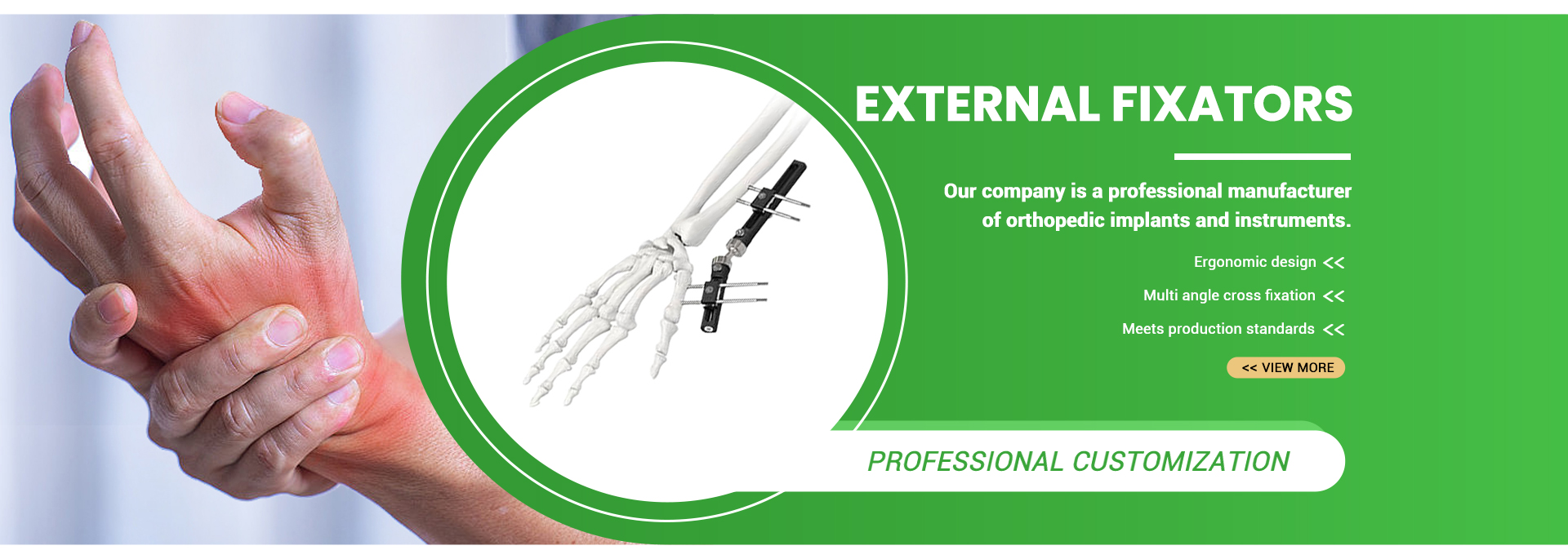
Complete trauma external stabilization set complete with carbon fiber radiolucent rods and self-drilling hydroxyapatite-coated pins.
Inquire NowClinical Integration & Trauma Dynamics in Central Norway (Trøndelag)
Trondheim serves as the central administrative and acute trauma care hub for Trøndelag and greater central Norway. Anchored by the renowned St. Olavs Hospital (Trondheim University Hospital), the regional trauma network manages complex blunt injuries, severe occupational trauma from maritime operations along the Trondheimsfjord, and severe poly-trauma incidents arising from high-latitude winter recreation across Oppdal, Meråker, and the surrounding mountains.
Under northern Scandinavian clinical protocols, immediate operative decision-making frequently utilizes Damage Control Orthopedics (DCO) over Early Total Care (ETC). When patients present with systemic hypothermia, coagulopathy, and acidosis—exacerbated by extended transit times across arctic weather patterns—definitive internal fixation poses unacceptable risks of systemic complication. Jiangsu GMV Medical delivers CE-certified external fixation systems engineered precisely to address this physiological window: ultra-rapid spanning frames that establish biomechanical stability within twenty minutes, minimizing surgical trauma and preserving vital soft-tissue envelopes.
| Trauma Presentation | Local Environmental Context (Trøndelag) | Indicated Fixation Architecture | Clinical Biomechanical Outcome |
|---|---|---|---|
| High-energy Pilon & Tibial Plateau Fractures | Alpine sports impact, high-speed icy roadway collisions on the E6 highway network | Delta or bridging unilateral frames with carbon-fiber radiolucent bars | Rapid joint distraction, soft-tissue decompression, MRI-compatible diagnostic follow-up |
| Open Gustilo-Anderson Type IIIB/C Diaphyseal Fractures | Maritime processing injuries, forestry and heavy offshore engineering accidents | Multi-planar modular pin-to-rod fixators with dynamic axial compression capability | Rigid stabilization without periosteal stripping, full surgical access for vascular reconstruction |
| Pelvic Ring Disruption (Tile B & C) | Crush injuries, snowmobile roll-overs in remote high-latitude terrain | Anterior supra-acetabular pelvic external fixators with self-tapping Schanz screws | Immediate retroperitoneal volume reduction, rapid hemostasis during emergency resuscitation |
| Post-Traumatic Chronic Osteomyelitis & Nonunion | Delayed presentation cases, deep complex structural bone loss | Multi-ring circular Ilizarov apparatus & computerized hexapod systems | Distraction osteogenesis, simultaneous limb lengthening, and gradual angular deformity correction |
Furthermore, because St. Olavs Hospital pioneers advanced digital radiography and intraoperative imaging methodologies in Scandinavia, our instrumentation emphasizes radiolucent carbon-fiber connecting elements. This engineering reduces scattering artifacts under fluoroscopy and high-resolution computed tomography (CT), enabling orthopedic surgeons to confirm anatomical alignment and joint space restoration without disassembling structural fixator rings.
Technological Evolution & Procurement Shifts Across Nordic Healthcare
The Nordic orthopedic ecosystem—historically led by centralized regional authorities such as Helse Midt-Norge RHF—is undergoing structural shifts in how surgical medical hardware is sourced, audited, and deployed. Distributors and hospital purchasing syndicates are pivoting beyond conventional multi-tier procurement toward factory-direct engagements with certified Original Equipment Manufacturers (OEM). Four primary vectors are redefining the external fixation landscape across Trondheim and the wider Nordic territory:
Rigorous MDR (EU 2017/745) Adherence
With the sunset of the Medical Device Directive (MDD), Norwegian clinical registries demand thorough clinical evaluation reports (CER), stringent Post-Market Clinical Follow-up (PMCF), and full traceability via Unique Device Identification (UDI) laser marking.
Decarbonization & Circular Supply Chains
Public health authorities across Norway enforce carbon-accounting scorecards in tender tenders. Utilizing high-strength, recyclable medical-grade alloys along with durable, multi-cycle autoclavable instrument containment significantly decreases total operational waste.
Hexapod Computerized Deformity Correction
The adoption of web-based spatial planning software coupled with multi-axial hexapod rings has surged for nonunion management and pediatric limb discrepancies. GMV Medical designs modular strut joints calibrated down to sub-millimeter adjustment increments.
As academic surgical research conducted at institutions like NTNU (Norwegian University of Science and Technology) continues to highlight the economic burdens of extended hospital stays, the market for modular external fixators is increasingly focused on outpatient conversion. Fixators that allow conversion from rigid acute bridging to dynamic weight-bearing frames assist early functional mobilization, directly aligning with Scandinavian postoperative rehabilitation models.
Engineering Integrity Backed by TÜV Rheinland On-Site Audits
Jiangsu GMV Medical Device Co., Ltd. is not an export broker or intermediary. We operate fully integrated medical manufacturing workshops in Jinfeng Town, Suzhou, China, maintaining uncompromising oversight over raw metallurgy, tight tolerance CNC machining, surface passivation, and batch mechanical validation.
Precision CNC Turning & Machining
Our facility operates multi-axis CNC machining centers, precision slitting machinery, and Swiss-type lathes capable of maintaining tight tolerances (within ±0.005mm) across Schanz pins, dynamic ball joints, and locking ring couplings.
In-House Mechanical & Optical Testing
Every production run undergoes strict quality validation in our physical testing laboratories. Equipped with automated tensile testing apparatus, optical profile projectors, and micro-hardness testers, we verify yield strength, pull-out resistance, and surface roughness before dispatch.
Full UDI Traceability & Laser Marking
Every component, clamp, and pin is permanently etched with batch identification, CE marks, and GS1-compliant 2D DataMatrix codes, providing seamless integration with hospital inventory networks and traceability systems.
OEM / ODM Custom Design Services
From client-supplied 3D CAD files or customized clinical specifications, our 121+ dedicated personnel and R&D engineers deliver customized surgical sets, custom clamp geometries, and private-label hospital packaging.
TÜV Rheinland Assessed Facilities
Our export manufacturing workflows, quality management infrastructure, clean assembly bays, and inventory storage warehouses are fully assessed by third-party auditor TÜV Rheinland, ensuring verification you can trust.
System-Matched Surgical Instrument Kits
Unlike fragmented suppliers, we manufacture matching surgical instrument trays, drill bits, bone taps, and quick-release hex wrenches within modular anodized sterilization cassettes, eliminating mismatch during operating theatre setup.
Frequently Asked Questions by Scandinavian Importers & Tender Teams
Answers to common regulatory, logistical, and technical questions regarding factory-direct supply into Norway and the Nordic Economic Zone.
How do Jiangsu GMV Medical external fixators comply with Norwegian MDR and CE requirements?
What metallurgical grades are utilized for external fixator rods, clamps, and Schanz pins?
Can our procurement committee or clinical staff arrange a remote or on-site factory audit?
What are the standard lead times and export logistics arrangements to Trondheim and Oslo?
Do you provide OEM private labeling and customized sterilization tray configuration?
Procure Verified Fixation Systems for Scandinavian Healthcare
Connect with our technical engineering group to request MDR compliance dossiers, product specification sheets, or bulk factory-direct pricing for regional hospital networks.
