Featured Orthopedic Systems & Surgical Power Instruments
Standardized, hospital-ready trauma hardware engineered for immediate clinical integration across Republican Šiauliai Hospital and Baltic surgical procurement groups.
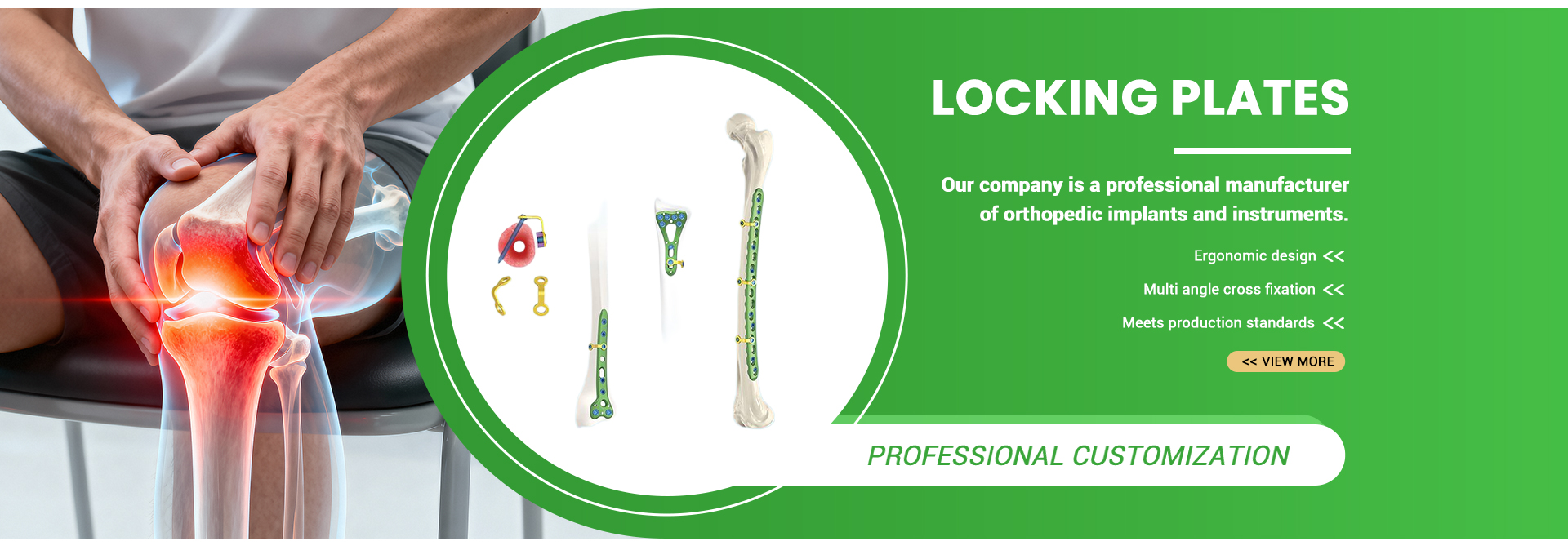
Dynamic Hip Screw (DHS) Osteosynthesis System
Standard 135° barrel plates manufactured in medical Ti-6Al-4V ELI and 316L. Engineered for controlled dynamic telescoping and lateral impaction in extracapsular hip fractures.

External Fixator Ringent Rod Coupling
High-strength snap-fit rod-to-rod and rod-to-pin clamps. Rapid mechanical locking for acute stabilization of polytrauma, open pelvic fractures, and distal tibia injuries.

Small Fragment Upper Limb Instrument Kit
Complete autoclavable stainless steel manual instrumentation set for 2.7mm/3.5mm cortex, cancellous, and locking reconstruction plates used in clavicle, radius, and ulna surgery.

CE Certified Electric Sternum Saw & Drill
Brushless autoclavable motor system engineered for sternotomy and major bone resection. Delivers high-torque oscillation with thermal necrosis suppression.

Electric Surgical Implant Tool Box System
Medical grade anodized aluminum and stainless steel organization case designed for microsurgical instruments, precision drills, and dynamic implant drivers.

High-Speed Surgical Turbine Handpiece
Balanced micro-rotational drive optimized for osteotomies, bone contouring, and reconstructive bone drilling with integrated irrigation spray channels.
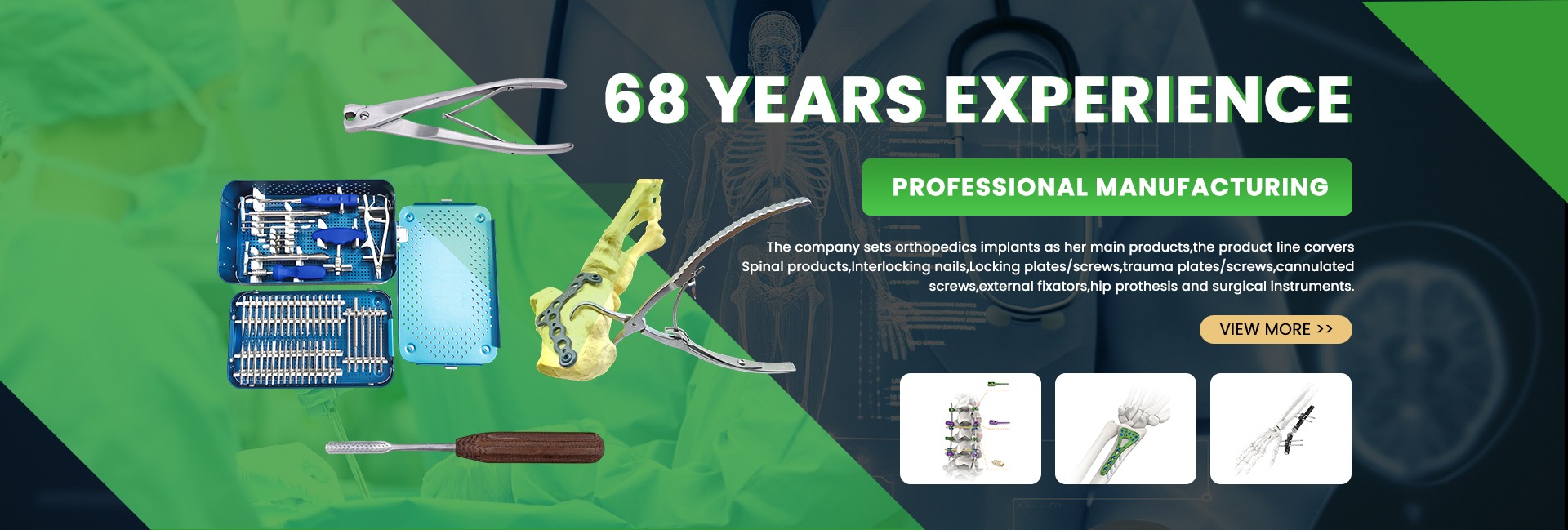
Multi-Axial Variable-Angle Locking Plates
Polyaxial locking screw technology allowing ±15° directional trajectory. Superior biomechanical purchase in osteopenic periarticular femur and tibia fractures.

Anatomical Demonstration Skeleton Models
High-precision anatomical bone models used by orthopedic residency departments and surgical simulation laboratories across university hospitals in the Baltic States.
Engineering Principles of the Dynamic Hip Screw in Extracapsular Proximal Femoral Fractures
Proximal femoral fractures, specifically pertrochanteric and intertrochanteric fractures classified under AO/OTA 31-A1 and 31-A2, represent the highest burden of acute orthopedic hospitalizations in geriatric trauma centers. In northern industrial and healthcare hubs like Šiauliai, clinical success hinges upon hardware that can simultaneously withstand dynamic cyclic axial load while facilitating biologically driven osseous union. The Dynamic Hip Screw (DHS) system manufactured by Jiangsu GMV Medical Device Co., Ltd. is engineered specifically around the classical principles of controlled telescoping dynamic impaction, minimizing the risks of lag screw cut-out, medialization of the distal shaft, and catastrophic implant fatigue failure.
Dynamic Biomechanical Load Transfer vs. Rigid Static Failure
Unlike non-telescoping fixed-angle blade plates or poorly toleranced rigid lag screws, the GMV DHS incorporates an ultra-precision honed internal barrel surface (Ra < 0.4 µm) with matching external lag screw flat-guide tolerances. When patients begin early partial weight-bearing during postoperative rehabilitation, gravitational ground reaction forces generate axial compression along the femoral neck axis. The GMV Dynamic Hip Screw converts these deforming shear stresses into constructive axial compression across the osteotomy or fracture interface.
The controlled sliding of the lag screw barrel mechanism preserves bony contact along the calcar femorale. By permitting the proximal fracture fragment to settle dynamically onto the stable calcar pillar of the femoral shaft, load transmission is shared between the titanium or cobalt-alloy hardware and living cortical bone. This dynamic load-sharing prevents cyclic tensile bending moments from localizing at the plate-barrel junction, which historically is the primary locus for fatigue fracture in sub-standard trauma hardware.
Metallurgical Architecture: Titanium Grade 5 ELI vs. Implant-Grade 316L
Material selection governs clinical endurance in high-load skeletal environments. GMV Medical manufactures DHS side plates, dynamic lag screws, and compression locking screws in two distinct certified metallurgical profiles: Ti-6Al-4V ELI (Extra Low Interstitial, ISO 5832-3 / ASTM F136) and Medical-Grade 316L Stainless Steel (ISO 5832-1 / ASTM F138). Each billet of medical raw material undergoes ultrasonic testing for crystalline micro-fissures and chemical spectrometry verification before entering our 5-axis CNC machining centers in Jiangsu.
Ti-6Al-4V ELI exhibits an elastic modulus (approximately 110 GPa) significantly closer to human cortical bone (18–20 GPa) than traditional surgical stainless steel (approx. 200 GPa). This substantial reduction in structural stiffness minimizes stress shielding, accelerating cortical remodeling and periosteal callus maturation. Conversely, our vacuum arc remelted (VAR) 316L stainless steel offers high ductility, cold-work fatigue resistance, and exceptional economic viability for high-volume central European and Baltic public hospital procurement tenders where clinical durability must align with strict budgetary targets.
| Biomechanical / Material Parameter | GMV Medical Dynamic Hip Screw | Generic / Low-Cost Import DHS | Clinical Significance for Surgeons |
|---|---|---|---|
| Raw Material Specification | Ti-6Al-4V ELI (ISO 5832-3) / 316L (ISO 5832-1) | Commercial Grade 304 or unverified Titanium | Prevents metallosis, galvanic corrosion, and micro-cracking |
| Barrel-to-Lag Tolerances | H7/g6 slide fit tolerance (±0.008 mm) | Variable tolerance (±0.05 mm or looser) | Prevents mechanical "jamming" and toggle cut-out |
| Tip-Apex Distance (TAD) Safety | Reverse-buttress deep thread profile with self-tapping tip | Standard coarse machine thread | Maximizes bone-to-implant surface area; maintains TAD < 20mm |
| Available Barrel Angles | 130°, 135°, 140°, 145°, 150° (Short & Long Barrel) | Typically only 135° standard | Allows anatomical restoration of coxa vara and valga anatomy |
| Side Plate Screw Configurations | Combination holes (Dynamic Compression + Locking) | Plain round or single slotted holes | Superior cortical purchase in osteopenic and osteoporotic shafts |
| Traceability & Surface Marking | High-contrast femtosecond laser batch tracking | Basic stamp or ink marking | Full MDR (EU 2017/745) UDI-compliant traceability |
Optimization of the Tip-Apex Distance (TAD) & Cut-Out Prevention
Lag screw cut-out remains the most feared technical complication in pertrochanteric hip reconstruction, frequently necessitating rescue arthroplasty or total hip conversion. Pioneered by Baumgaertner, clinical data demonstrates that a Tip-Apex Distance (TAD) of less than 25 mm (measured on calibrated anteroposterior and lateral radiographs) is required to reduce cut-out rates to under 1%. The GMV Medical DHS lag screw incorporates a specialized deep reverse-buttress thread configuration with a diameter of 12.7 mm, providing elevated resistance against superior migration and rotational toggle in the trabecular matrix of the femoral head.
Furthermore, our dedicated instrumentation kit features radiolucent targeting guides and precision-calibrated triple reamers that prepare the outer cortex, femoral neck channel, and barrel shoulder in a single step. This eliminates eccentric reaming trajectories, ensuring the screw is positioned dead-center in the femoral head on both orthogonal views, delivering biomechanical stability even in osteoporotic bones.
Localized Application Scenarios in Šiauliai & Northern Lithuania
Šiauliai serves as the fourth largest metropolitan region in Lithuania and acts as the crucial medical nexus for the entire Šiauliai County (Šiaulių apskritis), including surrounding districts such as Radviliškis, Joniškis, Kelmė, Pakruojis, and Akmenė. Understanding the specialized clinical landscape of this territory is essential for surgical teams, biomedical directors, and orthopedic distributor partners.
Republican Šiauliai Hospital Trauma Hub
As the primary tertiary referral center (VšĮ Respublikinė Šiaulių ligoninė), the orthopedic-traumatology departments handle severe polytrauma, industrial machinery incidents, and complex pertrochanteric fractures requiring immediate intervention within 24–48 hours of admission.
Sub-Zero Baltic Winter Trauma Surges
During northern Lithuanian winter months (November through March), freezing rain, black ice, and snow elevate seasonal slip-and-fall incidents among older demographics. A reliable supplier must maintain rapid stock delivery to prevent operating room supply shortages during regional cold snaps.
Managing Elderly Osteoporotic Bone Stock
The demographic aging across Šiauliai County heightens the prevalence of severe Type II osteoporosis. GMV DHS systems feature combination locking compression plate holes, providing rigid screw locking against weak cortical bone while allowing the lag screw to glide smoothly.
Market Trends: Why Lithuanian Hospitals Shift to Direct Verified Manufacturers
Healthcare procurement within Lithuania operates under strict centralized and municipal oversight managed through the Valstybinė ligonių kasa (VLK - National Health Insurance Fund) and the Centrinė perkančioji organizacija (CPO LT). In recent fiscal cycles, significant structural shifts have redefined how medical hardware is selected, evaluated, and procured:
1. Pressure from DRG-Based Reimbursement (NordDRG System)
Lithuania's healthcare financing relies on the NordDRG (Diagnosis-Related Group) methodology. Under fixed-case hospital reimbursements, surgical departments cannot sustain inflated 300% to 500% price markups imposed by Western European or North American middleman brand distributors. Hospital administrators in Šiauliai and Vilnius are increasingly executing direct supply agreements or working with authorized distributors who partner directly with audited ISO 13485 Chinese manufacturers like Jiangsu GMV Medical. By procuring at source, clinical facilities save between 35% and 55% on unit hardware costs while preserving identical surgical metallurgical metrics.
2. Strict Compliance with EU Medical Device Regulation (MDR 2017/745)
The end of transition windows under the former MDD 93/42/EEC framework has created severe implant shortages across European regional medical networks. Unprepared suppliers have exited the market due to regulatory backlog. Jiangsu GMV Medical maintains proactive conformity assessment documentation, technical files, biocompatibility dossiers (ISO 10993), and post-market clinical follow-up (PMCF) plans aligned with MDR Class IIb/III internal fixation hardware, ensuring continuity in public tenders without administrative disqualification.
3. Dynamic Hip Screws vs. Cephalomedullary Nails (PFNA) Debate
While cephalomedullary intramedullary nails (such as PFNA or Gamma Nails) are widely favored for reverse oblique and subtrochanteric fractures, international clinical literature confirms that standard stable two-part intertrochanteric fractures (AO 31-A1) treated with Dynamic Hip Screws achieve identical healing rates, lower hardware costs, and reduced risk of anterior cortical impingement or iatrogenic femoral shaft fractures. For Baltic trauma programs striving for evidence-based cost effectiveness, the DHS remains an indispensable foundational implant in every orthopedic emergency inventory.
Comparative Matrix: Tier-1 Western Brands vs. GMV Medical vs. Unverified Traders
When procurement officers in Šiauliai submit tenders to CPO LT, they evaluate technical quality, clinical support, delivery reliability, and life-cycle cost. The breakdown below details how GMV Medical bridges high-level European clinical demands with direct Chinese factory pricing.
Western Multinational Tier-1
Synthes, Stryker, Zimmer Biomet, etc.
- Excellent brand awareness in Baltic clinical circles
- High acquisition price (3x–5x higher unit cost)
- Inflexible custom design adjustments for local tenders
- Lengthy warranty procedures via layered distributor branches
- Increasing shortages due to EU MDR portfolio trimming
Jiangsu GMV Medical
Direct TÜV-Verified Manufacturer (Suzhou, China)
- Full compliance: ISO 13485 & CE certification dossiers
- Factory direct pricing: Saves 40–55% on public hospital budgets
- TÜV Rheinland verified: On-site assessed QA/QC labs and CNC lines
- Customization flexibility: OEM/ODM private labeling & kit design
- Rapid logistics: Reliable air cargo to Vilnius/Kaunas or sea freight via Klaipėda port
Unverified Trading Intermediaries
Generic Export Agents without Production Assets
- Low initial quotes masking sub-par metallurgy
- No on-site cleanrooms or mechanical test facilities
- Inability to supply genuine raw material batch certificates
- High risk of customs seizure or tender disqualification under MDR
- Zero post-market clinical traceability or surgeon support
Why European Distributors & Hospital Groups Partner with GMV Medical
Headquartered in Jinfeng Town, Suzhou, Jiangsu Province, Jiangsu GMV Medical Device Co., Ltd. operates across 27+ years of dedicated orthopedic manufacturing. We do not operate as an intermediary; we own and operate our production infrastructure, guaranteeing direct traceability from raw titanium rod stock to sterilized, sealed patient implants.
TÜV Rheinland On-Site Assessed
Our production facilities, testing protocols, cleanroom parameters, and trade capabilities undergo thorough independent inspection by TÜV Rheinland, providing European partners with verifiable evidence for hospital procurement compliance.
In-House Precision Machining Fleet
Equipped with advanced multi-axis CNC Swiss-type lathes, high-precision machining centers, robotic polishing cells, and computerized laser engraving systems to secure repeatable micro-tolerances across every dynamic hip screw and side plate.
Physical & Metallurgical QA Laboratory
Every production batch is tested in-house on calibrated tensile machines, torsional fatigue testers, optical profile projectors, and Vickers hardness analyzers to ensure mechanical strength exceeds ISO and ASTM requirements.
Complete System-Matched Instrumentation
Implants perform best when paired with purpose-built instruments. GMV Medical provides custom graphic-case autoclavable instrument sets, reamers, depth gauges, and tap guides matched to each implant line, eliminating operating room friction.
OEM & ODM Custom Engineering
We provide full design customization, customized plate curvature modifications, private labeling, laser brand serialization, and sterile barrier packaging tailored for regional orthopedic brands across the Baltic and Nordic regions.
Multilingual Dedicated Export Support
Our international trade team maintains streamlined export corridors, providing freight documentation, bilingual technical inserts, customs clearing declarations, and round-the-clock technical communication for global buyers.
Frequently Asked Questions for Šiauliai & Baltic Importers
Clear, direct answers regarding certifications, order logistics, surgical compatibility, and factory inspections for hospital buyers and orthopedic distributors.
Are GMV Medical Dynamic Hip Screw systems compliant with Lithuanian and EU MDR regulations?
What are the shipping routes and transit lead times from your factory to Šiauliai, Lithuania?
Can Lithuanian hospital biomedical engineers or distributor teams audit your manufacturing facilities?
Are GMV Dynamic Hip Screws compatible with standard AO/ASIF surgical instrumentation sets?
Do you offer OEM private labeling and customized instrument box layouts for local distributors?
Equip Your Surgical Network with Verified DHS Systems
Connect directly with our engineering and export departments to receive complete technical drawings, biocompatibility files, and commercial tender pricing tailored for the Lithuanian and Baltic markets.
