
CSSD Sterilization Trays
Electric Surgical Dental Implant Tool Box Steel Construction
Heavy-gauge passivated medical stainless steel container designed for repetitive steam autoclave cycles in central sterilization facilities.
Precision-calibrated instrument trays, modular external fixation couplers, medical power saws, and educational anatomical apparatuses manufactured for operating theaters and clinical training centers across Budapest.
Heavy-gauge passivated medical stainless steel container designed for repetitive steam autoclave cycles in central sterilization facilities.

High-precision anatomical reproduction crafted from non-toxic medical PVC, engineered for craniomaxillofacial pre-op planning and academic curricula.

Ultra-rigid mechanical coupling clamp for polytrauma damage-control frames, supporting carbon fiber rods and Schanz screws with zero torsional slip.

Complete periarticular surgical set containing calibrated drill guides, countersinks, bone reduction forceps, and depth gauges for radius/ulna repair.

High-torque oscillating sternum bone saw with brushless motor architecture, ergonomic balanced casing, and autoclavable lithium-power shielding.

Dissectible cranial structure featuring hand-painted muscle origin and insertion mappings, engineered for residency surgical simulation in surgical labs.

Ultra-concentric air-driven turbine tool for oral, reconstructive, and small bone osteotomies, featuring integrated water jet cooling and ceramic bearings.
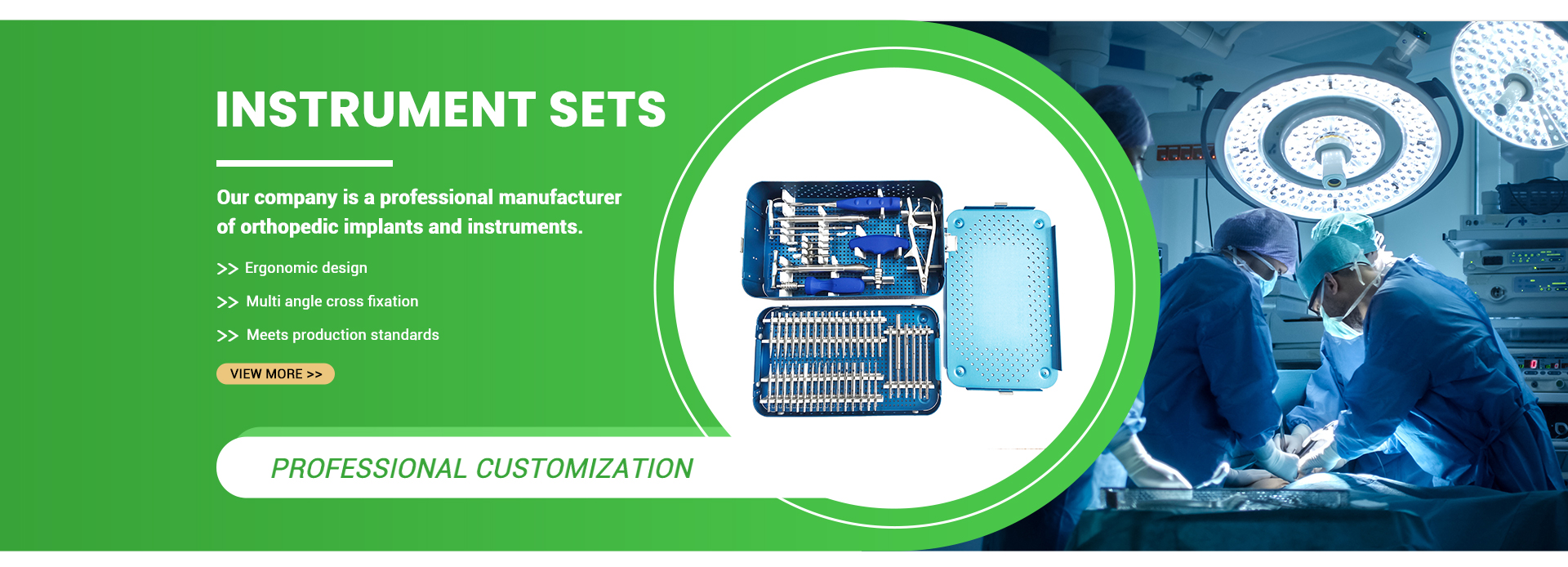
Multi-tier anodized aluminum sterilization box fully outfitted with quick-coupling silicone handles, bone tamps, tap sleeves, and self-centering retractors.
The Metropolitan Budapest healthcare corridor—anchored by historic tertiary care academic networks such as the Semmelweis University Clinical Centre, acute regional trauma units like the Dr. Manninger Jenő National Trauma Centre (Péterfy Sándor Utcai Kórház), and specialized spinal units like the National Center for Spinal Disorders (Budai Egészségközpont)—operates under stringent economic and regulatory imperatives. As public hospital management is streamlined under Hungary's National Directorate-General for Hospitals (OKFŐ - Országos Kórházi Főigazgatóság) and monitored through central procurement platforms like KEF (Közbeszerzési és Ellátási Főigazgatóság), clinical directors and biomedical procurement executives face a double-edged challenge: maintaining surgeon-grade instrumentation quality while mitigating escalating European supply chain inflation.
In response to this fiscal tightening, Hungarian medical distributors, private surgical clinics (such as Duna Medical Center and Medicover), and hospital supply consortiums are re-evaluating historical sole-source dependencies on high-margin Western European conglomerates. The strategic pivot toward direct-from-manufacturer Chinese partnerships has transitioned from a pure cost-arbitrage tactic to a structured quality play. Chinese manufacturers with on-site independent accreditation—such as Jiangsu GMV Medical Device Co., Ltd. (TÜV Rheinland verified, with 27+ years of specialized manufacturing)—provide Budapest institutions with audited metallurgic provenance, full biocompatibility documentation, and direct OEM/ODM customization capability that satisfies both European MDR and local tender requirements.
Instrument set integrity directly influences operating theater throughput in Budapest's central sterilization departments. A surgical instrument set cannot simply mimic anatomical geometries; it must withstand alkaline enzymatic detergents, ultrasonic cavitations, and continuous steam autoclaving cycles at 134°C without suffering hydrogen embrittlement, pitting, or passivity breakdown. For trauma and reconstructive surgeons across Hungary, surgical precision is non-negotiable. Sourcing directly from verified Chinese facilities that maintain end-to-end CNC machining, laser identification marking, and optical quality verification bridges the budgetary gap without compromising clinical efficacy.
Every instrument set and implant component is laser-marked with lot numbers and item identifiers, backed by mill test certificates (DIN EN 10204 3.1) and comprehensive technical documentation to facilitate effortless MDR (EU) 2017/745 dossier submissions and OGYÉI/NNGYK notifications.
Utilizing high-precision multi-axis Swiss-type lathes and CNC vertical milling centers in Suzhou, GMV achieves micron-level tolerances for torque shafts, locking drill sleeves, and articulated clamping heads, preventing intraoperative cam-out and stripping during rigorous bone fixation.
Custom tailored to Hungarian hospital tender requirements and private distributor brand architectures. We supply custom anodized instrument trays, bespoke laser branding, modified ergonomic handle geometries, and complete customized kit assortments optimized for local surgical preferences.
Engineered to interface seamlessly with standard European clinical techniques, our instrument ecosystems streamline operative duration, lower infection vectors, and enhance intraoperative tactile feedback.
In high-throughput casualty units like Manninger Jenő Trauma Centre, our Modular External Fixation Couplers and Carbon Rods facilitate rapid, rigid temporary stabilization for open tibia/femur fractures, combating shock and secondary tissue necrosis.
For elective joint reconstruction at Semmelweis University Orthopedic Clinic, our Small and Large Fragment Instrument Sets offer surgeons precision-calibrated depth gauges, quick-locking tap handles, and atraumatic retractors for anatomical plate reduction.
Designed for complex lumbar and thoracolumbar surgeries at specialized centers, GMV’s dedicated spine instrument sets feature calibrated torque limiters, gear-driven rod benders, and universal ball-tipped probes for error-free cortical pedicle preparation.
Medical training institutions and dissection laboratories in Budapest utilize our Anatomical Skull & Skeleton Models to demonstrate biomechanical vectors, complex osteotomies, and pre-operative plate contouring during surgical residency programs.
The Hungarian medical device marketplace is undergoing rapid structural evolution driven by three defining vectors: the full enforcement of the European Medical Device Regulation (EU MDR 2017/745), persistent volatility in the HUF/EUR (Hungarian Forint to Euro) currency exchange pair, and central consolidation of hospital operational budgets via OKFŐ. As the National Health Insurance Fund of Hungary (NEAK - Nemzeti Egészségbiztosítási Alapkezelő) re-benchmarks procedural reimbursements for diagnosis-related groups (HBCs - Homogén Betegségcsoportok), hospital administrators in Budapest are actively removing cost inefficiencies from surgical inventory.
Historically, procurement boards contracted turnkey packages through Western multinational device manufacturers at steep premiums. Today, savvy Hungarian distributors adopt a hybrid procurement framework: sourcing Class III active implants and proprietary total joints under legacy contracts, while disaggregating Class I/IIa surgical instrument sets, modular external fixator systems, bone saw attachments, and general sterilization trays to qualified, verified Chinese OEM manufacturers. By procuring instrument sets from Jiangsu GMV Medical at ex-factory price points, Budapest distributors achieve a 35% to 55% reduction in landed equipment capital expenditure, allowing them to bid aggressively in national public tenders while maintaining full MDR compliance.
Furthermore, post-pandemic supply chain risk mitigation policies have made supplier auditing paramount. With TÜV Rheinland on-site factory verification, over 121 technical specialists, and dedicated tensile, optical, and hardness testing laboratories in Suzhou, Jiangsu GMV eliminates the intermediary risk. Hungarian procurement directors can review third-party audit reports, verify material test certificates before vessel departure, and inspect custom laser-etched inventory in full alignment with Hungarian customs and healthcare regulations.
| Performance & Compliance Metric | GMV Medical Export Specification | Standard European Tender Baseline | Strategic Advantage for Budapest Buyers |
|---|---|---|---|
| Raw Material Standard | ISO 5832-3 (Ti-6Al-4V ELI) / ISO 5832-1 (316LVM) | EN ISO 5832 Equivalency | 100% Certified Mill test certs per heat batch |
| Sterilization Durability | Tested for 200+ Autoclave Cycles @ 134°C | Minimum 50 Standard Cycles | Eliminates pitting, rust, and premature latch failure |
| Dimensional Tolerance (CNC) | ±0.005 mm on critical drive interfaces | ±0.02 mm General standard | Zero stripping with hex and torx driver screws |
| Factory Verification Status | TÜV Rheinland On-Site Physical Inspection | Self-declared compliance / Agency brokers | Audit dossiers ready for hospital tender committees |
| Procurement Lead Time | 15–30 Days Direct Dispatch (Express Air/Rail) | 8–16 Weeks Backordered Regional Stock | Fast restocking via Budapest Airport / Rail Freight |
| Custom Brand Marking | High-contrast fiber laser etching included | Restricted to proprietary branding | Supports Hungarian distributor private labeling |
Direct technical answers regarding regulatory dossiers, minimum order quantities, shipping logistics to Budapest, and custom surgical kit configurations.
Our surgical instrument sets, external fixators, and trauma kits are produced in strict adherence to ISO 13485:2016 quality management systems. We provide comprehensive technical documentation, raw material mill test certificates (ISO 5832 standards), biocompatibility data (ISO 10993), and risk assessments to ensure your regulatory team or Authorized Representative (EC REP) can register the product lines with OGYÉI/NNGYK.
Yes. We specialize in design-based OEM/ODM customization. Budapest tender specifications often require specific combinations of bone holding forceps, calibrated drill bits, and tap sleeves in a single sterilization case. Send us your tender item list or sample drawings; our Suzhou engineering team will produce 3D CAD tray layouts and prototype customized sterilization cases accordingly.
For urgent surgical replenishment and hospital tender deadlines, we offer air-cargo direct from Shanghai Pudong (PVG) to Budapest Ferenc Liszt International Airport (BUD) with a 5–7 day transit window. For scheduled containerized volume orders, we utilize regular rail freight (Yiwu/Chongqing to Budapest via the Silk Road corridor, ~18–22 days) or maritime shipping through Koper or Hamburg.
Implant failure is not tolerated. GMV operates an in-house destructive and non-destructive testing facility in Suzhou equipped with computerized tensile testing machines, Vickers and Rockwell hardness testers, and high-precision optical profile projectors. Every heat-lot of medical-grade steel and titanium is quarantined, verified, and accompanied by batch traceability logs down to the individual surgical tray.
We welcome third-party and buyer-led factory audits. We are independently verified on-site by TÜV Rheinland. In addition to reviewing our published verification reports, Hungarian procurement committees and biomedical engineers can schedule live high-definition video audits of our CNC production workshops, clean packaging areas, and testing laboratories, or visit our facility in Jinfeng Town, Suzhou.
Our trauma, small fragment, and large fragment instrument sets are engineered based on standardized AO/ASIF clinical parameters. Quick-connect drivers, drill sleeves, and screw forceps feature universal mating profiles compatible with global titanium bone plates and screws, eliminating compatibility issues in busy Hungarian central sterile supply departments.
Accelerate your medical procurement cycle. Request complete product catalogs, dimensional specifications, TÜV Rheinland verification dossiers, or custom OEM manufacturing quotations tailored to the Hungarian and CEE marketplace.
