Precision Orthopedic Implants & Surgical Instrumentation
Verified biomechanical solutions matching European standards, supplied directly to medical distributors, healthcare tenders, and university surgical faculties across Kaunas and Lithuania.







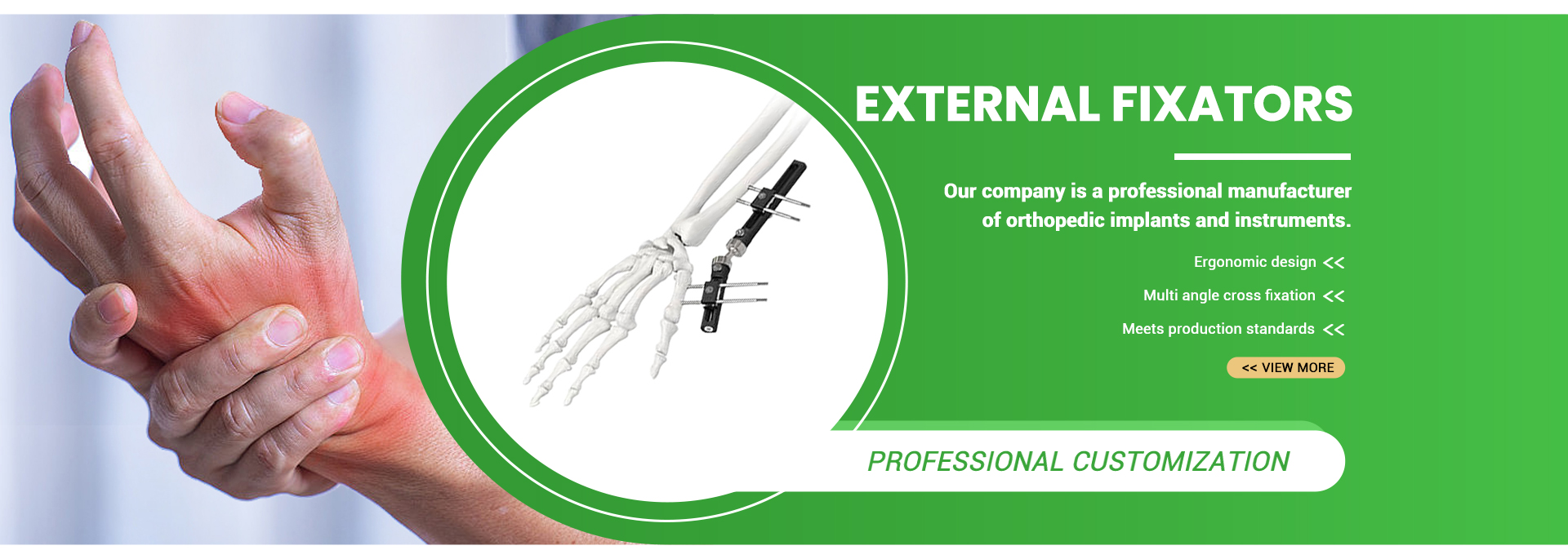
External Fixator Ring Mechanics: The Multi-Planar Biomechanical Imperative
In modern high-energy traumatology, the circular external fixator represents the gold standard for skeletal stabilization where conventional internal fixation is strictly contraindicated. As a certified manufacturer and premier external fixator ring exporter for Kaunas, Lithuania, Jiangsu GMV Medical Device Co., Ltd. engineers tensioned-wire circular ring frameworks based on rigorous principles of distraction histogenesis, beam deflection mechanics, and multi-planar axial elasticity. Fractures managed within the trauma divisions of Kaunas—particularly at university-affiliated centers such as the Hospital of Lithuanian University of Health Sciences Kauno Klinikos (Lietuvos sveikatos mokslų universiteto Kauno klinikos)—often involve severe soft-tissue compromise (Gustilo-Anderson Grade IIIB and IIIC open fractures), extensive comminution, and active contamination. In such precarious clinical presentations, plate osteosynthesis or unreamed intramedullary nailing risks catastrophic implant sepsis, chronic osteomyelitis, and non-union.
The biomechanical superiority of circular external fixators over unilateral monolithic frames lies in the three-dimensional distribution of radial forces. Transfixion Kirschner wires (smooth or olive-stopped, ranging from 1.5 mm to 2.0 mm diameter) are anchored across complete 360-degree aluminum alloy or carbon-fiber composite rings. When tensioned to protocol-calibrated levels via calibrated wire tensioners, these wires function in tension rather than bending. This mechanical architecture creates a rigid structural cage around the traumatized limb segment, distributing loads symmetrically around the physiological mechanical axis of the tibia or femur, neutralizing catastrophic shear and rotational moments while maintaining beneficial axial micromotion during patient ambulation.
Metallurgical Specifications: Titanium Grade 5 vs. Aircraft-Grade Aluminum Alloy
Material science defines the longevity, structural stiffness, and radiological utility of external fixator rings. Our manufacturing plant in Jinfeng Town, Suzhou, utilizes computer-numeric-controlled (CNC) 5-axis machining to craft circular rings, half-rings, 5/8 rings, and carbon-fiber hybrid arches according to strict ISO 5832-3 and ASTM F136 requirements. Below is the comparative structural breakdown of ring materials deployed across Kaunas orthopaedic surgical departments:
Al6061-T6 Aluminum Alloy
Treated with micro-arc anodic oxidation to prevent corrosion. Delivers exceptional tensile yield strength (276 MPa) while remaining ultra-lightweight (2.7 g/cm³), reducing the physical burden on mobile rehabilitation patients in Kaunas convalescent facilities.
Radiolucent Carbon Fiber
Engineered with multi-layered quasi-isotropic carbon weave. Offers near-zero radiopacity on intraoperative C-arm fluoroscopy and computed tomography (CT), enabling orthopedic traumatologists in Kaunas to precisely evaluate bone callus formation.
Ti-6Al-4V ELI Hardware
All transfixion wire fixation bolts, ringent rod couplings, hinge assemblies, and telescopic threaded rods are machined from Grade 5 medical titanium alloy, offering supreme fatigue endurance, biocompatibility, and magnetic resonance imaging (MRI) compatibility.
| Biomechanical / Clinical Metric | Ilizarov Tensioned Circular Ring System | Monolateral External Fixator | Internal Anatomical Locking Plate |
|---|---|---|---|
| Axial Micromotion Induction | Optimal (0.2–0.5 mm under weight-bearing) | Asymmetrical (leads to cantilever bending) | Rigid / Suppressed (callus suppression risk) |
| Infection Risk in Open Trauma (Grade III) | Extremely Low (implant remains trans-osseous) | Low-Moderate (large diameter half-pins) | Critical (extensive periosteal stripping) |
| Multi-Planar Deformity Correction | Simultaneous angulation, translation, rotation | Uni-planar only; complex secondary surgery | Requires secondary osteotomy and revision |
| Immediate Post-Op Mobilization | Full physiological weight-bearing enabled | Partial weight-bearing only | Strict non-weight bearing (6–12 weeks) |
| Bone Defect Reconstruction Capability | Distraction osteogenesis (bone transport) | Inapplicable without complex bone grafting | Limited to structural spacer cages |
Localized Trauma & Reconstruction Paradigms in Kaunas
Kaunas occupies a critical geostrategic position as Lithuania's central logistics and industrial intersection. Traversed by the major international transit corridor E67 (Via Baltica) and the A1 highway connecting Vilnius to the seaport of Klaipėda, the regional healthcare infrastructure carries an immense burden of severe polytrauma and deceleration motor vehicle trauma. High-speed collisions on icy Baltic winter thoroughfares generate complicated tibial pilon fractures, periarticular crush injuries, and open distal femoral shattering that strain surgical resources.
High-Energy Via Baltica Corridor Polytrauma
For Level-1 emergency receiving units in Kaunas, rapid damage-control orthopedics (DCO) is pivotal. Unstable polytrauma patients presenting with hypothermia, coagulopathy, and metabolic acidosis cannot tolerate prolonged open reduction surgeries. The GMV Circular External Fixator Ring System enables emergency hybrid bridging within 25 minutes in operating suites: two tensioned wires in the distal tibial plafond and two rigid 5.0 mm Schanz screws in the proximal diaphysis immediately restore limb length, stabilize devastating soft-tissue envelopes, and mitigate compartment syndrome risks.
Once systemic parameters normalize, this temporary emergency span is systematically converted into a definitive multi-ring Ilizarov assembly without requiring a secondary internal plate procedure, completely bypassing secondary infection cycles.
Septic Non-Union & Post-Traumatic Osteomyelitis
In post-surgical revision cases referred to specialized tertiary orthopaedic wards in Kaunas, septic tibial non-union with segmental bone loss presents an extreme surgical dilemma. Traditional methods requiring autologous fibular vascularized grafts or massive allografts exhibit catastrophic failure rates in previously infected beds.
Our circular ring constructs facilitate radical debridement of necrotic bone followed by the classic Ilizarov distraction histogenesis protocol. Through a low-energy corticotomy performed with GMV micro-osteotomes, surgeons initiate bone segment transport at a controlled rate of 1.0 mm per day (divided into 0.25 mm increments every 6 hours). The tensioned ring frame provides unconditional 3D structural rigidity across the intercalary defect, guiding healthy osteogenesis across gaps exceeding 12 centimeters while eradicating deep chronic infection without permanent shortening.
Lithuanian Healthcare Modernization: Navigating EU MDR 2017/745
The healthcare procurement ecosystem in Kaunas is experiencing profound transitions driven by EU regulatory harmonization and modernization initiatives. The enforcement of European Union Medical Device Regulation (EU MDR 2017/745) has reshaped the orthopaedic supply market across the Baltic states. Stringent scrutiny over Class IIb surgical implants—encompassing circular fixators, bone screws, and transfixion wires—has eliminated uncertified manufacturers and non-compliant importers from state hospital tenders managed by the Lithuanian State Health Care Accreditation Agency (Valstybinė akreditavimo sveikatos priežiūros veiklai tarnyba prie Sveikatos apsaugos ministerijos).
Full Technical Documentation
Jiangsu GMV delivers comprehensive MDR-compliant Technical Files, including biocompatibility reports (ISO 10993 series), biomechanical endurance testing (ASTM F1541), clinical evaluation reports (CER), and cleanroom sterilization validation.
Unique Device Identification (UDI)
Every single ring, half-ring, connector rod, and slotted bolt carries precise, permanent fiber-laser marked UDI codes (GS1 DataMatrix standard), ensuring absolute lot traceability from raw billet fusion to the surgical theater in Kaunas.
Rapid Baltic Transit Corridor
Direct air freight conduits via Kaunas International Airport (KUN) and Vilnius Airport (VNO), paired with bonded maritime container transport via Klaipėda Seaport, guarantee uninterrupted inventory replenishments for regional distributors.
Jiangsu GMV Medical Device Co., Ltd.: Manufacturing Supremacy
Operating from an expansive, technologically advanced production park in Jinfeng Town, Suzhou, China, Jiangsu GMV Medical Device Co., Ltd. stands as an authoritative force in precision orthopedic engineering. With over 27 years of dedicated clinical hardware manufacturing, 121 verified technical specialists, and 20 consecutive years of audited global export operations, our enterprise bridges the gap between state-of-the-art metallurgical engineering and hospital procurement value.
Our integrated facilities operate world-class precision equipment, including Japanese Star CNC Swiss-type automatic lathes, 5-axis vertical machining centers, fully automated ultrasonic passivation cleaning lines, and Class 100,000 cleanrooms for sterile medical packaging. We maintain rigorous compliance under ISO 13485:2016 quality management systems, empowering surgical distributors in Kaunas and across Eastern Europe with bespoke OEM/ODM capabilities, custom hole configurations, specialized carbon-fiber layups, private labeling, and rapid tool production.
Frequently Asked Questions: Sourcing External Fixator Rings for Kaunas
Authoritative technical, commercial, and regulatory guidance tailored for hospital purchasing departments, orthopedic distributors, and tender authorities in Kaunas and the Baltic region.
Q1: How does GMV ensure compatibility with existing hospital Ilizarov systems in Kaunas?
All GMV circular rings, half-rings, rods, and couplings are strictly engineered according to standardized metric modular dimensions. Our ring diameters (standard 100 mm to 220 mm inside diameter), hole spacing (8.0 mm or 10.0 mm pitch center-to-center), and thread pitches (M6 metric system) are 100% backward- and forward-compatible with international classic Ilizarov frames, Russian original Ilizarov systems, and modern hexagonal spatial frames commonly utilized in Lithuanian university clinics.
Q2: What certifications accompany shipments clearing customs in Lithuania?
Shipments directed to Kaunas include comprehensive export dossiers: ISO 13485:2016 certified quality certificate, TÜV Rheinland factory verification audit report, EN 10204 3.1 chemical and mechanical material mill test certificates (demonstrating exact Ti-6Al-4V ELI or Al6061-T6 metallurgical compliance), surface passivation test verification, and complete UDI documentation for MDR compliance.
Q3: Can GMV provide customized hybrid circular frames for complex pediatric or pelvic reconstruction?
Yes. As a custom OEM/ODM manufacturer with in-house CAD/CAM engineering teams, we rapidly prototype and produce custom arch dimensions, specialized multi-hole 5/8 femoral rings, pediatric miniature rings (down to 80 mm ID), and carbon-fiber pelvic stabilization arcs. Technical drawings or 3D STEP files submitted by Baltic orthopaedic surgeons can be converted into clinical-grade titanium or aluminum hardware within accelerated lead times.
Q4: What is the lead time and logistics procedure for emergency or replenishment deliveries into Kaunas?
Standard circular fixator components, threaded rods, wire-fixation bolts, and tensioners are maintained in constant inventory in our Suzhou finished-goods warehouse. For orders to Kaunas, urgent air cargo consignments are routed via direct flights to Kaunas International Airport (KUN) or Vilnius International Airport (VNO) within 5 to 7 business days. Large-volume hospital tender consignments are dispatched via consolidated sea freight to Klaipėda Seaport with full customs clearance facilitation.
Q5: What are the recommended sterilization and reprocessing protocols for GMV external fixator rings?
Unless ordered in pre-sterilized clinical blister packs, all GMV aluminum alloy and carbon-fiber rings are supplied non-sterile. They are fully validated for repeated hospital autoclave sterilization under moist heat cycles (pre-vacuum steam autoclave at 134°C / 273°F for a minimum holding time of 4 minutes or 121°C for 30 minutes) in accordance with ISO 17665 guidelines. Our anodic oxidation layer on aluminum hardware resists degradation over dozens of autoclaving cycles without surface pitting or micro-fracturing.
Equip Kaunas Surgical Centers with World-Class Circular Fixation
Partner directly with Jiangsu GMV Medical Device Co., Ltd.—TÜV Rheinland verified manufacturer with 27+ years of clinical excellence. Request technical catalogs, sample evaluation frames, or tender pricing proposals today.
