
Product Portfolio
Surgical Systems & Orthopedic Instrumentation
System-matched intramedullary solutions, locking osteosynthesis implants, powered trauma tools, and anatomical instruction devices engineered to international medical standards.

Electric Surgical Dental Implant Tool Box Steel Construction for Dental Handpiece
View Specifications →
Small Fragment Orthopedic Upper Limb Instrument Kit Steel Manual Power Source Bone Instruments
View Specifications →
High-Speed Surgical Repair Handpiece for Dental Implants Turbine Power Source Steel Material
View Specifications →
Orthopedic Instruments External Fixator Ringent Rod Coupling
View Specifications →
Factory Price Metal Sternum Saw Medical Electric Saw Orthopedic Drill Saw CE Certified for Orthopedic Surgical Instruments
View Specifications →
Lab Teaching Models 3 Parts Human Muscular Skull Skeleton Models for Students
View Specifications →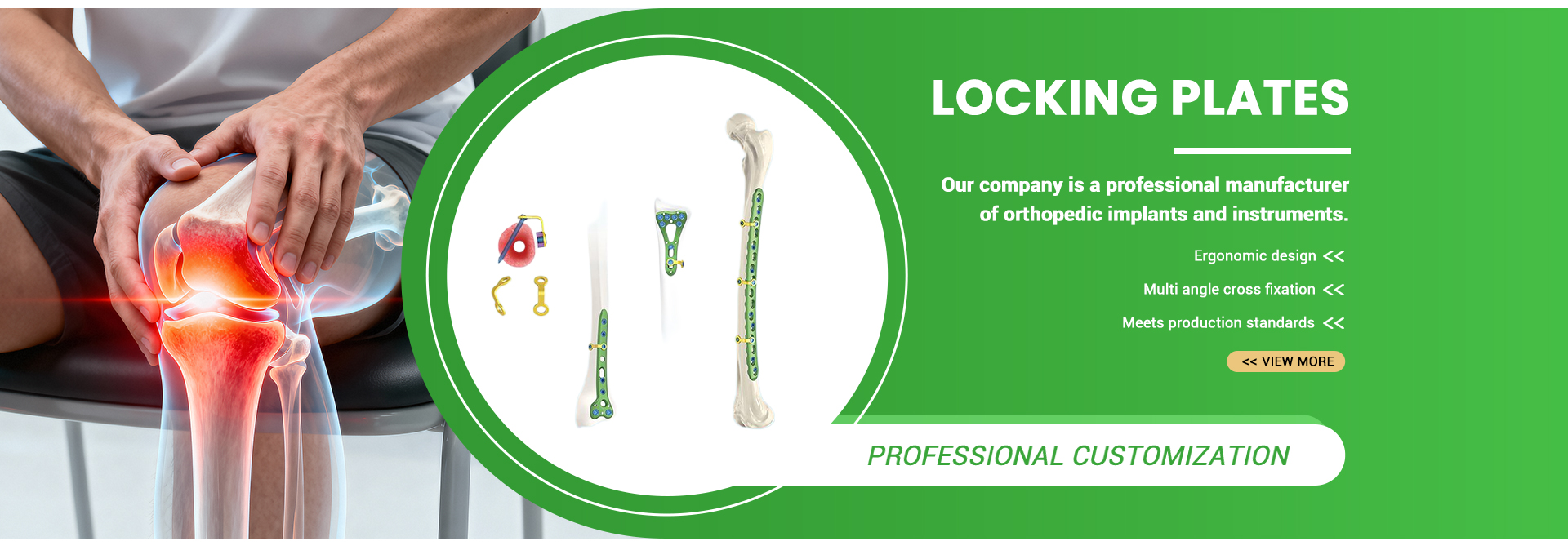
Anterograde & Retrograde Interlocking Femoral Intramedullary Nail System (Ti-6Al-4V ELI)
Contact Us →
27+ Years
Clinical Manufacturing Heritage
TÜV Verified
On-Site Audited Production
121 Specialists
In-House Technical Staff
100% Traceable
Laser Marked & Batch Tracked
Clinical Indications
Localized Clinical Applications Across Liberec Trauma Centers
Addressing the specific biomechanical and demographic demands of North Bohemia's acute trauma departments, regional referral hospitals, and sports injury clinics.
High-Energy Alpine & Winter Sports Fractures
The Jizera and Krkonoše mountain corridors bring severe seasonal influxes of high-energy diaphyseal comminuted femur fractures from skiing and extreme sports to centers like Krajská nemocnice Liberec. GMV's titanium intramedullary nails provide high torsional rigidity, early load-bearing stability, and multi-planar dynamic locking to resist secondary displacement under acute shear forces.
Geriatric Subtrochanteric & Osteoporotic Fractures
With an aging demographic across the Liberec Region (Severočeský kraj), proximal femoral osteoporotic fractures are prevalent. Our cephalomedullary recon nail configurations integrate optimized helical screw trajectories and lag screw compaction, achieving outstanding bone purchase in fragile cancellous trabeculae and reducing cut-out rates in elderly bone matrix.
Polytrauma & Damage Control Orthopedics (DCO)
Major transit lines intersecting the northern Czech Republic produce complex vehicular trauma cases. GMV systems allow a staged transition from emergency pin-to-rod external fixators to definitive retrograde or antegrade closed reamed intramedullary nailing without compromising soft-tissue envelopes or medullary perfusion.
Technical White Paper
Precision Engineering & Metallurgical Benchmarks
Comparing certified orthopedic implant specifications against standard regional supply parameters for hospital tenders in the Czech Republic.
| Engineering Parameter | GMV Interlocking Femoral Nail System | Regional Standard (ISO 5832 Compliant) | Clinical & OR Impact |
|---|---|---|---|
| Raw Alloy Chemistry | Medical Ti-6Al-4V ELI (ASTM F136 / ISO 5832-3) | Standard Grade 5 Ti / 316L SS | Low modulus minimizes stress-shielding; zero nickel-hypersensitivity |
| Anatomical Radius of Curvature (ROC) | Pre-curved 1.5m to 2.0m anatomical radius options | Fixed 2.0m or straight profile | Prevents anterior cortical impingement and distal shaft blowout during insertion |
| Locking Configurations | Static, Dynamic, Cephalomedullary Reconstruction | Dual distal static locking only | Allows controlled dynamization for secondary callus formation and delayed non-unions |
| Cannulation Profile | Uniform deep-hole gun-drilled inner bore (3.2–4.2 mm) | Standard drawn hollow tubing | Ensures smooth passage over guide wires without binding or thermal medullary necrosis |
| Instrumentation System | Carbon-fiber radiolucent proximal targeting guide arm | Full metallic targeting arch | Unobstructed fluoroscopy C-arm view of proximal recon screws during trauma surgery |
Industry Insights
Localized Procurement & Healthcare Trends in the Czech Republic
Understanding shifting macroeconomic dynamics, regulatory changes, and institutional buying behaviors across regional hospital purchasing consortiums.
EU MDR 2017/745 Compliance Consolidation
The enforcement of European Medical Device Regulation (EU MDR) has caused significant catalog consolidation among traditional tier-1 European distributors due to rising certification costs. Liberec procurement committees are actively seeking high-compliance OEM partners capable of supplying full technical documentation, biocompatibility testing, and valid CE dossiers without imposing inflated pricing on regional healthcare budgets.
DRG-Driven Hospital Tenders & VZP Pressures
Czech health insurance reimbursement models (Všeobecná zdravotní pojišťovna - VZP) and localized Diagnosis-Related Group (CZ-DRG) cost caps have pressured hospital central sterile supply and orthopedics departments to balance clinical excellence with procedural profitability. Facilities are transitioning away from high-markup brand premiums toward direct verified manufacturing partnerships that yield identical metallurgical reliability at sustainable unit costs.
Instrument Standardization & Tray Optimization
Operating theaters in Northern Bohemia prioritize ergonomic modularity. Hospital logistics teams reject fragmented inventory systems where nails, screws, drill guides, and reamers originate from disparate vendors. The demand has centered on integrated trauma sets where universal targeting instrumentation handles both retrograde and antegrade nailing using standardized surgical drivers.
Factory Heritage
Jiangsu GMV Medical: 27+ Years of Precision Manufacturing
A certified, vertically integrated medical device facility providing predictable, high-yield manufacturing for international distributors and hospital tenders.
TÜV Rheinland On-Site Assessed
Our complete production facility in Jinfeng Town, Suzhou, China has undergone stringent on-site audits by TÜV Rheinland. We maintain transparent quality assurance dossiers, full material heat certificates, and lot traceability documentation readily available for hospital procurement audits.
End-to-End In-House Machining
Operating high-precision Swiss-type multi-axis CNC lathes, dedicated vertical milling centers, deep-hole gun-drilling machinery, and automated polishing suites under one roof. We enforce tolerances down to ±0.005mm on all locking screw interfaces and cannulation bores.
Rigorous In-House Mechanical Testing
Every single production batch undergoes destructive and non-destructive testing inside our certified testing laboratories, including 4-point bending fatigue analysis, dynamic torsion testing, Vickers/Rockwell hardness verification, and high-magnification optical profile projection.
OEM/ODM & Design Customization
We provide full white-label contract manufacturing for European brands. From CAD drawing modifications and custom anatomical profiles to bespoke laser marking of custom UDI serials, private branding, and sterile/non-sterile validated packaging solutions.
Complete Trauma-to-Spine Portfolio
Beyond femoral nailing, GMV manufactures anatomical locking plates, variable-angle periarticular plates, cannulated cancellous screws, thoracolumbar pedicle screw constructs, external fixators, and battery-powered orthopedic surgical drill and saw handpieces.
Experienced Multilingual Trade Desk
Over two decades of export execution with dedicated documentation specialists ensuring smooth customs clearance into the European Union, standard incoterms compliance (FOB, CIF, DDP), fast sample dispatch, and continuous supply chain transparency.
Buyer FAQ
Frequently Asked Questions by Czech Procurement Teams
Direct answers regarding regulatory compliance, delivery timelines, sterilization compatibility, and supply agreements for the Liberec medical district.
What material certifications accompany GMV femoral nails?
Every shipment is accompanied by complete mill test certificates conforming to EN 10204 3.1, verifying that the titanium alloy complies strictly with ISO 5832-3 and ASTM F136 (Ti-6Al-4V ELI). Chemical composition, tensile strength, yield strength, and elongation data are thoroughly cross-referenced against raw material heats.
Are your implant systems compatible with hospital autoclave protocols?
Yes. Our complete femoral nailing instrument sets, anodized aluminum cases, stainless steel reduction tools, and carbon targeting guides are fully validated for repeated standard moist heat steam sterilization cycles (134°C for 18 minutes in accordance with standard European EN ISO 17665 protocols).
What are the typical lead times and logistics routes to Liberec?
Standard catalog orders and replenishment batches ship within 2 to 4 weeks via air express (Prague Václav Havel Airport or Dresden Airport hubs) with subsequent ground transit to Liberec facility docks within 3-5 days. Custom OEM production runs generally require 4 to 6 weeks depending on tooling configurations.
Can our hospital audit your manufacturing plant in China?
We welcome audits. Hospital clinical evaluators, distributor quality managers, and third-party inspectors are invited to conduct in-person audits at our facility in Suzhou, Jiangsu. Alternatively, we offer comprehensive live interactive video audits covering raw stock receiving, cleanroom operations, and QC labs.
