1. The Biomechanical Imperative: Longitudinal Bore Integrity & Pull-Out Resistance
Metallic cannulated screws serve as the bedrock of minimally invasive fracture stabilization. Across femoral neck subcapital fractures, scaphoid nonunions, and tibial plateau splits, clinical outcomes hinge directly on the mechanical accuracy of the implant's hollow core. A cannulated screw is subject to asymmetric torsional shear during insertion over a guidewire (Kirschner wire). The manufacturing concentricity of the central bore determines whether wall stress concentrations lead to intra-operative guide-pin binding, runout deviation, or structural implant fatigue.
Our automated Swiss-type sliding head lathes preserve concentric wall thickness deviations within ±0.015 mm. This ensures that the axial compression force delivered across reverse-cutting and self-tapping flutes remains uniform, preventing thread stripping in osteoporotic bone. By utilizing ISO 5832-3 compliant Ti-6Al-4V ELI (Grade 23) and ISO 5832-1 implant-grade 316L stainless steel, these screws deliver optimal elastic moduli—attenuating stress shielding without yielding under early ambulation loads.
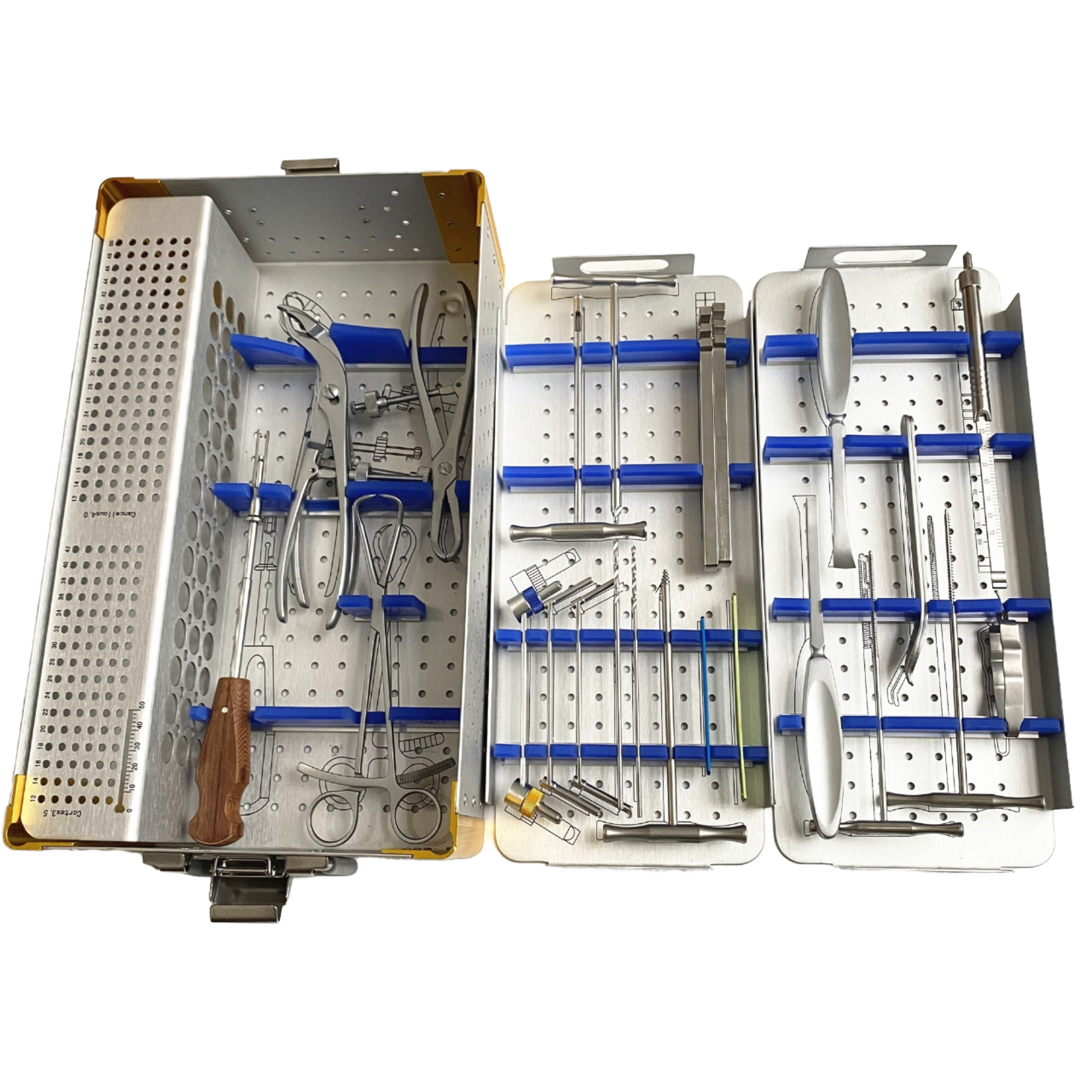
Clinical Note on Trajectory Control: Guidewire deviation exceeding 1.2° can degrade interfragmentary lag compression by up to 22%. GMV Medical’s cannulated drills, sleeve depth limiters, and reverse thread tap profiles are matched to guide wires with micrometric clearances to preserve spatial targeting under intraoperative fluoroscopy.
2. Localized Clinical Applications Across Kawasaki's Medical Hubs
Kawasaki City occupies a critical node within the Greater Tokyo industrial-urban corridor. Bordering the Keihin Industrial Zone and housing major emergency tertiary care networks, local clinical requirements present two distinct, demanding profiles:
⚕
Geriatric Fragility Fixation
Addresses subcapital and intertrochanteric fractures in Kawasaki's aging wards (such as Asao and Tama). High demand for 6.5mm / 7.3mm cancellous cannulated lag screws engineered for superior purchase in low bone mineral density (BMD).
⚙
Industrial Trauma Damage Control
Coastal logistics zones and assembly plants along Kawasaki Port demand robust emergency solutions. 4.0mm / 4.5mm partially threaded cannulated screws paired with modular external fixator couplings ensure rapid reduction under acute polytrauma protocols.
☑
Minimally Invasive Sports & Hand Care
Specialized clinics near Musashi-Kosugi prioritize percutaneous headless compression screws (Herbert type, 2.5mm / 3.0mm) for scaphoid reconstruction, allowing rapid return-to-activity without extensive soft tissue stripping.
3. Technical Specifications: Titanium vs. 316L Stainless Steel Cannulated Screws
Selecting the optimal alloy matrix requires balancing bio-inertness, imaging interference, and localized budgetary constraints within Japan's health insurance framework (Shakai Hoken / Kokumin Kenko Hoken).
| Engineering Attribute |
Medical Titanium Alloy (Ti-6Al-4V ELI) |
Implant-Grade 316L Stainless Steel |
| Standard Compliance |
ISO 5832-3 / ASTM F136 |
ISO 5832-1 / ASTM F138 |
| Elastic Modulus (GPa) |
110–114 GPa (Closer to cortical bone, minimizes stress shielding) |
190–200 GPa (Higher rigidity, enhanced initial shear stability) |
| Tensile Strength (MPa) |
≥ 860 MPa |
≥ 490–800 MPa |
| MRI & CT Artifacts |
Minimal susceptibility distortion; optimal for post-op CT tracking |
Noticeable halo distortion; requires artifact-reduction sequences |
| Surface Passivation |
Electrochemical Anodizing Type II (Color-coded sizing) |
Electropolished passivation (Ultrasonic clean boundary) |
| Target Applications |
Long-term retention, multi-fragmentary periarticular fixation |
Temporary trauma sets, price-sensitive national tenders |
4. Healthcare Modernization & Procurement Trends in Kanagawa Prefecture
Healthcare supply chain structures in Kawasaki and Yokohama are transitioning toward streamlined supplier rationalization. Hospitals are reducing reliance on fractured supply lines in favor of integrated OEM factories that supply coordinated implants, driver systems, and sterilization trays. Furthermore, the push toward reducing Central Sterile Supply Department (CSSD) workloads has catalyzed demand for ready-to-use, laser-barcoded implant traceability that directly syncs with electronic patient records (EPR), mitigating medical liability and guaranteeing batch authenticity.