Featured Orthopedic Systems & Surgical Tooling
Manufactured to rigorous clinical standards for upper cervical stability, reconstructive trauma, and precision surgical execution.

High-Speed Surgical Repair Handpiece
Engineered with medical steel turbine power for micromachining and delicate bone contouring during craniomaxillofacial repairs.
Technical Specs →
Factory Price Metal Sternum Saw Drill
CE-certified high-torque oscillating saw system designed for sterile theater environments requiring rapid osteotomy precision.
Technical Specs →
External Fixator Ringent Rod Coupling
Robust modular coupling clamp engineered for quick assembly and stable biomechanical locking in external limb reduction frameworks.
Technical Specs →
Small Fragment Upper Limb Kit
Complete surgical tool assembly including depth gauges, drill sleeves, and screw drivers housed within an autoclavable sterilization tray.
Technical Specs →
3-Parts Muscular Skull Skeleton Model
Life-size anatomical reference casting displaying craniovertebral muscle insertions and foramen structures for surgical planning.
Technical Specs →
Surgical Tool Box Steel Construction
Stainless steel modular storage unit featuring reinforced silicone retention brackets for powered surgical handpieces and burrs.
Technical Specs →
Separated Human Skull Model (PVC)
Disarticulated cranial bone teaching structure illustrating temporal, occipital, and parietal alignment for neurotrauma training.
Technical Specs →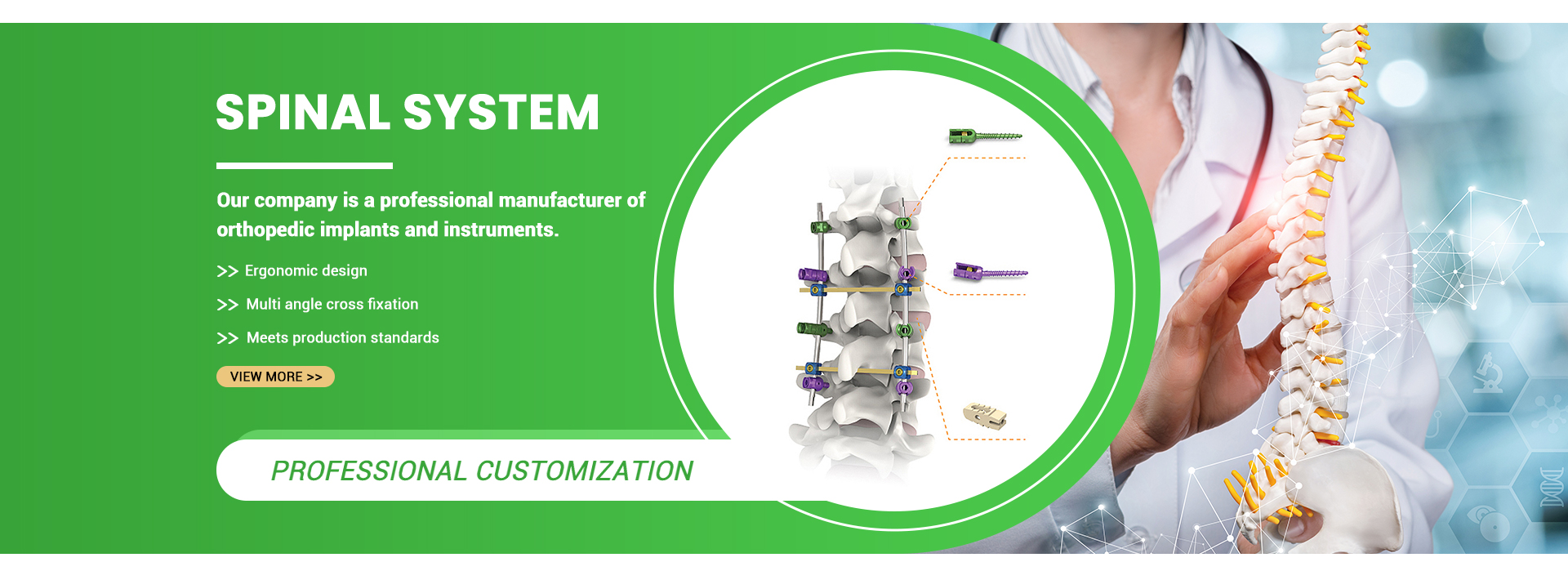
Occipital Cervical Posterior Fusion System
Low-profile occipital midline fixation plates, polyaxial occipital-cervical screws, transition rods, and occiput clamps in Ti-6Al-4V ELI.
Contact UsBiomechanics and Clinical Demands of Occipitocervical Instrumentation
A rigorous examination of cranial-cervical junction stabilization, metallurgical compliance, and global supply channels serving the North Rhine-Westphalia medical cluster.
The occipitocervical junction (craniovertebral junction or CVJ) represents the most complex anatomical transition zone within the human musculoskeletal architecture. Comprising the occipital bone (C0), atlas (C1), and axis (C2), this pivotal kinematic hinge accounts for over 50% of total cervical rotation and roughly 50% of flexion-extension motion. When destabilized by traumatic high-velocity injury, neoplastic bone erosion, degenerative rheumatoid arthritis with secondary basilar invagination, or congenital anomalies, surgical stabilization via an Occipital Cervical System remains the recognized gold standard for preventing devastating neurological compromise and restoring physiological craniospinal alignment.
From an engineering perspective, modern occipitocervical system assemblies demand multi-axial adjustability alongside acute structural fatigue strength. Modern implants integrate low-profile occipital midline fixation plates designed to capture bicortical anchorage along the internal occipital protuberance—where bone density typically exceeds 8 mm to 12 mm in thickness. These cranial plates bridge to the subaxial spine using variable-angle rod couplers or continuous dual-diameter rods (typically transitioning from a 3.5 mm cervical rod up to a 5.5 mm thoracic/transitional rod), permitting seamless connection to polyaxial pedicle screws, translaminar screws, and lateral mass anchors.
For surgical teams operating in specialized tertiary facilities, precision instrumentation is paramount. Screw thread engagement, tap sharpness, self-centering drill guides, and high-precision torque-limiting drivers directly dictate intraoperative success and reduce the potential for vertebral artery injury, hypoglossal canal violation, or dural tears. Jiangsu GMV Medical Device Co., Ltd. addresses these exacting surgical tolerances through comprehensive in-house 5-axis CNC machining, batch-specific metallurgical assays, and standardized instrument set manufacturing.
Düsseldorf & North Rhine-Westphalia: The Gateway for European Surgical Procurement
Strategic geographic and clinical positioning provides seamless delivery and strict regulatory compliance across Europe's dense healthcare corridor.
Clinical Excellence & Academic Centers
North Rhine-Westphalia boasts Germany's highest concentration of specialized university hospitals and trauma facilities, including the renowned Universitätsklinikum Düsseldorf (UKD). These surgical centers manage severe polytrauma, oncology resections, and complex pediatric spine deformities requiring responsive supplier access to occipitocervical systems.
The Rhine-Ruhr Medical Logistics Hub
Centrally located in the heart of the Rhine-Ruhr megalopolis, Düsseldorf serves as an international distribution nexus. Importers and medical device distributors utilize the city's multimodal air cargo, high-speed rail, and road connections to maintain just-in-time consignments of spinal instrumentation for emergency surgeries across Germany, Belgium, the Netherlands, and Luxembourg.
Trade Hub: Home of MEDICA & COMPAMED
Düsseldorf hosts the world's most prominent medical trade platforms, MEDICA and COMPAMED. International healthcare procurement authorities, surgical engineers, and global distributors converge on Messe Düsseldorf annually, making the city a natural hub for forging factory-direct OEM/ODM partnerships and negotiating European distribution tenders.
Emerging Trends Shaping Craniovertebral Instrumentation in Europe
Navigating the convergence of EU Medical Device Regulations, biocompatible metallurgy, and navigation-guided spinal stabilization.
The European landscape for implantable spinal systems has shifted dramatically under the full enforcement of the European Medical Device Regulation (EU MDR 2017/745). Historically, CE marking permitted straightforward self-declaration routes for ancillary instruments, but Class IIb and Class III implantable devices such as occipitocervical constructs now undergo unprecedented clinical evaluation, post-market surveillance (PMS), and Unique Device Identification (UDI) validation. Hospitals across Germany prioritize suppliers capable of providing complete, unimpeachable technical dossiers with fully transparent risk management documentation conforming to ISO 14971.
Advanced Titanium Alloy Metallurgy
Adoption of medical-grade Ti-6Al-4V ELI (Extra Low Interstitial, ASTM F136 / ISO 5832-3) ensures optimal fatigue strength and superior CT/MRI artifact suppression compared to traditional stainless steel constructs, enhancing postoperative neurological monitoring.
Intraoperative Navigation & Robotics
German neurosurgical theaters widely employ intraoperative O-arm imaging and 3D optical tracking systems. Consequently, occipitocervical screw systems and drill sleeves must feature low-tolerance mechanical registration interfaces compatible with navigational arrays.
Modular Damage Control Fixation
In poly-trauma scenarios, rapid temporary stabilization precedes definitive reconstruction. Hybrid instrumentation workflows pairing quick-clamp external frames with transitional spinal stabilization kits represent a growing clinical demand across European level-one trauma networks.
Metallurgical & Mechanical Performance Comparison
Detailed performance benchmarks informing implant selection for craniovertebral reconstruction constructs.
| Evaluation Parameter | Ti-6Al-4V ELI (Grade 23 Titanium) | 316L Stainless Steel (ASTM F138) | Cobalt-Chromium-Molybdenum (CoCrMo) |
|---|---|---|---|
| Primary Indication | Permanent Occipital Plates, Screws & Rods | Trauma Plates & External Fixation Couplings | Heavy-Duty Dual Transition Rods (3.5 to 5.5mm) |
| Elastic Modulus (GPa) | 110–114 (Closer to cortical bone, reduces stress shielding) | 190–200 (Rigid, higher stress shielding risk) | 210–240 (Extremely rigid, maximum construct stability) |
| Tensile Yield Strength (MPa) | ≥ 795 MPa | ≥ 690 MPa | ≥ 850 MPa |
| MRI / CT Compatibility | High (Negligible magnetic distortion; minimal scatter) | Low (Significant susceptibility artifacts on neural imaging) | Moderate (Controlled scatter, superior to 316L) |
| Biocompatibility Profile | Outstanding (Spontaneous TiO2 passivation layer) | Good (Nickel-sensitization concerns in rare cohorts) | Excellent (Superior tribological and wear characteristics) |
| Hospital Purchasing Focus | Dominant standard across German & EU spine units | Cost-effective damage control and trauma tenders | Complex pediatric deformity & long spinal fusions |
Jiangsu GMV Medical: 27+ Years of Engineering Integrity
A dedicated manufacturing facility combining independent auditing, precision machining, and custom OEM/ODM services for global healthcare partners.
TÜV Rheinland Verified
Our production premises in Jinfeng Town, Suzhou, undergo rigorous on-site assessments by third-party inspection leader TÜV Rheinland, validating production capacity, factory cleanliness, and comprehensive quality control governance.
Full In-House Machining
Equipped with advanced CNC lathes, automated Swiss-type sliding headstock machining centers, slitting units, and precision surface polishers to control every micron of thread pitch and plate curvature under one roof.
In-House Testing Laboratory
Every raw material heat undergoes optical projector inspection, tensile testing, and Rockwell/Vickers hardness validation to ensure zero mechanical failures in critical surgical applications.
OEM & ODM Custom Engineering
We transform partner engineering drawings and clinical CAD models into private-labeled, laser-marked, and cleanly packaged implant lines with custom sterilization tray configurations for European brands.
Frequently Asked Questions by European & German Buyers
Essential answers regarding compliance, auditing, batch traceability, and supply agreements for occipital cervical systems.
What regulatory compliance and quality documentation accompany each occipital cervical shipment?
Can German hospital procurement groups or private distributors audit your factory?
How does the Occipital Cervical System ensure compatibility across varying cervical anatomy?
Do you offer OEM private labeling and custom surgical instrument kit configurations?
What are the lead times and shipping logistics from your facility to Düsseldorf?
Partner with a Verified Orthopedic Manufacturer
Whether you are establishing a new spinal fixation brand in Germany, responding to a European hospital tender, or seeking a qualified OEM manufacturer audited by TÜV Rheinland, our engineering team is ready to support your technical and commercial requirements.
Contact Us