Featured Orthopedic & Surgical Reconstruction Products
System-engineered implants, precision instruments, and surgical cutting power units built to PMDA-compatible tolerances for Nagoya hospital systems and orthobiological device distributors.







Strategic Overview: Engineering OEM/ODM Arthroplasty Solutions for the Nagoya & Chubu Medical Hub
The Greater Nagoya metropolitan area, anchoring the Chubu industrial and medical economic corridor in Aichi Prefecture, represents one of Japan's most demanding regional ecosystems for orthopedic healthcare delivery. Home to premier clinical academic institutions—including Nagoya University Graduate School of Medicine, Fujita Health University Hospital, Nagoya City University Hospital, and Aichi Medical University—the regional surgical community performs thousands of primary and revision joint arthroplasty procedures annually. As the Japanese demographic shifts into a super-aged demographic where over 29.1% of the national population is aged 65 or older, clinical demand for Total Hip Arthroplasty (THA), Total Knee Arthroplasty (TKA), and Unicompartmental Knee Arthroplasty (UKA) continues an unprecedented ascent.
For Japanese medical device marketing authorisation holders (MAH / Seizo-Hanbai-Gyo) and Nagoya-based medical wholesalers, finding contract manufacturing partners that satisfy the Japanese Pharmaceuticals and Medical Devices Agency (PMDA) regulatory stringency while maintaining economic viability has become a top operational objective. Jiangsu GMV Medical Device Co., Ltd. serves this specialized demand via an integrated OEM/ODM manufacturing infrastructure located in Suzhou, China. With 27+ years of dedicated orthopedic manufacturing expertise, on-site verification by TÜV Rheinland, and mastery over high-precision multi-axis CNC machining, our facility manufactures patient-matched and standardized arthroplasty implants, anatomical locking plates, intramedullary fixation systems, and surgical power equipment engineered to the highest metallurgical and tribological standards.
Operating within close geographic proximity to the Port of Nagoya and Chubu Centrair International Airport (NGO) via direct maritime and air transit lanes from Shanghai and Taicang, GMV bridges precision biomedical engineering with high-velocity cold-chain and dry freight logistics. This white paper breaks down the biomechanical engineering, metallurgical specifications, regulatory conformity, and localized clinical nuances necessary to deploy high-flexion, bone-preserving arthroplasty systems into the central Japan orthopedic ecosystem.
Clinical & Biomechanical Applications Across Nagoya Hospitals
Tailoring implant architecture to Eastern Asian morphological characteristics and traditional ergonomic lifestyles across Aichi Prefecture.
High-Flexion Knee Arthroplasty (TKA/UKA)
Nagoya's demographic maintains lifestyle habits that frequently require deep knee flexion, such as floor sitting (seiza), kneeling, and traditional Japanese bathing. Standard Western femoral knee implants often induce posterior edge loading or impingement beyond 120° of flexion. Our ODM knee systems feature an extended posterior femoral condyle radius, cam-post mechanism optimization, and deep anterior cutaways that allow safe, wear-resistant kinematic excursion up to 155° flexion under physiological axial loading.
Dysplastic Hip Reconstruction (Crowe I-IV THA)
Developmental Dysplasia of the Hip (DDH) exhibits an exceptionally elevated prevalence in Japanese female patients compared to Caucasian populations. This manifests as shallow acetabular sockets, high femoral anteversion, and narrow, stovepipe or Dorr Type C femoral canals. GMV manufactures shortened, tapered-wedge cementless femoral stems and multi-hole micro-porous hemispherical acetabular cups with trabecular titanium coatings that maximize biological fixation even within deficient Chubu bone stock.
Robotic-Assisted Navigation Alignment Sets
University clinics and private orthopaedic centers in Aichi are rapid adopters of robotic resection platforms (such as MAKO and ROSA) and CT-free digital optical navigation. Our OEM surgical instrument engineering units produce quick-release optical tracking arrays, dynamic bone clamps, and high-frequency oscillating saw blades calibrated precisely to avoid thermal osteonecrosis while interfacing seamlessly with automated cutting jigs.
Nagoya Arthroplasty Market: Regulatory Dynamics & Structural Industry Trends
The Japanese orthopedic implant market is the second largest single-country market globally, characterized by rigid regulatory barriers, exceptionally high consumer expectations for mechanical surface perfection, and strict adherence to the Yakukiho (Pharmaceuticals and Medical Devices Act - PMD Act). In Nagoya and the surrounding Tōkai region, hospital procurement committees work in close coordination with clinical key opinion leaders (KOLs) who place significant weight on documented biomaterial provenance, particulate cleanliness, and long-term joint registry survival statistics comparable to the Japanese Arthroplasty Society (JAS) annual registry benchmarks.
1. Accelerating Shift to Cementless Fixation with Bioactive Interfaces: Driven by advanced surgical techniques in Fujita Health University and Nagoya University orthopedics, surgeons in Aichi are transitioning rapidly away from PMMA bone cement in both primary hips and knees. Implants must feature osteoconductive interfaces. GMV supplies titanium alloy (Ti-6Al-4V ELI conforming to ASTM F136 / JIS T 0311) substrate implants treated with multi-phase vacuum plasma sprayed (VPS) pure titanium coatings topped with crystalline hydroxyapatite (HA). This dual-layer architecture provides an immediate friction coefficient (μ > 0.7) for initial press-fit stability followed by rapid osteointegration within 4 to 8 weeks.
2. Vitamin E-Stabilized, Highly Cross-Linked Polyethylene (XLPE): Sub-micron particulate debris generated from conventional ultra-high-molecular-weight polyethylene (UHMWPE) acetabular liners and tibial inserts represents the primary vector for periprosthetic osteolysis and aseptic loosening. To address this within Japan's extended life-expectancy context (where female life expectancy surpasses 87 years), GMV machines inserts exclusively from medical GUR 1020/1050 resin that has undergone electron-beam cross-linking (75–100 kGy) infused with alpha-tocopherol (Vitamin E). This formulation delivers zero free-radical oxidative degradation while maintaining critical tensile yield strength and fatigue resistance.
3. Decentralization of Surgical Supply Chains Post-Global Disruptions: Prior over-reliance on European and North American manufacturing hubs created severe lead-time vulnerabilities for Japanese surgical centers during logistics bottlenecks. Nagoya-based distributors are actively diversifying their supply lines by qualifying high-capacity Asian contract manufacturers who can offer direct maritime routing to Nagoya Port. GMV’s modern 121-staff manufacturing center in Suzhou delivers standard lead times of 30–45 days from approved technical drawings to sterilized final export dispatch, cutting typical Western supply lag by over 60%.
Biomaterial Engineering & Tribological Specifications
Every joint reconstruction implant and trauma system produced for the Nagoya medical sector adheres to rigorous international metallurgic purity and dimensional tolerances:
| Implant Component | Material Standard | Surface Treatment / Roughness | Biomechanical Objective | Japanese Market Requisite |
|---|---|---|---|---|
| Femoral Knee Condyle | Cast / Wrought CoCrMo (ASTM F75 / ASTM F1537) | Mirror Polished, Ra ≤ 0.02 μm | Ultra-low friction contact with XLPE insert; wear minimization | High flexion durability up to 155°; zero surface inclusions |
| Tibial Tray Baseplate | Ti-6Al-4V ELI (ASTM F136 / ISO 5832-3) | Bead-blasted stem, VPS porous undercoating | Optimal elastic modulus match; minimizes tibial bone stress shielding | Asymmetrical or rotary-keyed tray architecture for Asian tibiae |
| Acetabular Shell | Ti-6Al-4V ELI + 3D Trabecular Titanium | Macro-porosity 60–70%, pore size 300–500 μm | Deep biological ingrowth; high frictional torque resistance | High-profile dome screw fixation for shallow dysplastic acetabulum |
| Femoral Hip Stem | Forged Ti-6Al-4V ELI / Ti-6Al-7Nb | Proximal Hydroxyapatite (HA) over Titanium VPS | Immediate wedge axial engagement; preservation of proximal calcar | Shortened stem geometry tailored for Dorr A/B/C femoral anatomy |
| Tibial Insert / Liner | GUR 1020/1050 UHMWPE + Vitamin E | Precision CNC Machined, Annealed / Stabilized | Elimination of oxidative embrittlement; ultra-low volumetric wear | High-congruency deep-dish lip prevention against posterior subluxation |
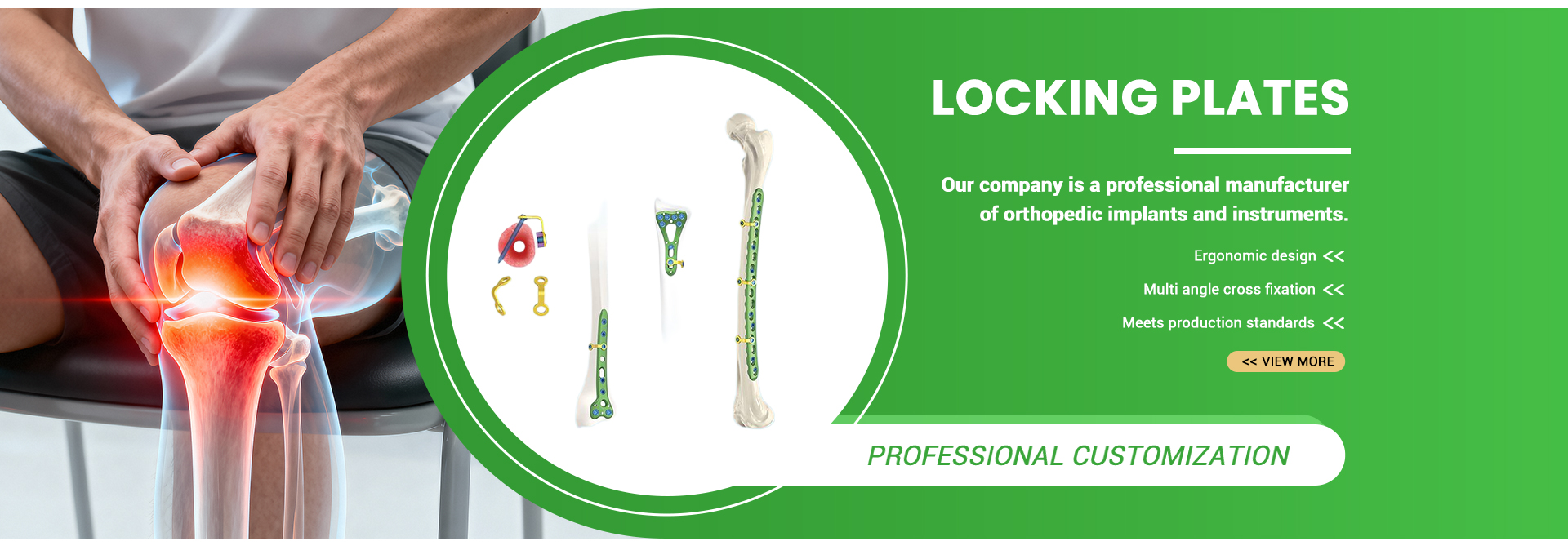
| Locking Periarticular Plates | Titanium Grade 5 or 316L (ISO 5832-1) | Anodized Type II Anti-Galling Surface | Rigid buttressing of periprosthetic fractures around stems | Low-profile anatomical pre-contouring; soft-tissue friendly edges |
The GMV Advantage: On-Site Verified Quality from Raw Billet to Cleanroom
Procuring arthroplasty implants and orthopedic fixation devices demands uncompromising supplier transparency. Jiangsu GMV Medical Device Co., Ltd. does not operate as a broker or trading intermediary. Our operations are grounded in comprehensive internal ownership of every phase of medical device fabrication:
TÜV Rheinland Audited Facility
Our complete manufacturing workshop, testing protocols, cleanrooms, and warehouse operations have been evaluated on-site by TÜV Rheinland. Comprehensive assessment dossiers covering machine maintenance, lot traceability, and raw bar chemical certification are fully open to procurement auditors from Nagoya.
Multi-Axis CNC Precision Lathes
Equipped with high-end multi-axis CNC machining centers, sliding-head Swiss lathes, and specialized robotic mirror polishers, our engineering teams hold dimensional thread pitch and femoral condyle curves to tolerances under ±5 microns, ensuring seamless implant-to-bone congruency in the operating theatre.
Full Dimensional & Destructive Testing Lab
Each production batch is subject to mechanical verification in our in-house lab, including hydraulic tensile and fatigue testing, Rockwell/Vickers hardness testers, and high-resolution optical profile projectors to ensure strict conformance with ISO 13485:2016 and ASTM standards.
Design-Based Customization & Rapid Tooling
Whether adapting an existing knee instrument tray for a custom Japanese ergonomic handle or machining specialized hip revision stems from 3D CT DICOM reconstructions, our biomedical CAD/CAM engineers turn digital files into physical master prototypes rapidly.
Laser Traceability & Cleanroom Packaging
Every single implant receives high-contrast fiber laser etching denoting catalog number, size, and individual production lot number for end-to-end hospital traceability. Implants undergo multi-stage ultrasonic cleaning and terminal sealing in certified Class 100,000 / ISO Class 7 cleanrooms.
Direct Port of Nagoya Freight Logistics
Located in Suzhou with seamless highway access to Shanghai and Taicang container terminals, GMV coordinates ocean consolidated container shipments arriving at the Port of Nagoya in 48–72 hours sailing time, ensuring dependable buffer stock management for distributors across central Japan.
Frequently Asked Questions by Japanese Importers & Procurement Teams
Key technical, regulatory, and supply chain insights for qualifying GMV as your contract manufacturing partner in the Nagoya market.
We maintain an established regulatory dossier framework formatted for submission to the Ministry of Health, Labour and Welfare (MHLW) and the PMDA. As an OEM supplier, GMV facilitates Foreign Manufacturer Accreditation (Gaikoku Seizo Gyosha Toroku) by providing complete factory master layouts, certified ISO 13485:2016 audit records, device master files (DMF), material biocompatibility testing according to ISO 10993, and sterilization validation records (ISO 11135 for EtO / ISO 11137 for Gamma radiation). Our regulatory affairs specialists coordinate directly with your appointed Marketing Authorization Holder (MAH / Seizo-Hanbai-Gyo) in Japan.
Yes. Standard Western implants frequently present clinical challenges in Japan due to morphological differences: smaller distal femur aspect ratios, narrower mediolateral-to-anteroposterior proportions, smaller intramedullary femoral canals, and higher incidence of acetabular dysplasia. We provide full ODM design support to scale implant sizing runs, offer downsizes (such as size 1/2 femoral knee components and micro-hip stems), and adjust offset angles and femoral neck-shaft angles (e.g., 125°–135° ranges) to match Japanese clinical requirements.
For standard orthopedic trauma plates, cannulated bone screws, and instrument kits with your custom branding or laser marking, our MOQs start flexibly at 50 to 100 units per specification to facilitate pilot market trials and registration sample testing. For full OEM arthroplasty joint lines requiring dedicated tooling and custom forging dies, MOQs are determined based on tooling scale. Average manufacturing lead time ranges between 30 and 45 business days upon drawing sign-off, significantly shorter than typical North American suppliers.
Our factory in Jinfeng Town, Suzhou, is situated within an hour’s transport from the Port of Taicang and two hours from the Port of Shanghai. For sea freight, direct container lines call regularly at the Port of Nagoya with a transit window of approximately 3 days. For expedited surgical instrument prototypes or high-value implants, direct air courier flights via Chubu Centrair International Airport (NGO) deliver shipments to your warehouse within 24 to 48 hours following export customs clearance. All shipments include detailed packing lists, certificates of analysis (CoA), mill test certificates, and sterilization batch indicators.
We welcome both in-person comprehensive audits and live high-definition video inspections of our Suzhou production facility. Visitors can inspect our raw material receiving quarantine, multi-axis CNC machine shops, surface finishing lines, cleanroom packaging zones, and quality assurance testing laboratories. We have hosted numerous international qualification teams and third-party inspectors like TÜV Rheinland, ensuring full alignment with your corporate supplier qualification requirements.
Partner with a Verified Orthopedic Manufacturing Leader
Accelerate your orthopedic brand's competitiveness across the Nagoya medical market. Request our comprehensive OEM/ODM joint reconstruction catalog, detailed engineering drawings, and TÜV Rheinland on-site audit reports today.
Send an Inquiry