Direct Factory Ecosystem
Surgically Validated Orthopedic Kits & OR Systems
Streamlining institutional trauma response and surgical reconstructions across regional referral centers in Vientiane Capital. Sourced directly from our TÜV Rheinland-inspected facilities.

Institutional Landscape: Orthopedic Instrument Deployment in Vientiane
The healthcare delivery infrastructure in Vientiane Capital is undergoing rapid modernization driven by strategic capital investments in central public referral centers—such as Mahosot Hospital, Mittaphab Hospital (Hospital 150), and the Military Central Hospital 103—alongside growing private specialist clinics. As the national epicenter for emergency triage, complex polytrauma surgery, and spine reconstruction in Lao PDR, surgical departments across Vientiane require surgical instrumentation platforms that combine structural reliability with standardized ergonomics. Trauma admissions along National Road 13 and urban transit corridors generate constant demand for rapid internal and external bone fixation. Sourcing direct from an established ISO 13485 certified manufacturer bridges critical clinical delivery gaps, eliminating inconsistent distributor intermediaries and bringing predictable surgical outcomes to Lao operating rooms.
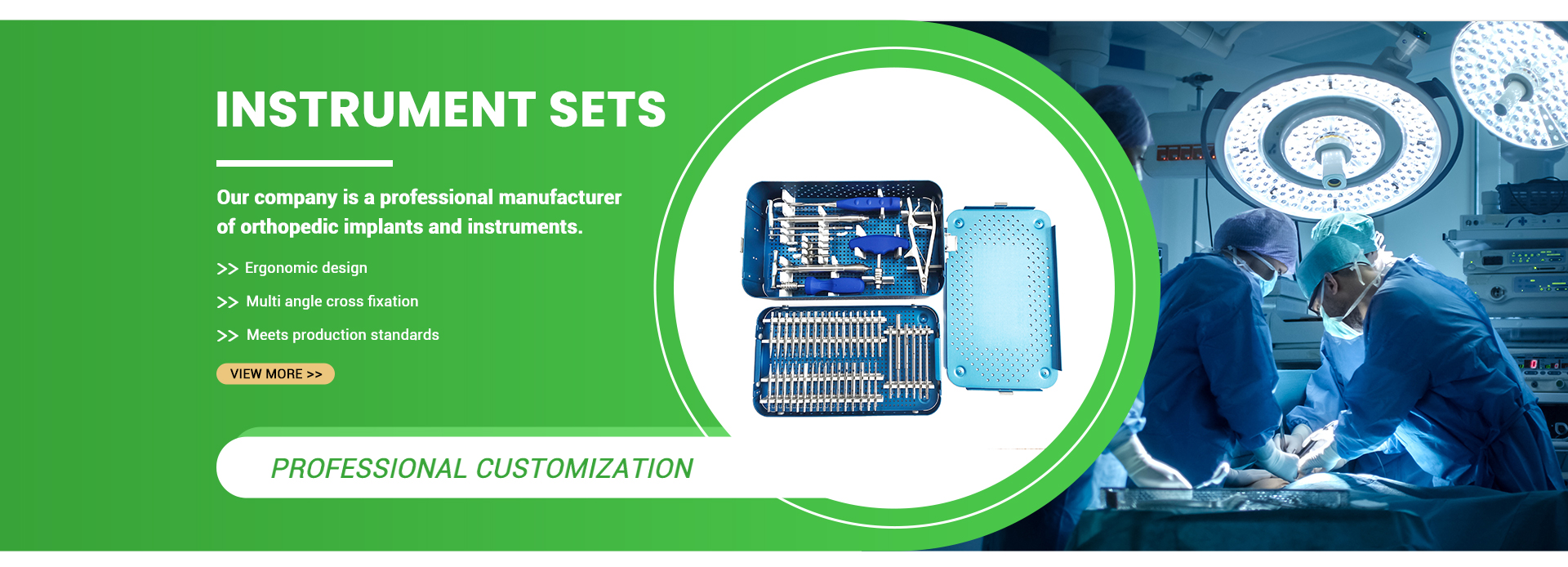
In localized clinical scenarios across Vientiane, orthopedic surgeons face diverse challenges ranging from closed comminuted fractures of long bones to severe soft-tissue disruptions requiring immediate external stabilization. Instruments must seamlessly interface with matching implants—such as locking compression plates, multi-axial fixation systems, cannulated screws, and titanium intramedullary nails. GMV Medical customizes orthopedic instrument kits to meet these exact regional demands: drill guides manufactured with tight clearances prevent off-axis drilling that compromises screw-thread engagement; ergonomic silicon-gripped reduction forceps maintain stable clamping force even during long reconstructive procedures; and rapid-coupling external fixation instruments enable trauma teams at emergency centers to establish skeletal frame rigidity within minutes of patient arrival.
Dynamic Trauma Management
Pre-packaged small and large fragment kits designed for accelerated workflow during high-velocity periarticular fractures and blast stabilization across regional emergency rooms.
Tropicalized Autoclave Durability
Hardened surgical-grade German and Japanese stainless steel alloys (e.g., 420B, 17-4PH) heat-treated to resist intergranular corrosion in high-humidity central sterilization facilities.
Clinical Residency Integration
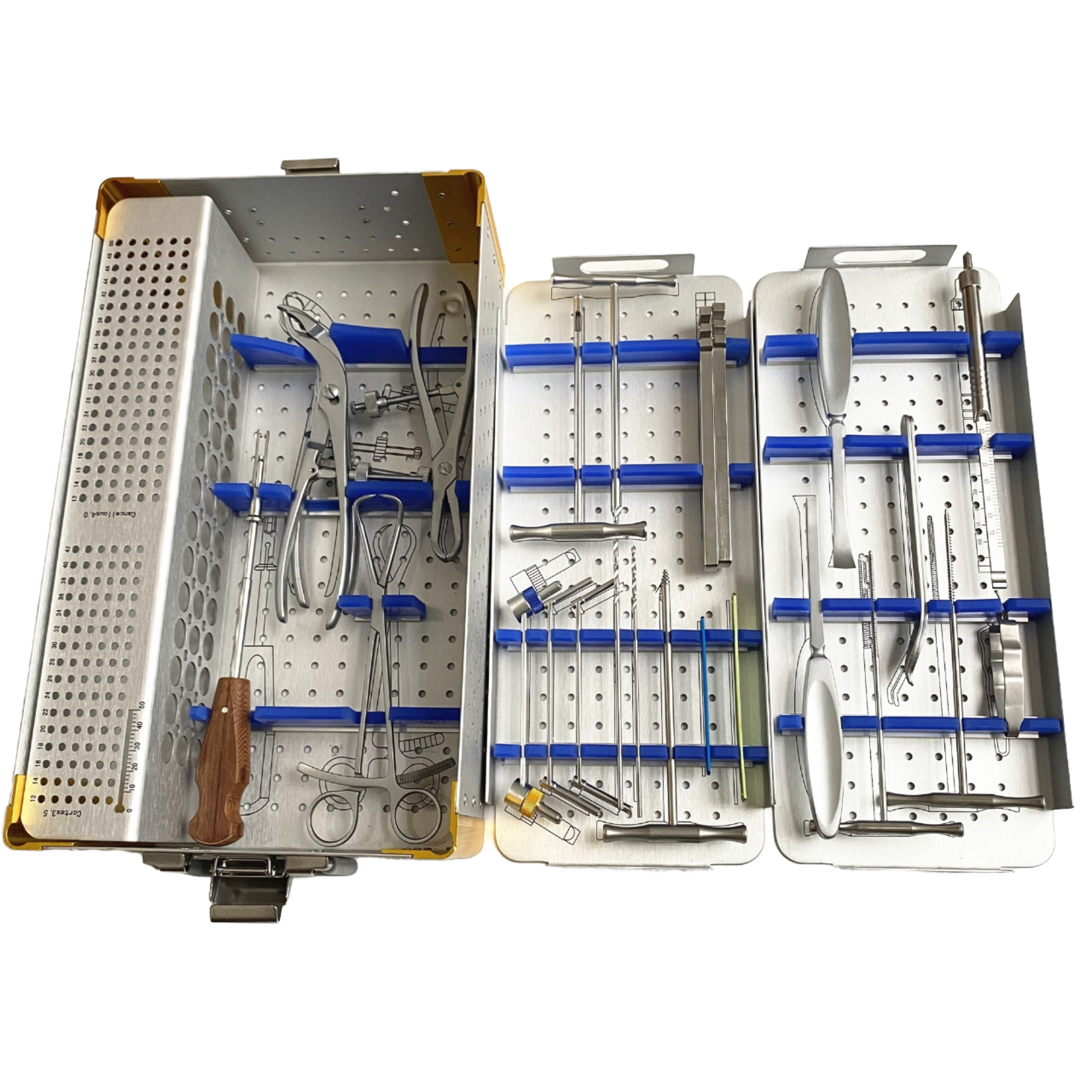
Color-coded graphic layouts on anodized aluminum trays optimize surgical residency learning curves across national university teaching hospitals in Vientiane.
Healthcare Evolution & Procurement Trends in Lao PDR
The clinical procurement ecosystem in Vientiane Capital is shifting decisively away from fragmented, open-market spot buying toward comprehensive supply chain integration. The Ministry of Health of Laos and municipal hospital boards are prioritizing medical device longevity, post-sale parts accessibility, and verified manufacturer credentials. Three strategic macroeconomic and clinical trends are shaping local orthopedic acquisitions:
1. Shift Toward Universal Minimally Invasive Osteosynthetic Capabilities: As diagnostic capabilities such as C-arm fluoroscopy become standard across central wards in Vientiane, surgical preferences have shifted toward targeted percutaneous plate osteosynthesis (MIPPO) and cannulated screw systems. This requires high-precision, low-profile targeting guides, calibrated soft-tissue protectors, and flexible reamers that deliver consistent axial alignment without wide soft-tissue stripping.
2. Stringent Sterilization Lifecycle Economics: Facilities face persistent tropical ambient humidity and variable water filtration quality in autoclaving loops. Consequently, hospitals are moving away from budget carbon-blend instruments that suffer pitting corrosion, micro-cracking, and joint seizure within months. Hospital purchasing committees in Vientiane now calculate cost-per-procedure over five-year lifecycles, favoring high-chromium alloys with electrochemical passivation layers that withstand continuous alkaline detergents and saturated steam cycles at 134°C.
3. Demand for Unified Implant-Instrument Modular Kits: The logistical complexity of maintaining incompatible instruments from differing third-party vendors has led sterile processing departments (CSSD) to insist on matched sets. Procuring implants and instrument systems from a single certified factory guarantees that screw driver hexalobe geometries mate tightly with screw heads, eliminating head stripping during final torque application in dense cortical bone.
| Evaluation Parameter | Direct Factory Standards (Jiangsu GMV) | Local Open-Market Trading Houses |
|---|---|---|
| Traceability & Material MTR | Certified mill inspection test sheets (Ti-6Al-4V ELI & ASTM F899 Stainless Steel) | Unverified raw material tracing with generic labeling |
| On-Site Verification | TÜV Rheinland audited cleanrooms, CNC lathes & QC testing labs | Third-party brokers without direct factory floor control |
| Dimensional Precision | Optical projector verification down to ±0.005mm for all thread pitches | Varied clearances causing intraoperative screwdriver cam-out |
| Autoclave Longevity | Electropolished, passivated surfaces resisting pitting > 1,000 steam cycles | Prone to surface corrosion and pivot degradation under high humidity |
| OEM / Customized Marking | Custom laser engraving of institutional ID, QR tracking, and national language | Fixed catalog items with rigid configuration limits |
Procurement FAQ: Sourcing Orthopedic Instrumentation for Vientiane
What documentation is provided to satisfy Laos Food and Drug Department (FDD) registration?
Every shipment is supported by comprehensive regulatory dossiers including ISO 13485:2016 quality management system certifications, CE mark certificates of conformity, full raw-material mill test reports (MTR), third-party TÜV Rheinland inspection audit paperwork, and manufacturer Certificates of Free Sale (CFS). These technical files streamline the importation clearance process with the Food and Drug Department (FDD) of the Ministry of Health of Laos.
How do your instrument kits prevent corrosion in Vientiane's high-humidity climate?
All GMV Medical instruments undergo advanced automated surface finishing, multi-stage ultrasonic degreasing, and specialized nitric or citric acid electrochemical passivation. This forms a protective chromium-oxide layer on the metal surface that resists oxidation and pitting, even under repetitive 134°C pre-vacuum steam autoclaving and prolonged ambient exposure during wet seasons.
What are the freight routes, customs transit times, and delivery mechanics to Vientiane?
Our production facilities in Suzhou, Jiangsu Province, leverage multiple established shipping corridors to Vientiane. Bulk institutional orders and heavy surgical cases are dispatched via sea freight to Laem Chabang or Bangkok, Thailand, before bonded cross-border transit via the First Lao-Thai Friendship Bridge directly into Vientiane. Alternatively, priority hospital shipments travel via the cross-border China-Laos Railway (Kunming to Vientiane) for delivery in under 5 to 7 days, as well as express air cargo options via Wattay International Airport (VTE).
Can our hospital customize tray layouts and add localized laser branding?
Yes. As a direct OEM/ODM manufacturer, we can configure internal tray brackets, insert modular silicone retaining slots, and add custom CNC milled divisions to hold specific assortments of bone plates, reamers, and reduction forceps. We offer dedicated high-contrast fiber laser marking for institutional inventory asset numbers, hospital crests, surgical department coding, and multilingual dimensional indications directly onto instrument shafts and storage boxes.
How does GMV ensure compatibility between instruments and existing implant inventories?
We manufacture to international orthometric standards (AO/ASIF dimensions). Furthermore, our engineering team can inspect customer-provided technical drawings, physical sample screws, or plates to ensure that our screwdrivers, tap sleeves, countersinks, and drill bits fit precisely. This design review prevents intraoperative problems such as screw stripping or inadequate plate seating.
Factory Manufacturing Capabilities & Quality Assurance
Operating from our production campus in Jinfeng Town, Suzhou, China, Jiangsu GMV Medical Device Co., Ltd. controls the complete manufacturing cycle across trauma, spine, and surgical instrumentation lines. Rather than relying on contract machine shops, our on-site facilities feature multi-axis CNC Swiss-type lathes, high-precision machining centers, robotic polishing benches, and certified class-standard cleanroom packaging zones.
Our comprehensive manufacturing capability is audited on-site by TÜV Rheinland, providing third-party verification of our raw material warehousing, mechanical testing, and batch inspection processes. From receipt of medical-grade titanium and stainless steel to final laser engraving and export delivery, each stage is documented with traceable lot records. Tensile testers, optical profile projectors, and Rockwell hardness testers ensure that every instrument kit leaving our floor meets the mechanical strength, dimensional accuracy, and corrosion resistance demanded by surgical teams in Vientiane and worldwide.
Equip Your Surgical Theatres with Direct Factory Excellence
Connect directly with our engineering and regulatory export team to discuss tailored instrument configurations, hospital tender requirements, and dealer pricing for Vientiane Capital.
Inquire Now