Electric Surgical Dental Implant Tool Box Steel Construction
High-grade stainless steel organized instrument sterilization containment with high-thermal resilience for demanding theater workflows.
View Product Specifications →Integrated spinal instrumentation kits, surgical drills, power tools, and anatomical reconstruction instruments developed under TÜV Rheinland-assessed manufacturing controls.
High-grade stainless steel organized instrument sterilization containment with high-thermal resilience for demanding theater workflows.
View Product Specifications →
Anatomical teaching aid representing cranial sutural integrity, assisting neurosurgical surgical path planning and educational institutions.
View Product Specifications →
CE-certified medical electric osteotomy unit featuring variable oscillation speeds, anti-vibration damping, and autocalvable battery cartridges.
View Product Specifications →
Multi-axial clamping block manufactured from aircraft-grade aluminum alloy and biocompatible stainless steel for emergency damage-control orthopedics.
View Product Specifications →
Micro-burr torque stability system intended for high-precision cortical bone resection, high rev consistency, and long-duty life cycle under sterilizing stress.
View Product Specifications →
Tri-part muscular attachment model replicating bone mineral junctions for clinical surgical training, spine deformity demonstration, and education.
View Product Specifications →
Complete set containing quick-coupling tap handles, depth gauges, drill guides, and reduction forceps designed for locking compression plates.
View Product Specifications →
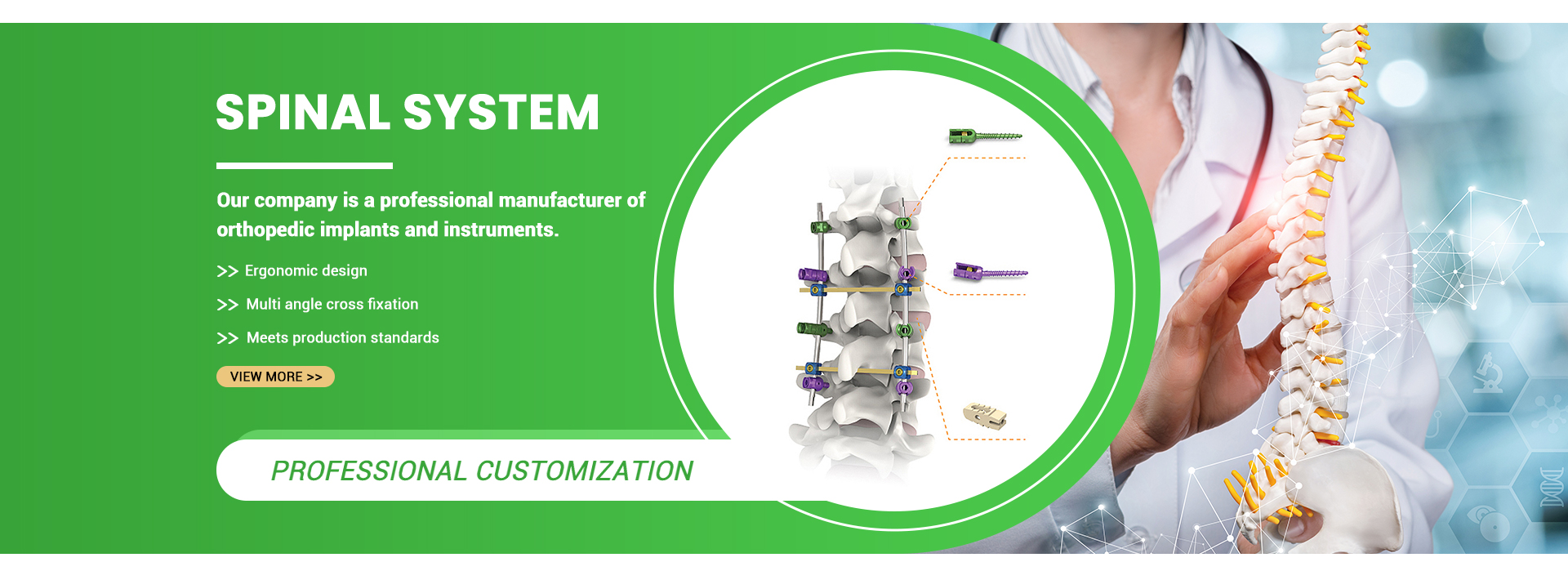
Polyaxial and monoaxial pedicle screws, cross-links, titanium connecting rods, and PEEK interbody fusion cages for degenerative disc reconstructive surgery.
Inquire for Mongolian Tender Spec →An in-depth analysis of anatomical adaptability, sub-zero logistics resilience, and trauma indications specific to Central Mongolia's demographic landscape.
The healthcare infrastructure of Ulaanbaatar serves as the tertiary referral core for Mongolia's entire population of 3.4 million citizens. Tertiary institutions—most notably the National Trauma and Orthopedic Research Center (NTORC), the First Central Hospital of Mongolia, and specialized municipal hospitals throughout Bayanzürkh and Songino Khairkhan—face unique challenges. Surgical teams manage complex pathologies spanning degenerative spondylolisthesis, tuberculosis-induced vertebral erosion (Pott’s disease), severe polytrauma caused by high-impact rural-to-urban transit accidents, and acute fractures stemming from treacherous winter conditions.
For spinal implant exporters serving this vital corridor, clinical success requires products engineered beyond standard indoor conditions. The cold-dry climate (with ambient temperatures regularly descending below -35°C during the winter months of "Dzud") imposes stringent requirements on surgical logistics. Cold-chain storage variations and transit thermal-cycling can induce micro-condensation or compromise low-grade polymer packaging. Jiangsu GMV Medical addresses this via double-barrier medical tyvek packaging and vacuum-sealed mechanical housing that ensures sterility and metallurgical passivity from our Suzhou cleanroom directly to the surgical theaters of Ulaanbaatar.
Ulaanbaatar receives critically injured pastoral and urban workers suffering vertebral burst fractures. Our polyaxial pedicle screws incorporate friction-head gripping geometries and dual-lead buttress threads that optimize pullout strength in both osteoporotic and high-stress cortical bone.
Urban lifestyle transitions combined with heavy pastoral physical labor create high rates of lumbar spine degradation in working-age cohorts. Our bullet-nosed PEEK lumbar interbody cages ensure optimal lordosis correction while reducing endplate subsidence.
Exported instrumentation utilizes certified Ti-6Al-4V ELI (Extra Low Interstitial) conforming to ASTM F136 specifications. This structural composition reduces post-operative magnetic susceptibility artifacts during 1.5T and 3.0T MRI diagnostics, common at Ulaanbaatar diagnostics facilities.

Understanding shifting regulatory compliance under the Ministry of Health (MoH) and bilateral clinical trade channels.
The medical procurement landscape in Mongolia is experiencing rapid modernization driven by state health insurance expansions (SHI) and centralized international tenders initiated by the Ministry of Health. Healthcare distributors in Ulaanbaatar are actively diversifying their vendor base away from exceptionally high-cost Western European imports in favor of verified, TÜV Rheinland-certified tier-one manufacturers from China who provide identical metallurgical guarantees at sustainable price margins.
| Strategic Factor | Legacy Market Baseline (2015–2020) | Current Procurement Realities (2024–2026+) | GMV Medical Supply Advantage |
|---|---|---|---|
| Regulatory Documentation | Basic customs declaration with sparse technical dossiers. | Strict MoH product registration requiring complete biocompatibility, ISO 13485:2016, and TÜV audit trail. | Pre-compiled technical documentation files ready for swift registration submission in Ulaanbaatar. |
| Metallurgical Standards | Widespread reliance on generic 316L stainless steel. | Rapid clinical pivot to high-tensile medical Grade 5 ELI titanium systems to minimize revision rates. | Full material certs (mill certificates) matching ASTM F136 with chemical and mechanical batch tracing. |
| Tender Logistics | Unpredictable 60-90 day sea/rail transit times via third-party freight forwarders. | Need for secured, land-linked express rail or air delivery through Erenhot-Zamiin-Uud border arteries. | Immediate dispatch from Jiangsu manufacturing hub, reaching Ulaanbaatar consolidation centers within 7-14 days. |
| Instrument Availability | Disjointed instrument kits requiring ad-hoc surgical adaptation in theatre. | Demand for dedicated, laser-etched, drop-tested instrument sterilization trays paired to implants. | Single-source supply: implant constructs shipped with dedicated ergonomic instrument kits and replacement spares. |
Eliminate intermediary markups and supply volatility by partnering directly with an on-site verified production plant.
Dedicated production lines operating 5-axis CNC machining centers, sliding head Swiss lathes, and specialized medical milling cutters.
Engineering teams transform surgical CAD files or clinical samples into production-ready implants tailored to regional anatomical parameters.
Comprehensive third-party assessment across physical plant operations, mechanical QA laboratories, and export trade compliance.
Fiber laser marking records lot, batch, and dimension directly on every plate, screw, and rod, adhering to international UDI frameworks.
Specific guidance on registration, payment, cold-climate metallurgy, and customs procedures for Ulaanbaatar logistics.
We supply full technical documentation dossiers required by the Mongolian Ministry of Health, including ISO 13485:2016 quality management certificates, TÜV Rheinland assessment reports, material analysis certificates (mill test reports confirming ASTM F136 or ASTM F138 standards), mechanical fatigue test evaluations, and Certificates of Free Sale (CFS). Our export department works directly with your registration representatives in Ulaanbaatar to expedite approval timelines.
Our Grade 5 ELI titanium alloy maintains ductile stability and structural resilience across broad thermal gradients, completely unaffected by sub-zero ambient winter temperatures (-40°C) experienced along the rail corridors from Erenhot to Ulaanbaatar. Furthermore, all sterile-packed devices are sealed using pharmaceutical-grade double blister packs and Tyvek membranes impervious to moisture ingress and pressure variations.
Yes. We strongly advocate providing complete, matched systems. Every spinal screw or locking trauma plate system is complemented by dedicated, autoclavable instrument sets. These sets include polyaxial screwdrivers, torque limiters, rod benders, reduction forceps, and depth gauges housed in anodized aluminum sterilization containers designed to withstand continuous autoclave cycles in high-volume central sterile services departments (CSSD).
We leverage multimodal transport corridors tailored to your urgency. For scheduled replenishment, cargo moves via express containerized rail through the Erenhot / Zamiin-Uud border crossing directly into Ulaanbaatar customs terminals within 10 to 14 days. For urgent hospital requirements or emergency trauma tenders, air freight via Beijing or directly to Chinggis Khaan International Airport (UBN) delivers in 3 to 5 business days.
Yes. We provide complete OEM and ODM services. This includes permanent fiber laser etching of your brand logo and part numbering on implants and instruments, bespoke graphic tray design, localized Mongolian or English outer box packaging, and tailored technical instruction manuals (IFUs) configured to your corporate specifications.
Request our comprehensive orthopedic catalog, receive metallurgical material test certificates, or initiate hospital tender pricing for the Ulaanbaatar healthcare market.