
Surgical Portfolio
Featured Orthopedic & Surgical Implant Systems
Factory-engineered orthopedic hardware, surgical power instruments, and anatomical training assemblies ready for hospital distribution across Greece.






Executive Industry Whitepaper
Spinal Arthrodesis & Internal Fixation Demands Across the Hellenic Republic
An analytical examination of spinal trauma incidence, degenerative vertebral pathologies, public ESY tendering mechanics, and private healthcare requirements in modern Greece.
Epidemiological Drivers & Demographic Aging
The Hellenic Republic represents one of the European Union's most rapidly aging populations, with over 22.5% of citizens aged 65 years or older. This demographic shift has created acute clinical demand for spinal arthrodesis instrumentation capable of delivering robust skeletal purchase within osteoporotic bone architectures. Spinal stenosis, degenerative spondylolisthesis, and adult degenerative scoliosis have become dominant procedural classifications across orthopedic and neurosurgical departments in major university hospitals such as Attikon, KAT Hospital in Athens, and AHEPA University Hospital in Thessaloniki.
Concurrently, Greece experiences significant high-energy polytrauma rates linked to arterial highway transit and seasonal island transportation surges. Thoracolumbar burst fractures (AO Spine Classification Type A3 and A4) demand rapid-response posterior spinal fixation systems featuring high biomechanical pullout resistance, streamlined reduction instrumentation, and versatile cross-link stabilization.
Regulatory Compliance: EOF, MDR & ESIDIS Integration
Supplying spinal fixation hardware into the Greek market mandates rigorous adherence to both European Union statutory directives and national procurement standards. Under the European Medical Device Regulation (EU MDR 2017/745), class IIb implantable spinal fixators require exhaustive technical dossiers, clinical evaluation reports (CER), and verifiable biocompatibility validation per ISO 10993 standards.
Domestically, all implant systems must be cataloged with the National Organization for Medicines (EOF - Εθνικός Οργανισμός Φαρμάκων) and integrated into the Greek National Electronic System for Public Procurement (ESIDIS - ΕΣΗΔΗΣ). Greek procurement managers, biomedical engineers, and central sterile supply departments (CSSD) strictly vet suppliers for comprehensive material certifications, full batch laser-etched traceability, and standardized surgical tool interface compatibility.
Product Recommendations
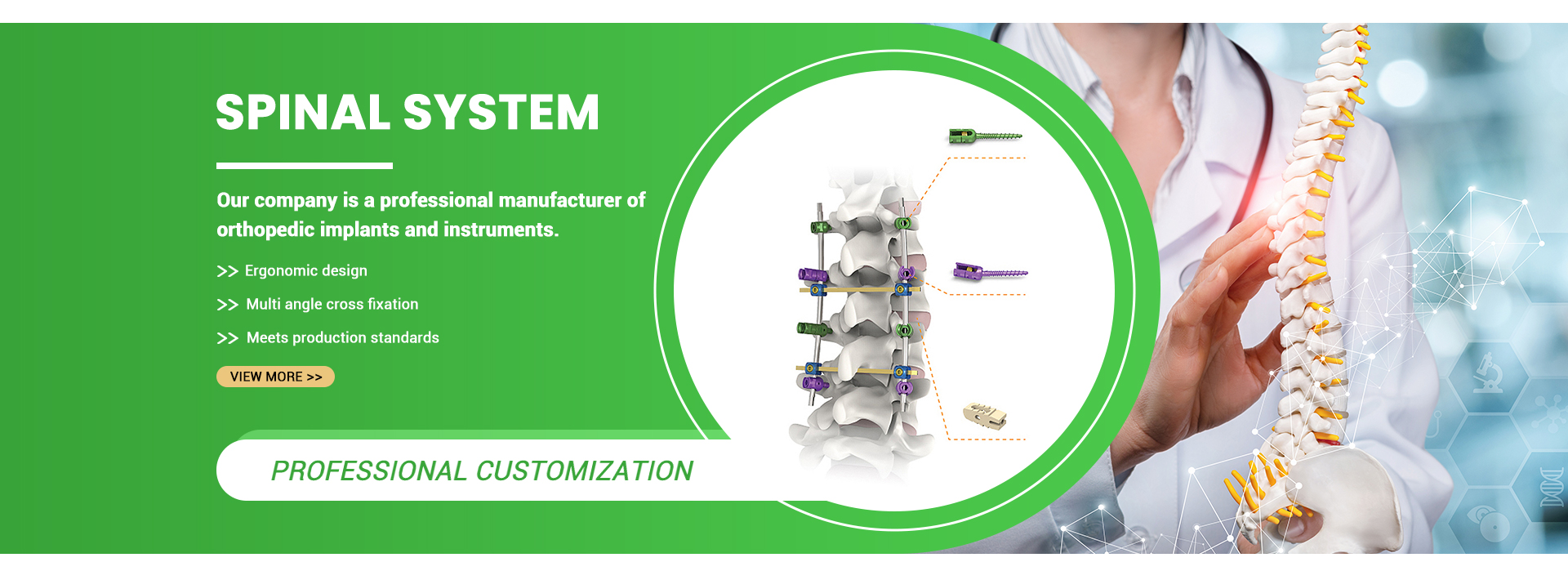
Biomechanically Engineered Spinal Fixation Systems
Optimized implant architectures engineered from medical-grade Ti-6Al-4V ELI titanium alloy, designed for high-stress anatomical stabilization and reproducible surgical delivery.
Polyaxial & Monoaxial Pedicle Screws
Manufactured from premium vacuum-arc remelted titanium alloy, our pedicle screw portfolio offers conical core geometries and dual-lead buttress threading, maximizing bone-thread contact and shortening insertion time by 50%.
- Polyaxial Angulation: +/- 25 to 30 degrees of multi-planar friction-head mobility for effortless rod linkage in complex kyphotic anatomies.
- Monoaxial Strength: Engineered for rigid fracture reduction and severe deformities requiring high corrective translational force.
- Reverse Buttress Threading: Mitigates set screw head splay, preventing cross-threading under peak torque loads (10-12 Nm).
Pre-Contoured Spinal Rods & Transverse Connectors
Longitudinal stability is achieved via 5.5mm and 6.0mm diameter titanium alloy and cobalt-chromium (CoCr) rods, surface-finished to minimize notch sensitivity and premature metallurgical fatigue.
- Elastic Modulus Optimization: Preserves physiological stress shielding profiles, stimulating fusion across the anterior column.
- Low-Profile Cross-Links: Adjustable multi-span connectors resisting axial rotational torques without impinging on the neural arch.
- Domed & Hexagonal End Profiles: Facilitates seamless passage through minimally invasive subfascial tissue planes.
Minimally Invasive (MIS) Percutaneous Fixation
Engineered for percutaneous pedicle screw insertion through muscle-splitting Wiltse approaches, significantly reducing blood loss, operative trauma, and postoperative recovery periods in Greek private and public centers.
- Extended Break-Off Tabs: Rigid integrated guide sleeves eliminating the need for bulky external tower assemblies.
- Cannulated Guidance: Precision cannulation matched to 1.5mm nitinol guide wires for fluoroscopy-verified pedicle entry.
- Self-Tapping Tips: Fluted cutting flutes enabling direct engagement without preliminary cortical tapping in non-sclerotic pedicles.
| Biomechanical Parameter | GMV Spinal System (Ti-6Al-4V ELI) | Standard Market Generic (Grade 4 Ti) | Clinical Advantage in Hellenic Practice |
|---|---|---|---|
| Ultimate Tensile Strength (UTS) | ≥ 960 MPa | ≥ 550 MPa | Prevents screw neck fracture under cyclic load during delayed arthrodesis. |
| Fatigue Bending Limit (ASTM F1717) | ≥ 210 N·m (10 Million Cycles) | ~ 150 N·m | Critical longevity for heavy, active individuals and long-segment fusion. |
| Axial Pullout Force (Sawbones 20 PCF) | ≥ 1,450 N | ≤ 1,050 N | Substantially mitigates screw loosening in Greek osteopenic cohorts. |
| Set Screw Tightening Torque | 12.0 N·m (Precision Break-off Head) | 8.0 - 10.0 N·m Non-break-off | Eliminates operator variability, stripping risk, and construct decoupling. |
Clinical Implementation
Localized Application Scenarios in the Greek Healthcare Ecosystem
How our spinal fixation platforms integrate into the operational workflows of public tertiary hospitals, trauma referral centers, and private surgical groups across Greece.
1. High-Volume Trauma Hubs (Attica & Central Macedonia Regional Centers)
In high-capacity emergency facilities such as KAT General Hospital in Kifissia, General Hospital of Athens "G. Gennimatas", and Papageorgiou Hospital in Thessaloniki, speed and instrumentation consistency are paramount. Severe thoracolumbar fracture dislocations require instantaneous stabilization. GMV’s color-coded instrument trays allow scrub nurses to immediately identify tap sizes, pedicle feelers, and reduction screwdrivers. Our dual-thread screws cut insertion time in half during emergency nighttime polytrauma decompression, ensuring stable rigid alignment before intensive care admission.
2. Complex Deformity Units & University Orthopedic Clinics
In specialized academic departments—including the Orthopedic Clinics of the University of Patras, University General Hospital of Heraklion (PAGNI) in Crete, and the University of Ioannina—surgeons regularly tackle high-degree idiopathic scoliosis, severe kyphoscoliotic deformities, and post-tubercular vertebral collapse. GMV’s multi-axial connectors, transverse bridge links, and cobalt-chromium high-rigidity rods permit multi-level segmental derotation maneuvers, safely redistributing corrective forces across the coronal and sagittal axes without pedicle breach.
3. Geriatric Spondylodesis in Regional Prefectural Hospitals
Throughout regional prefectures across the Peloponnese, Thessaly, and the Aegean Islands, district general hospitals manage an exceptionally elderly patient demographic presenting with low-energy insufficiency fractures and severe degenerative lumbar spondylolisthesis. Our system accommodates fenestrated pedicle screws engineered for low-viscosity polymethylmethacrylate (PMMA) bone cement augmentation, elevating pullout strength by over 200% in severely demineralized cancellous bone and eliminating the risk of catastrophic fixator failure.
4. Private Healthcare Networks & Medical Tourism Clinics
Top-tier private health networks such as Hygeia Hospital, Metropolitan Hospital, and Interbalkan Medical Center in Thessaloniki demand low-profile, tissue-sparing minimally invasive spinal systems. GMV’s percutaneous sets support minimal incision widths, zero paraspinal muscle stripping, and rapid patient discharge protocols, fulfilling the strict operational efficiency metrics demanded by private health insurance groups and international spine tourists seeking care in Greece.
Market Trends (2025-2030)
Hellenic Spine Market Dynamics & Structural Shifts
Strategic insights into procurement shifts, DRG reimbursement reforms, and medical device consumption within the Greek healthcare landscape.
Adoption of KEN-DRG Cost Benchmarking
The Greek Ministry of Health has accelerated the complete rollout of the Greek DRG System (KEN - Κλειστά Ενοποιημένα Νοσήλια). Public hospitals are constrained by strict capitation limits per surgical admission. Hospital procurement committees are actively seeking high-precision Tier-1 direct manufacturers who can deliver fully certified spinal hardware at competitive factory-direct pricing, bypassing inflated multi-tiered agent margins to maintain operating room solvency.
Consolidation of Centralized ESIDIS Tenders
Regional Health Authorities (YPEs - Υγειονομικές Περιφέρειες) across Greece have centralized their tender solicitations through the ESIDIS electronic platform. Tenders require long-term price stability guarantees, massive inventory buffer pledges, and comprehensive post-market surveillance. Importers collaborating with GMV benefit from our vast manufacturing capacity, ensuring continuous consignment stock availability without tender fulfillment disruptions.
Sterilization & Central Sterile Optimization
With Greek CSSD facilities facing staffing bottlenecks, hospitals are prioritizing universally standardized instrumentation trays. Rather than requiring distinct instrument cases for trauma, cervical, and lumbar procedures, GMV provides modular universal sets that utilize interchangeable screwdrivers, quick-release handles, and unified depth gauges, slashing autoclave cycle times and processing costs by over 30%.
Factory Qualifications
Jiangsu GMV Medical Device Co., Ltd.: Global Engineering Precision
An on-site TÜV Rheinland verified manufacturer with over 27 years of orthopedic implant engineering, 121 specialized technicians, and end-to-end quality control.
In-House Precision CNC Machining & Tooling
Operating from our modern medical device campus in Jinfeng Town, Suzhou, China, GMV executes 100% of its critical machining processes internally. Our workshop houses multi-axis Swiss-type automatic lathes and advanced CNC machining centers capable of achieving true micron-level tolerances (+/- 0.005mm) on complex pedicle screw thread profiles and locking set screws.
Unlike trading intermediaries, our integrated production line features dedicated slitting, precision milling, electrochemical surface polishing, and cleanroom passivation facilities. Every implant is laser-marked with permanent lot identification numbers, supporting complete traceability from raw titanium billet down to sterile operating room delivery.
Stringent Mechanical & Metallurgical Laboratory Verification
Patient safety cannot rely on statistical assumption. GMV maintains an accredited on-site physical and chemical testing laboratory. Every batch of medical-grade raw material (Grade 5 Ti-6Al-4V ELI conforming to ASTM F136 and ISO 5832-3) undergoes spectroscopic verification and microstructure metallography before machining commences.
Finished spinal fixators are evaluated using our calibrated optical profile projectors, static and dynamic axial tensile testers, and Rockwell hardness testers. Biomechanical fatigue endurance tests are executed per ASTM F1717 guidelines to ensure that our constructs exceed standard physiologic fatigue thresholds under millions of loading cycles.
TÜV Rheinland Audited
Our production facilities, cleanroom operations, and quality management protocols undergo rigorous on-site inspection and independent operational verification by TÜV Rheinland.
OEM & ODM Customization
We provide full-scope design-based customization for Greek distributors and European brand owners, including customized thread designs, specialized branding laser etching, and tailored kit configurations.
Direct Regulatory Support
Our multilingual international trade department supplies complete technical documentation, material test reports, and clinical compliance records required for rapid EOF product registration in Athens.
Buyer Knowledge Base
Frequently Asked Questions by Greek Medical Distributors & Tendering Teams
Clear, definitive answers addressing regulatory compliance, shipping logistics to Piraeus/Thessaloniki, tender qualification, and technical support.
How do GMV spinal internal fixators comply with Greek EOF and EU MDR 2017/745 mandates?
All GMV spinal fixators, locking plates, and screws are manufactured according to ISO 13485 quality management systems. Implants are forged from certified medical-grade Ti-6Al-4V ELI (ASTM F136). We supply full technical documentation dossiers—including mechanical testing per ASTM F1717, biocompatibility evaluations per ISO 10993, cleaning validation, and risk analyses—necessary for your authorized representative to complete national notification on the Greek EOF portal (Εθνικός Οργανισμός Φαρμάκων) and EUDAMED database.
What are the freight transit timelines and logistical protocols for Greek ports and airports?
We provide multimodal shipping options tailored to your procurement schedules. Air freight consignments dispatched via Shanghai Pudong International Airport (PVG) to Athens International Airport (ATH) typically clear customs and arrive within 5 to 7 business days. For bulk containerized ocean freight destined for the Port of Piraeus or the Port of Thessaloniki, typical transit times range between 26 to 32 days. All shipments include certified commercial invoices, EUR-compliant packing lists, and Certificates of Analysis (CoA) matching each lot.
Can GMV support OEM private labeling for established medical supply brands in Greece?
Yes. We possess extensive OEM and ODM manufacturing capabilities. We can laser-etch your registered company trade name, logo, dimensional codes, and unique lot identification directly onto implants using high-precision non-damaging fiber laser systems. Customized primary sterile peel-pouches, outer hospital box packaging, and multi-lingual Instructions for Use (IFU)—including Greek language translations—can be configured to meet your exact distribution specifications.
Are surgical instrument kits compatible with existing Greek hospital central sterilization systems?
Our orthopedic and spinal instrument kits are housed in heavy-duty, hard-anodized aluminum and medical-grade polyphenylsulfone (PPSU) sterilization containers. Trays feature slotted perforations designed for optimal steam penetration and rapid drying in pre-vacuum steam autoclaves (134°C cycles) standard across Greek ESY central sterile supply departments (CSSD). Silicone bracket grommets firmly hold instruments during washing, ultrasonic cleaning, and rough transit.
How does GMV ensure continuous inventory for participation in Greek ESIDIS public hospital tenders?
We understand that winning multi-year tenders through ESIDIS requires rigid adherence to delivery timelines under threat of contractual penalties. GMV establishes dedicated raw material buffers and scheduled production runs for our long-term distributor partners. With over 121 staff and high-throughput automated CNC machining lines, we guarantee expedited re-order turnaround times of 15 to 25 days for standard catalog implants, ensuring your consignment inventories never run dry.
What metallurgical advantages does Ti-6Al-4V ELI provide over standard stainless steel in spinal fusion?
Medical-grade titanium alloy Ti-6Al-4V ELI (Extra Low Interstitial) exhibits an elastic modulus approximately half that of 316L stainless steel (110 GPa vs 210 GPa). This closer proximity to cortical bone elasticity substantially reduces stress-shielding phenomena, encouraging natural interbody fusion. Furthermore, titanium exhibits superior corrosion fatigue resistance within physiological environments and produces substantially fewer artifacts on postoperative magnetic resonance imaging (MRI) and computed tomography (CT) scans, facilitating precise neurological follow-up.
Can international distributors and Greek procurement officers inspect your manufacturing campus?
We welcome direct on-site factory audits by Greek distributors, biomedical engineers, and hospital qualification teams at our primary facility in Jinfeng Town, Suzhou, Jiangsu, China. Additionally, we provide scheduled live high-definition video audits demonstrating our CNC lines, cleanrooms, and testing facilities for procurement teams seeking immediate technical verification before entering contractual commitments.
Partner with a Verified Orthopedic Factory for the Greek Market
Whether you are preparing a regional tender submission for Greek public hospitals, expanding your private distribution catalog, or requiring custom OEM implant engineering, our technical export team is ready to assist with comprehensive product catalogs, sample testing, and regulatory dossiers.
