Specialized Orthopedic Implants & Surgical Systems
System-matched implants, powered corpectomy saws, external ringent couplings, and cranial instrumentation engineered for hospital tenders and clinical distributors in Peru.







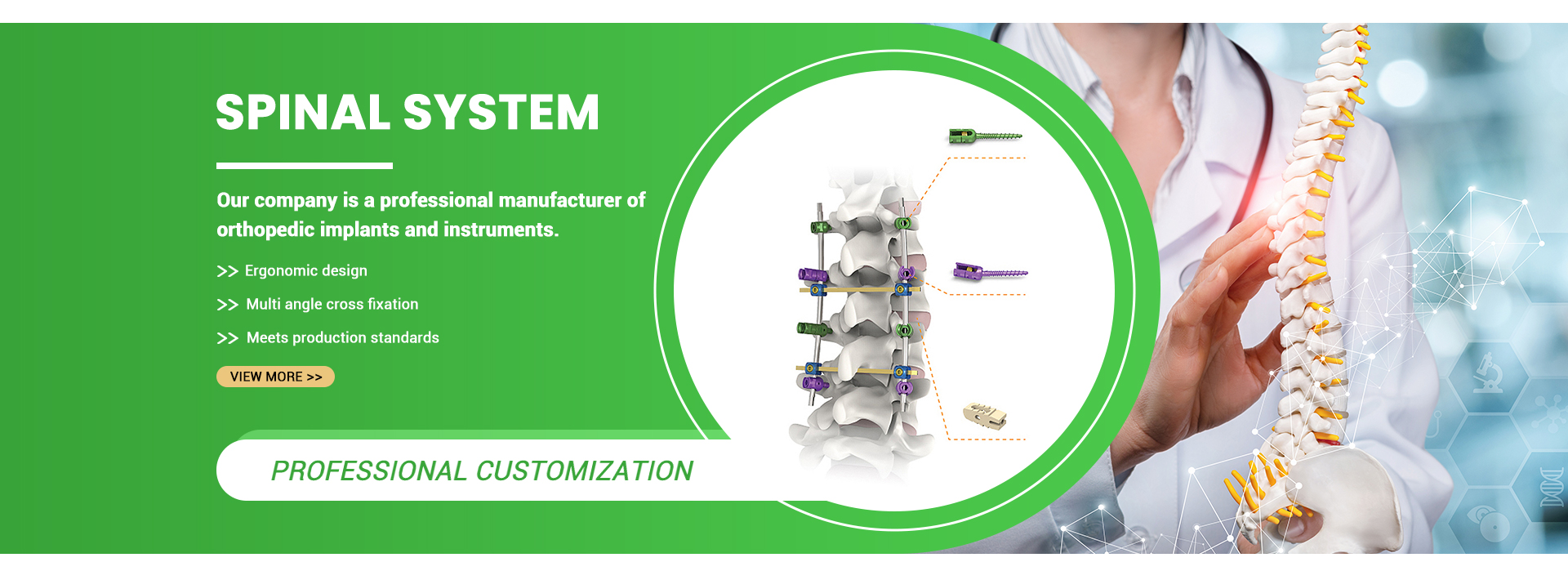
Biomechanical Rigor in Vertebral Body Replacement (VBR) Manufacturing
How precision metallurgical formulation, structural finite element modeling (FEA), and surface osteointegration protect patients against cage subsidence in high-demand thoracic and lumbar corpectomies.
The Biomechanics of Corpectomy Reconstruction
Vertebral body replacement (VBR) devices represent one of the most mechanically demanding segments of spinal surgery. When a thoracic or lumbar vertebral body is resected due to high-energy compressive trauma, primary or secondary oncological neoplasms, tuberculous spondylitis (Pott’s disease), or severe pyogenic osteomyelitis, the anterior structural spinal column loses its fundamental load-bearing capacity. The anterior column typically transfers between 70% to 80% of axial physiological loads, meaning that any vertebral spacer or expandable VBR device must withstand persistent axial forces exceeding 1,200 N during typical ambulation, rising to over 3,000 N under flexion and torsional moments.
At Jiangsu GMV Medical Device Co., Ltd., our engineering methodology addresses the critical clinical vulnerability identified in postoperative spinal studies: endplate subsidence and secondary sagittal kyphotic collapse. Fabricated strictly from medical-grade Ti-6Al-4V ELI (ASTM F136 / ISO 5832-3), our static titanium mesh cages and modular expandable VBR mechanisms feature optimized footprint end-caps designed with anatomical lordotic angles ranging from 0° to 15°. These wide-aperture endplates deliver balanced contact area distribution across the peripheral epiphyseal ring of adjacent vertebrae, which provides 300% greater compressive strength than the central cancellous bone bed.
Axial Load Dissipation
Precision-milled diamond lattice structures dissipate mechanical stress through progressive elasticity, reducing the stress-shielding phenomenon that causes regional osteopenia around the surgical margins.
Autograft Packing Matrix
Maximum central fenestration allows bone harvest packing (autologous or osteoinductive synthetic bone matrix) to achieve unhindered 360-degree vascularized osseointegration throughout the vertebral corridor.
Multi-Axial Fixation Synergy
Engineered to interface seamlessly with posterior pedicle screw instrumentation, ensuring rigid anterior-posterior biomechanical triangulation even in severe bone quality challenges.
Through our comprehensive in-house mechanical testing laboratory, all GMV vertebral implants are tested according to ASTM F1717 and ASTM F2077 standards, encompassing static axial compression, dynamic compression fatigue testing up to 5,000,000 cycles, and static torsion. Our implant series consistently demonstrates high yield loads exceeding 7,500 N, ensuring safety margins for neurosurgeons and orthopedic trauma specialists handling high-demand patients.
Localized Spine Reconstruction Scenarios Across Peru’s Health Networks
From seismic and vehicular trauma centers in Metropolitan Lima to high-altitude spinal cord decompression in mining hubs and national cancer centers, GMV implants serve the direct clinical needs of Peru.
Targeted Clinical Ecosystems in the Peruvian Healthcare Landscape
The Peruvian medical infrastructure operates through distinct institutional segments: the social security network (EsSalud), the Ministry of Health (MINSA), the Armed Forces and Police hospitals (Sanidad PNP / Fuerzas Armadas), and the growing private hospital network (Clínicas EPS like Anglo Americana, San Pablo, and Ricardo Palma). Each sector presents distinct surgical and operational challenges that our vertebral body replacement devices are designed to address.
High-Energy Trauma Corpectomy
Institutions: Hospital de Emergencias José Casimiro Ulloa (Lima), Hospital Nacional Dos de Mayo (MINSA), and Hospital Nacional Edgardo Rebagliati Martins (EsSalud). Severe road traffic incidents across the Pan-American highway and industrial construction falls produce burst fractures (AO Spine Type A3/A4) demanding immediate anterior decompression, stable distraction, and restoration of anatomical neuroforaminal height.
Spinal Oncological Reconstructions
Institutions: Instituto Nacional de Enfermedades Neoplásicas (INEN - Surquillo, Lima) and specialized regional cancer institutes (IREN Norte in Trujillo, IREN Sur in Arequipa). Metastatic spine lesions require en-bloc corpectomy followed by dependable VBR implantation that provides immediate stability, allowing rapid postoperative ambulation and radiation therapy without metallic artifact disruption.
High-Altitude Mining Trauma
Regions: Mining regions of Pasco, Junín (Huancayo), Cusco, and Puno. Operating at altitudes from 3,200 to 4,300 meters presents specific patient physiological factors including erythrocytosis and altered bone mineralization. GMV implants offer low notch sensitivity, superior biological integration, and simplified insertion toolkits designed for regional operating rooms with limited fluoroscopy resources.
Furthermore, spinal infectious cases such as tuberculosis of the spine (Pott's paraplegia) remain a focal public health concern across Peru. When extensive granulomatous destruction collapses multiple adjacent vertebral bodies, our stackable corpectomy mesh constructs, used in conjunction with autogenous bone graft, offer stable biomechanical struts that resist biofilm colonization while supporting full therapeutic antibiotic penetration.
Peruvian Spinal Implant Procurement Trends (2025–2030)
Analysis of public tender mechanisms via OSCE / Perú Compras, decentralization of neurosurgical care to regional hospitals, and technological evolution toward expandable titanium corpectomies.
The Structural Transformation of Peru's Orthopedic Sector
Peru’s medical device market is experiencing steady expansion, driven by public investments aimed at reducing the neurosurgical surgical deficit across regional capitals such as Arequipa, Chiclayo, Trujillo, and Huancayo. Distributors, bidding consortia, and hospital direct-purchasing committees are navigating three prominent market shifts:
| Market Vector | Historical Status in Peru | Emerging Trend (2025–2030) | GMV Strategic Advantage for Peruvian Distributors |
|---|---|---|---|
| Procurement Route | Fragmented, delayed individual tenders; extensive direct hospital requests. | Centralized tenders through OSCE (Organismo Supervisor de las Contrataciones del Estado) and Perú Compras electronic catalogs. | Turnkey tender dossier packages (CE, ISO 13485, Declaration of Conformity, Material Mill Certs) compliant with Peruvian public procurement bases. |
| Implant Selection | Basic non-expandable stainless steel or primitive mesh cages cut manually in the OR. | Shift to anatomical pre-cut titanium mesh and modular expandable corpectomy systems with lordotic endplates. | Factory pre-calibrated height systems and modular footprint kits that eliminate intraoperative cage trimming and shorten operating times. |
| Regionalization | Over 70% of complex spine surgeries centralized in Lima referral institutes. | Decentralization of complex trauma neurosurgery to regional EsSalud and MINSA level III-1 hospitals. | Reliable export logistics, consignment stock planning, and comprehensive instrumentation sets that enable regional hospitals to function autonomously. |
| Regulatory Oversight | Basic sanitary registrations; lengthy administrative processing by DIGEMID. | Stringent post-market surveillance and strict verification of ISO 13485:2016 production audits under DS 016-2011-SA. | On-site audit verification by TÜV Rheinland, providing verifiable certification that accelerates DIGEMID registration approval. |
Local distributors in Lima and provincial centers require manufacturing partners who offer both competitive pricing for competitive public bids and reliable product quality to maintain favorable relationships with leading Peruvian spine surgeons.
Technical Specifications: GMV Titanium VBR vs. Conventional Solutions
A direct biomechanical comparison illustrating why medical-grade titanium alloy corpectomy constructs outperform alternatives in axial stability and osteoconductive integration.
| Biomechanical Metric | GMV Ti-6Al-4V ELI Mesh VBR | Generic Expandable Titanium Cage | 316L Stainless Steel Legacy Mesh |
|---|---|---|---|
| Raw Material Specification | Medical Grade 5 Titanium (ISO 5832-3 / ASTM F136 ELI) | Standard Commercial Titanium Grade 4/5 | Implant Grade 316L Stainless Steel (ISO 5832-1) |
| Modulus of Elasticity (GPa) | 110 GPa (Significantly closer to cortical bone ~18-30 GPa) | 110 - 114 GPa | 200 - 210 GPa (High risk of stress shielding) |
| Subsidence Resistance Feature | Expanded footprint end rings with 360° annular teeth | Point-contact mechanical distraction feet | Sharp cut mesh edges prone to endplate perforation |
| MRI / CT Compatibility | Minimal imaging distortion; artifact suppression | Moderate imaging artifact around internal gear drive | Extensive radiographic shielding and flare artifacts |
| Biological Fusion Volume | > 65% internal volume dedicated to graft retention | < 35% volume (internal mechanism occupies space) | Variable depending on manual cutting geometry |
| Sterilization Packaging | Class 10,000 cleanroom packaged with chemical indicators | Varies by supplier | Bulk unsterilized or non-validated barrier pouches |
Verified Manufacturing Capabilities & OEM/ODM Excellence
Operating from our modern facility in Jinfeng Town, Suzhou, China, GMV Medical combines 27+ years of clinical manufacturing experience with full third-party validation.
The Value of Direct Factory Collaboration for Peruvian Importers
Jiangsu GMV Medical Device Co., Ltd. is an established manufacturer rather than an export trading intermediary. For Peruvian healthcare distributors, working directly with our manufacturing center eliminates intermediary markups and provides direct communication with our biomedical design engineers.
TÜV Rheinland Verified Site
Our production premises, testing laboratories, cleanrooms, and quality control systems are independently verified on-site by TÜV Rheinland. Comprehensive assessment audit reports are accessible to our Peruvian partners to substantiate hospital tender submissions.
In-House Precision Machining
Equipped with multi-axis CNC Swiss-lathes, CNC vertical machining centers, precision wire EDM, laser surface texturing, and dedicated polishing cells. We ensure precise dimensional tolerances (±0.008 mm) critical for reliable screw locking and secure cage engagement.
OEM / ODM & Private Labeling
We support established Peruvian distributors in building proprietary brands. Services include fiber-optic laser marking of custom trademarks and lot numbers, customized anodization color coding, customized Spanish surgical instruction manuals, and tailored sterilization kit designs.
Our 121 verified personnel manage the complete manufacturing lifecycle under strict ISO 13485:2016 quality management systems. From raw material spectrometry upon receipt through optical coordinate inspection and final medical ultrasonic cleaning, we ensure consistent production across every batch dispatched from our factory.
Peruvian Regulatory & Importation Playbook (DIGEMID & Customs)
Clear, practical steps for Peruvian importers navigating sanitary registrations, customs entry via Callao or Jorge Chávez, and public tender compliance.
Navigating DIGEMID Sanitary Registration for Class III / IV Spinal Implants
Importing spinal implants and vertebral body replacement devices into Peru requires compliance with the regulations established by the Dirección General de Medicamentos, Insumos y Drogas (DIGEMID) under Supreme Decree DS 016-2011-SA and its subsequent amendments. Vertebral body replacement cages and pedicle screw assemblies are classified as Clase III (Riesgo Alto) or Clase IV (Riesgo Crítico) medical devices.
1. Technical Dossier (Dossier Técnico)
GMV provides complete technical dossiers formatted for DIGEMID review, including detailed material mill test certificates (ISO 5832-3), ASTM F1717 / ASTM F2077 mechanical test results, biocompatibility evaluations (ISO 10993 series), and validated sterilization protocols (ISO 11137 / ISO 11607).
2. Legalization & Consular Apostille
All export certificates, Free Sale Certificates (FSC / CLV), and ISO 13485 certificates issued by our competent provincial and national authorities are properly apostilled in accordance with the Hague Apostille Convention, ensuring smooth legal validation for Peruvian regulatory authorities.
3. Spanish Labeling Compliance
All primary pouches, secondary boxes, and outer cartons are packaged with compliant Spanish medical labeling, detailing sterile barrier status, storage temperatures, single-use warnings, batch numbers, manufacturing dates, and local Peruvian registration holder (Droguería) details.
For maritime shipments bound for the Port of Callao (Puerto del Callao) or air cargo via Jorge Chávez International Airport (LIM), our export documentation includes full Commercial Invoices, detailed Packing Lists with itemized weight and batch numbers, and Air Waybills (AWB) or Ocean Bills of Lading (BOL). We coordinate closely with your local customs agency (Agencia de Aduana) to facilitate prompt customs clearance and avoid storage delays.
Frequently Asked Questions: Sourcing VBR Systems for Peru
Essential guidance on regulatory support, production lead times, surgical instrument loaner trays, and tender terms for Peruvian healthcare suppliers.
Does GMV Medical supply the necessary documentation for DIGEMID sanitary registration in Peru?
Can GMV supply complete, system-matched surgical instrument kits for VBR implantation?
What are the standard manufacturing lead times and shipping options to Peru?
How do your prices compare to European or North American spine implant brands in Peru?
Can Peruvian distributors inspect or audit your factory prior to finalizing large orders?
What warranty and product traceability assurances are provided for each implant?
Empower Your Spinal Implant Supply Chain in Peru
Partner directly with a TÜV Rheinland verified manufacturer. Connect with our engineering and export team to request technical catalogs, customized OEM quotation schedules, and complete DIGEMID registration dossier support.
Send an Inquiry